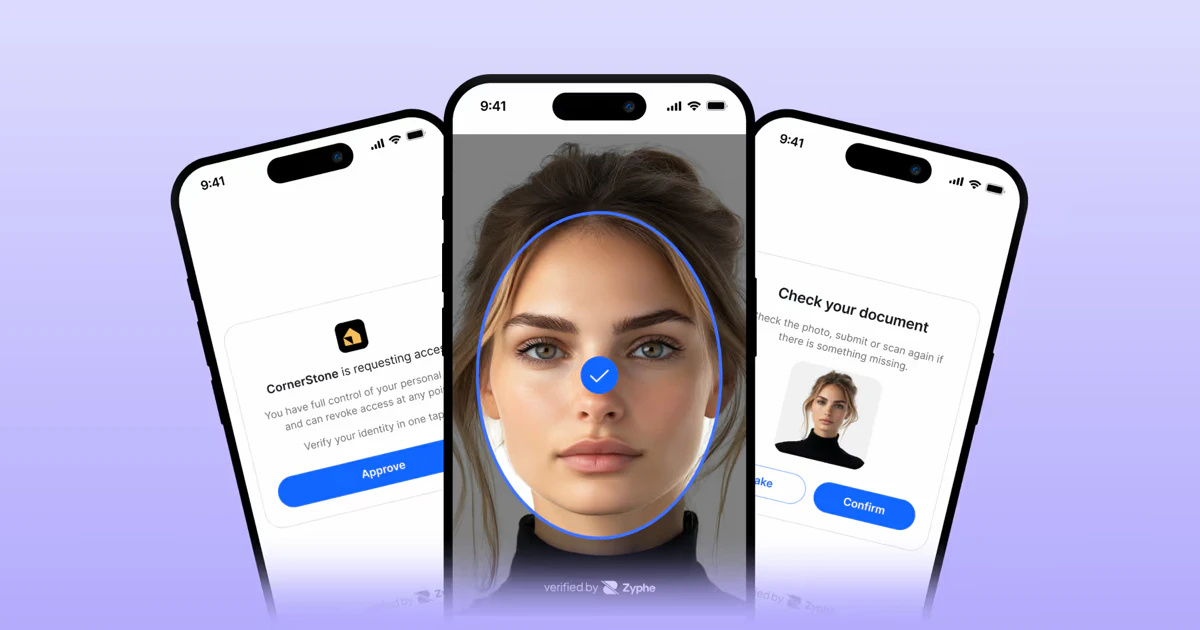
Privacy-first KYC/KYB verification for businesses and AI agents, without storing PII.
Product memo
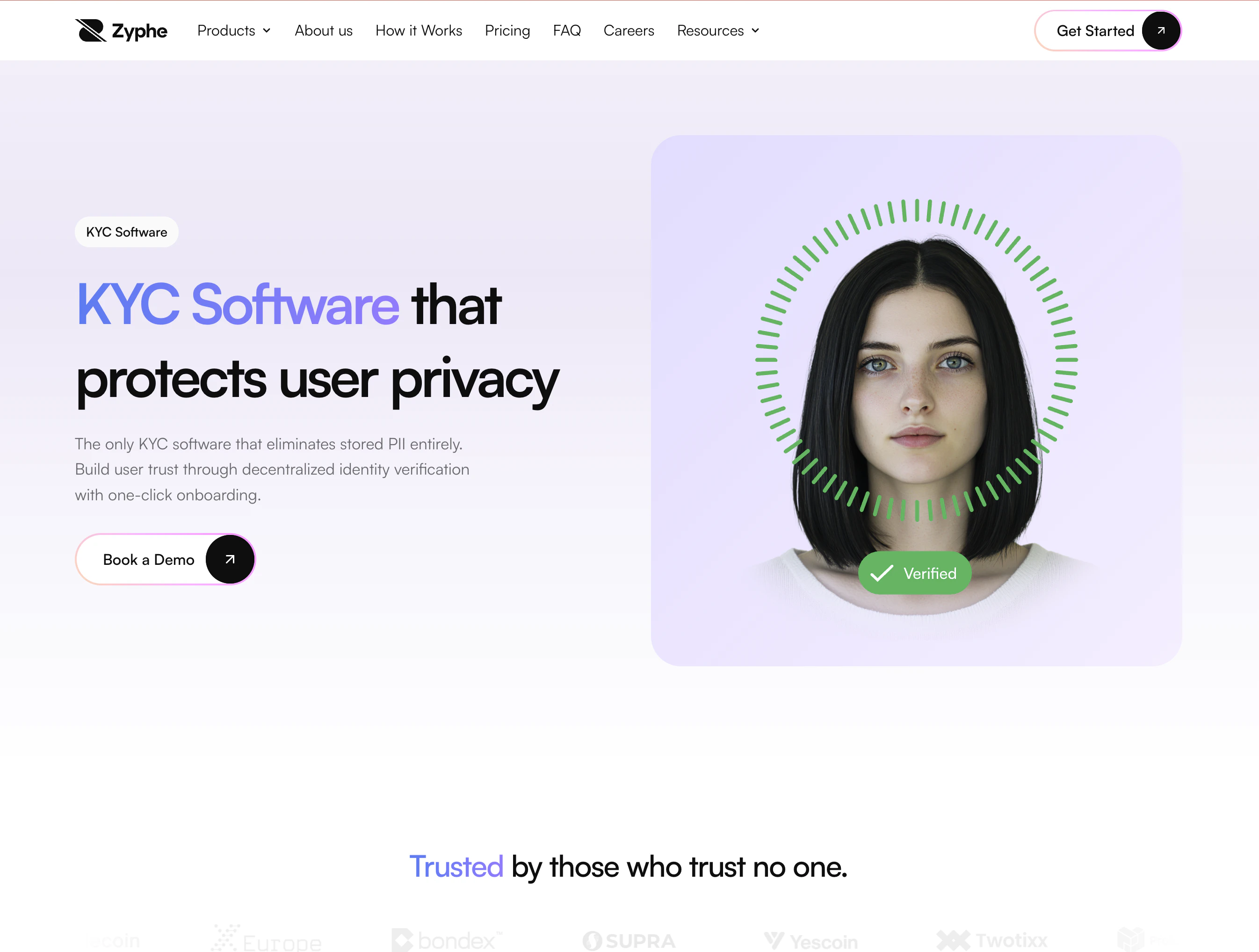
Zyphe provides global KYC, KYB, and AML verification, allowing businesses and AI agents to run identity checks without storing personally identifiable information. It uses decentralized identity and zero-knowledge architecture, so users verify once and reuse credentials across platforms. This approach reduces data breach liability and improves onboarding completion rates, serving businesses that prioritize user privacy and regulatory compliance.
For who
Businesses and AI agents needing global KYC/KYB compliance
Solves what
Privacy-first KYC, KYB, and AML verification without storing PII.
- Decentralized identity verification
- Zero-knowledge data storage
In their own words
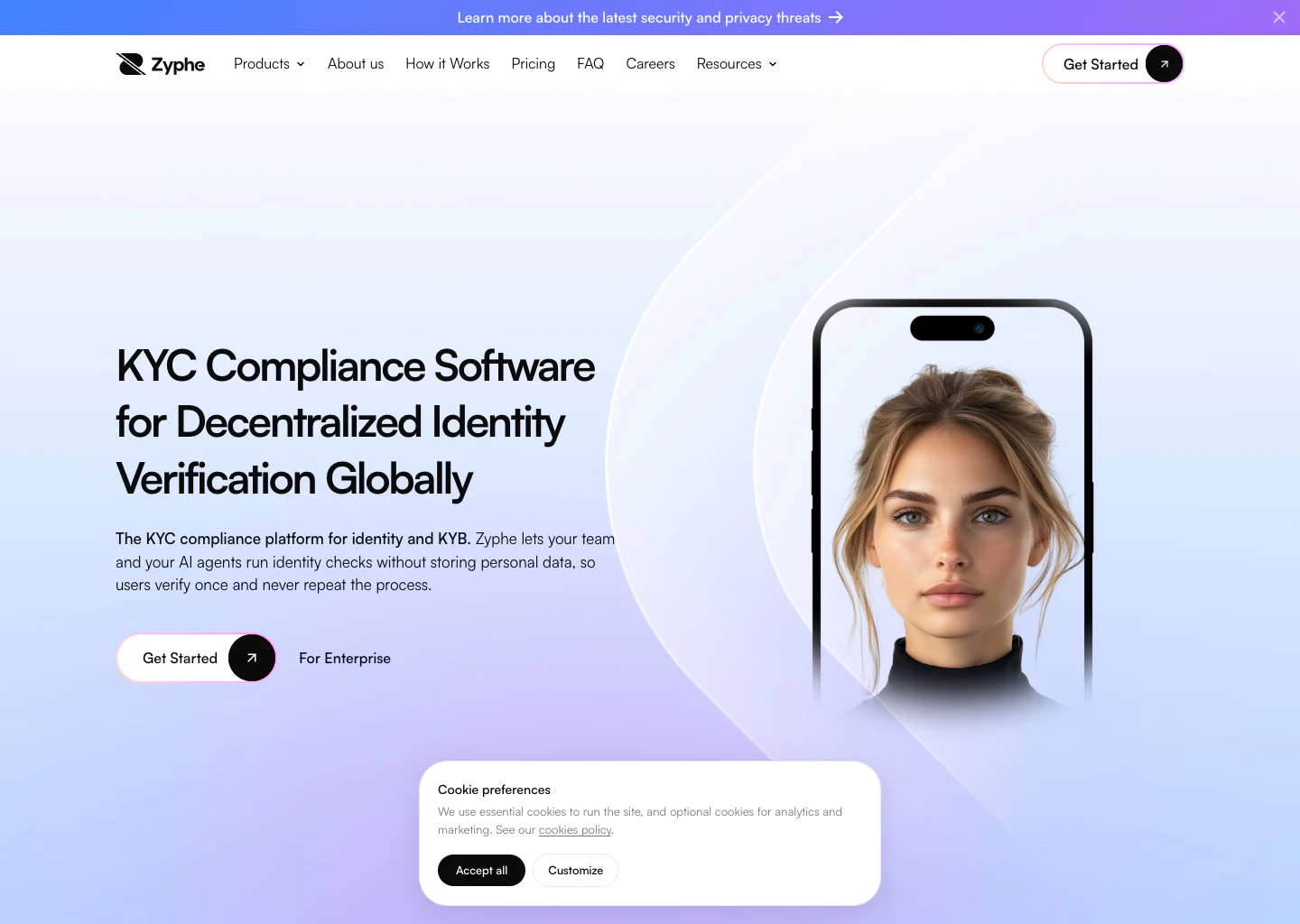
KYC Compliance Software for Decentralized Identity Verification Globally
The KYC compliance platform for identity and KYB. Zyphe lets your team and your AI agents run identity checks without storing personal data, so users verify once and never repeat the process.
Commercial cues
Model
contact only
Free tier
Yes
Trial
No
Pricing Strategy
Zyphe offers a free tier, with Enterprise handled through custom pricing.
- • A free tier lowers adoption friction for new businesses and AI agents.
- • Custom enterprise options serve larger clients with specific compliance needs.
- • Visible limits define plan boundaries.
Operator context
Founded
May 2026
Platform
API
Audience
Developers
Public footprint
+1 more footprint links
Tech stack
Builder Strategy
- Strategy Type
- Niche Specialist
- Stage
- Pre Revenue
- Effort
- Small Team
About Zyphe Expand
Zyphe provides a privacy-first approach to KYC, KYB, and AML verification, serving businesses and AI agents globally. It allows identity checks without storing personally identifiable information, leveraging decentralized identity and zero-knowledge architecture.
This method lets users verify once and reuse their credentials across various platforms, which reduces data breach liability. Zyphe's positioning appeals to organizations that need specific regulatory compliance while also prioritizing user privacy, particularly in sectors like fintech and Web3.