
Reduces AI inference costs and latency using specialized models on an edge network.
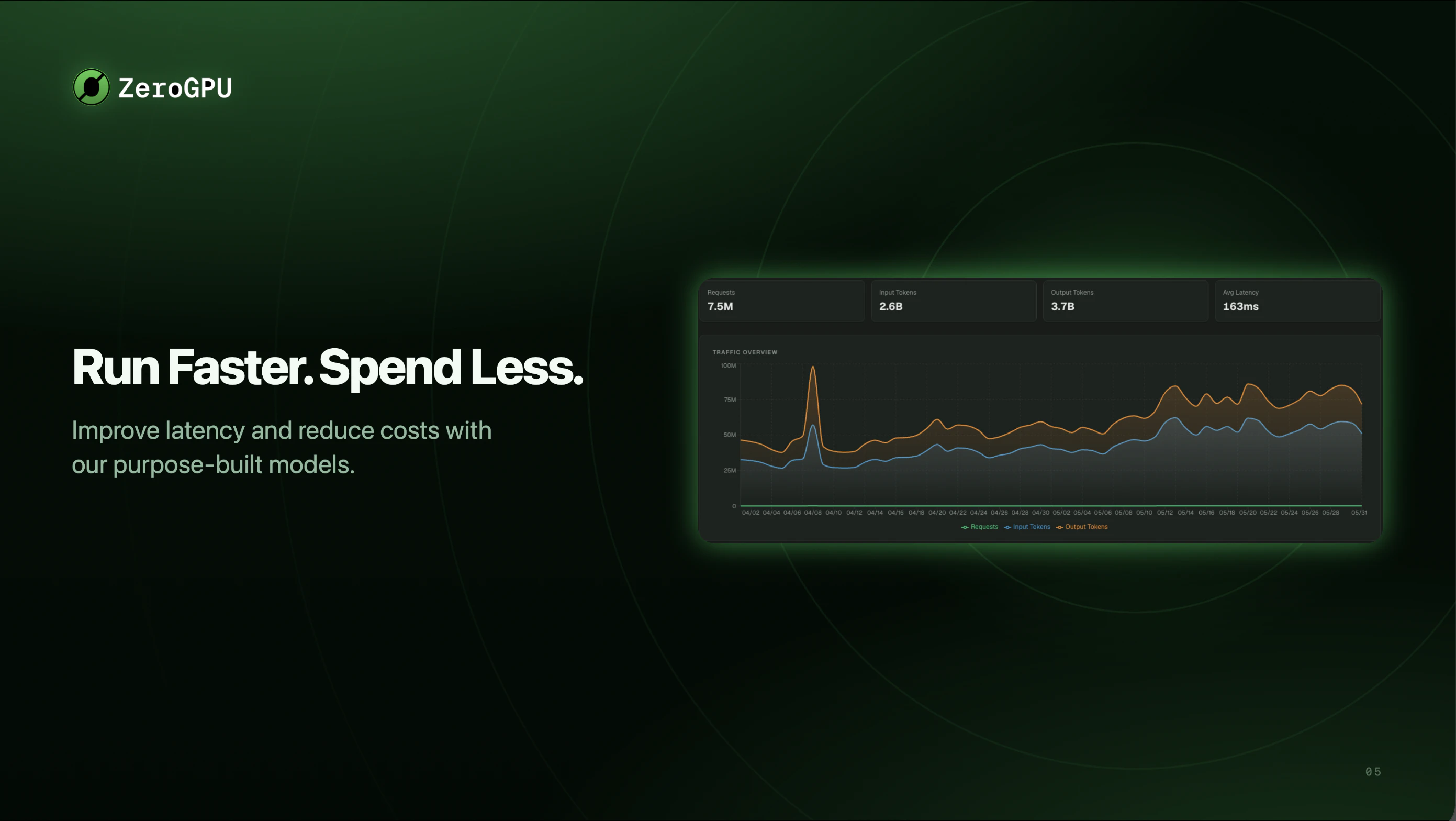

Product memo
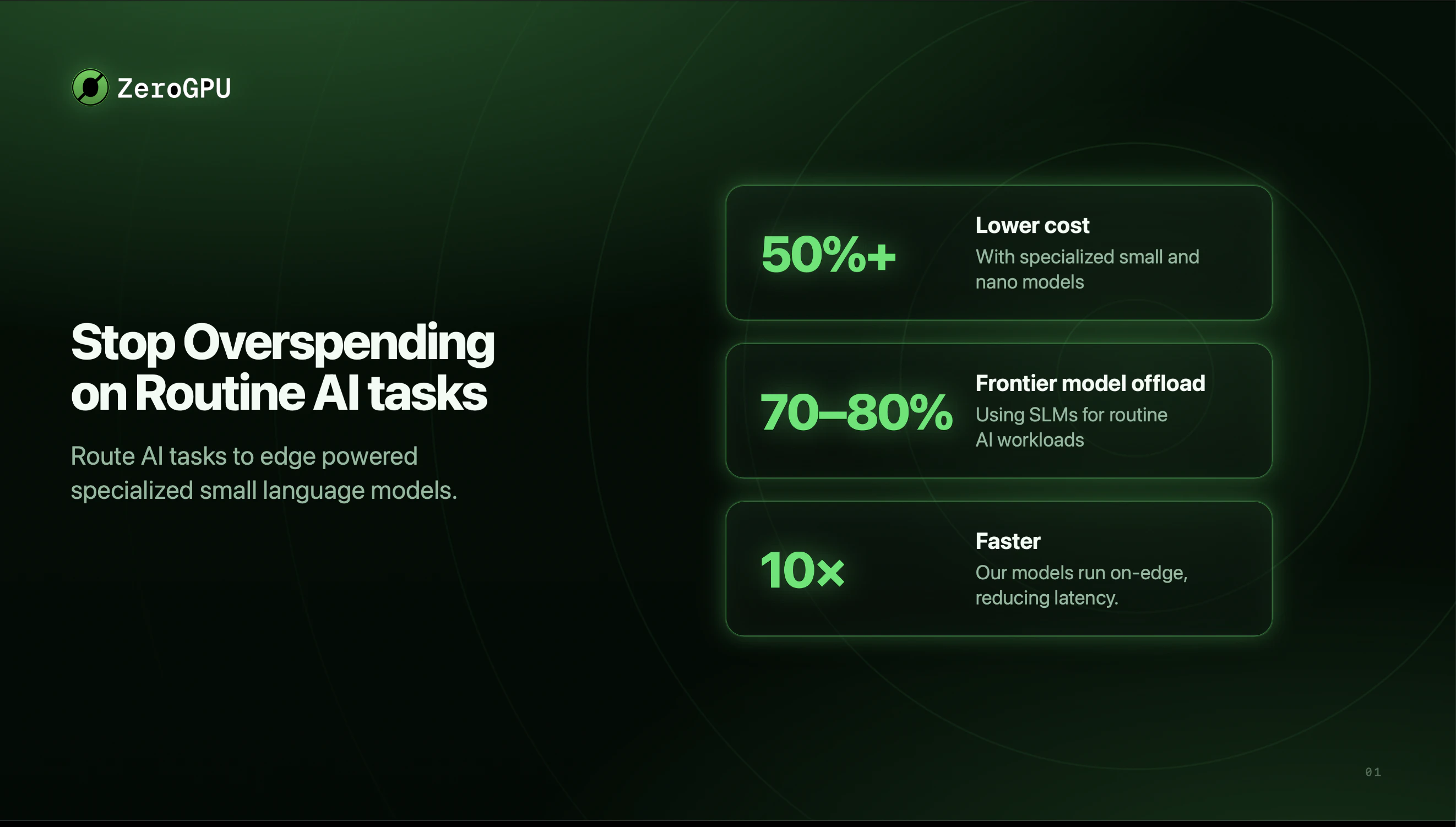
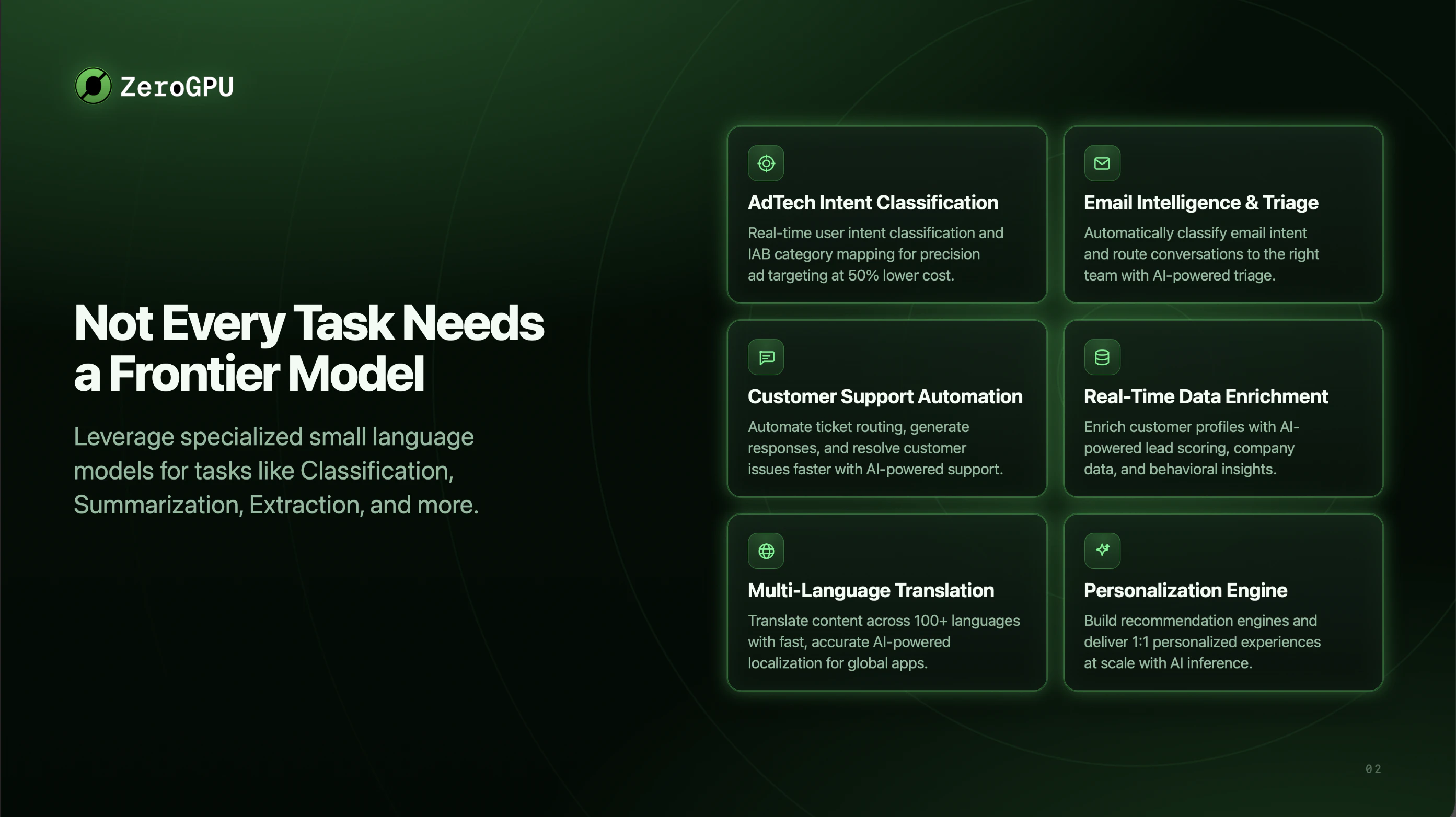
AI applications and agents often overspend on large frontier models for routine tasks. ZeroGPU cuts inference costs and latency by routing high-volume AI tasks to specialized small language models across its edge-powered inference network. This approach provides a cost-effective, faster alternative for workloads like classification, summarization, and PII detection, differentiating it from general-purpose model providers.
For who
AI applications and agents needing efficient inference
Solves what
Reduces AI inference costs and latency by using specialized models on an edge network.
- Specialized small language models
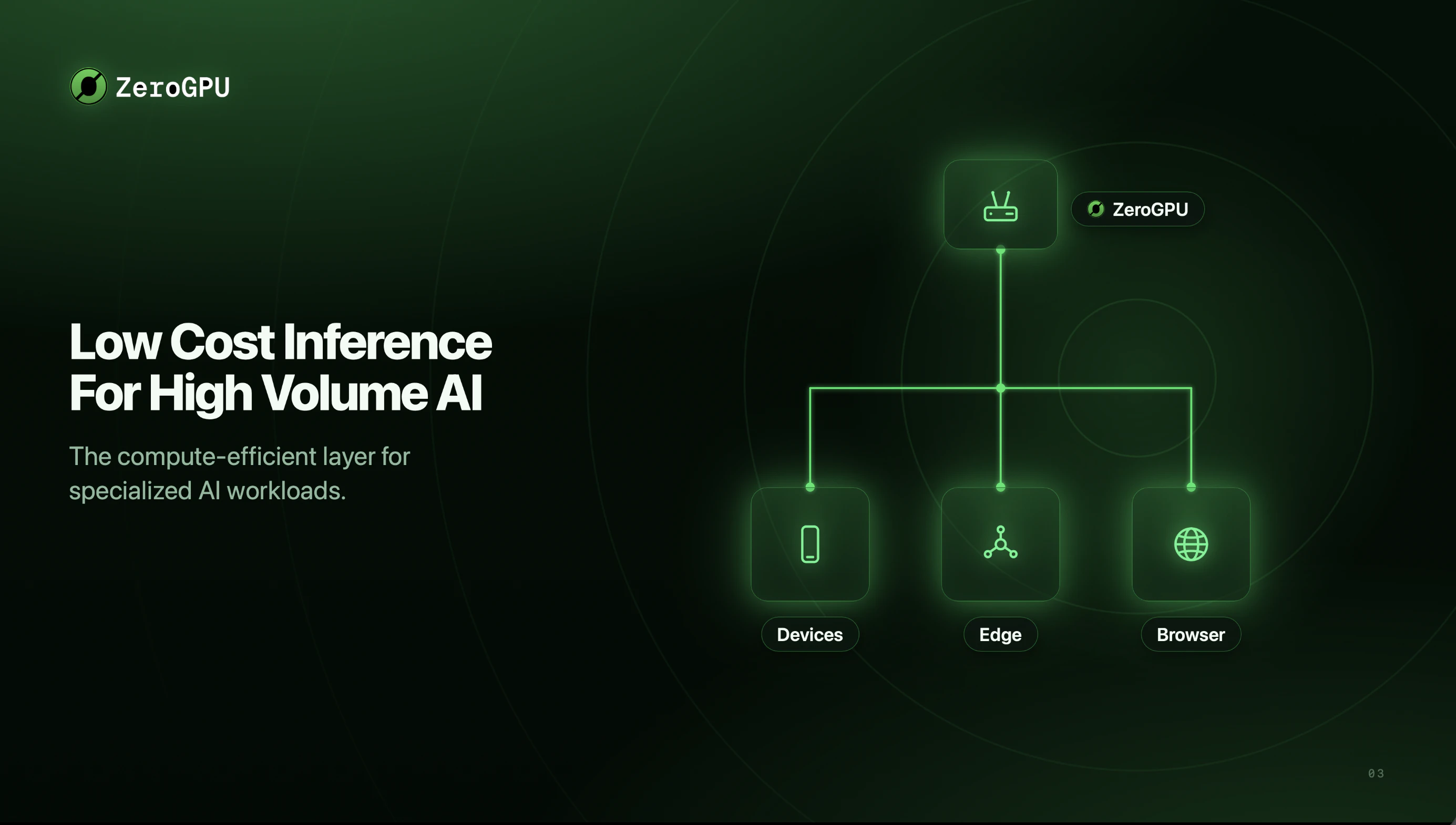
- Edge-powered inference network
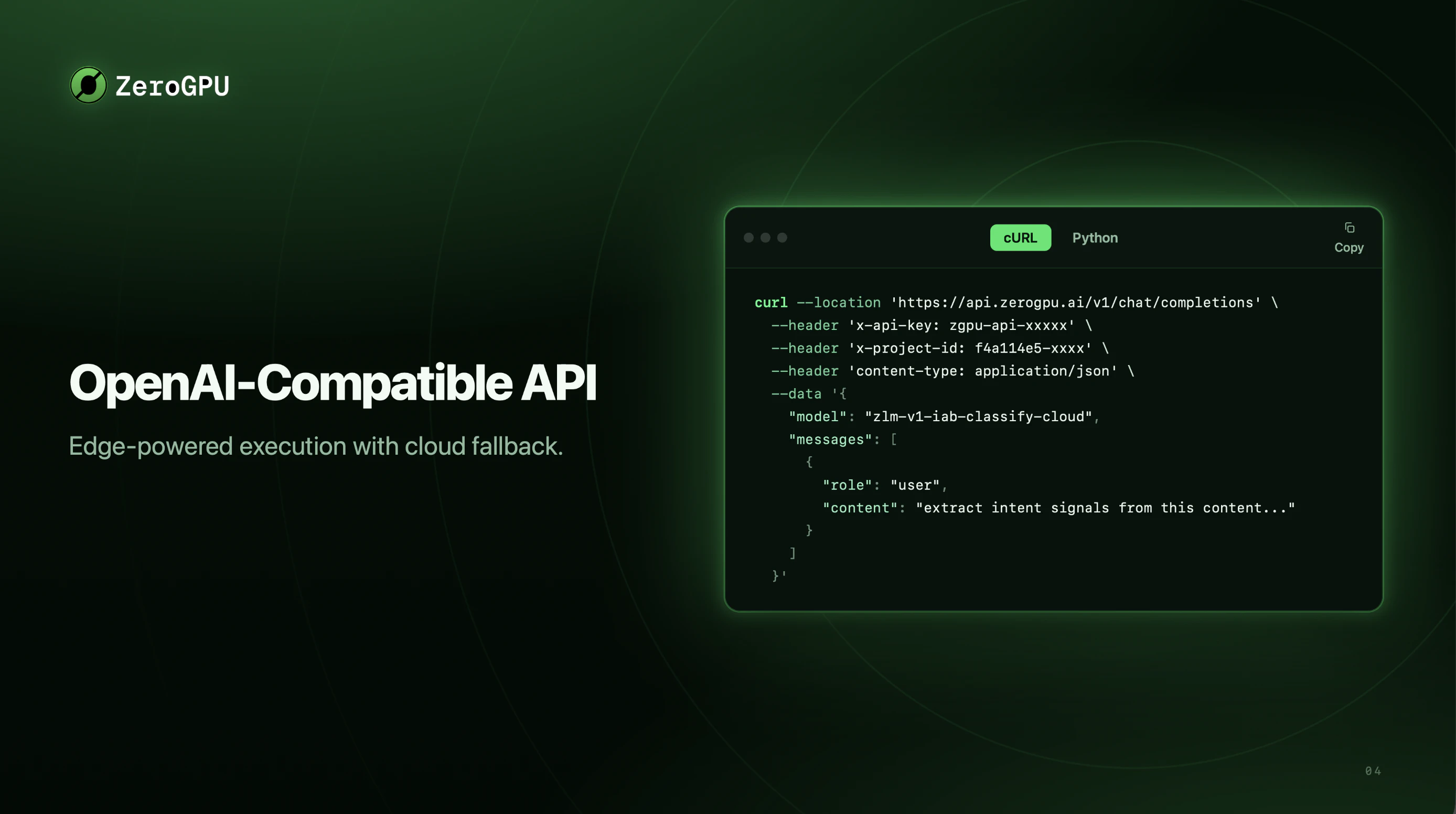
- OpenAI-compatible API
In their own words
The compute efficient layer for AI inference
ZeroGPU helps AI apps and agents access lower-cost compute by routing high-volume AI tasks to specialized models across an edge-powered inference network.
Commercial cues
Model
usage based
Free tier
No
Trial
No
Pricing Strategy
ZeroGPU uses contact-sales pricing through its Usage-Based tier.
- • Usage-based pricing per request aligns costs directly with inference volume.
- • No visible free tier focuses on established AI workloads with clear cost.
- • Usage-Based handles custom requirements.
Operator context
Operating setup
Founded
Jun 2026
HQ
United States
Platform
API
Audience
Developers
Social footprint
Tech stack
Market demand
ZeroGPU keyword demand
5 keywords
Market demand is Starter-tier market intelligence.
Derived from this product’s latest SimilarWeb keyword mix — directional demand, not proof.
Builder Strategy
- Strategy Type
- Niche Specialist
- Stage
- Vc Growth
- Effort
- Small Team
About ZeroGPU Expand
ZeroGPU provides an efficient layer for AI inference, designed for AI applications and agents that face high costs and latency with general-purpose models. It reduces these operational expenses by leveraging specialized small language models and a distributed edge network.
This setup allows for faster, more cost-effective processing of high-volume AI tasks such as classification, summarization, and PII detection. The platform offers an OpenAI-compatible API, making it accessible for developers looking to optimize their AI workloads without sacrificing performance for routine operations.