
Product memo
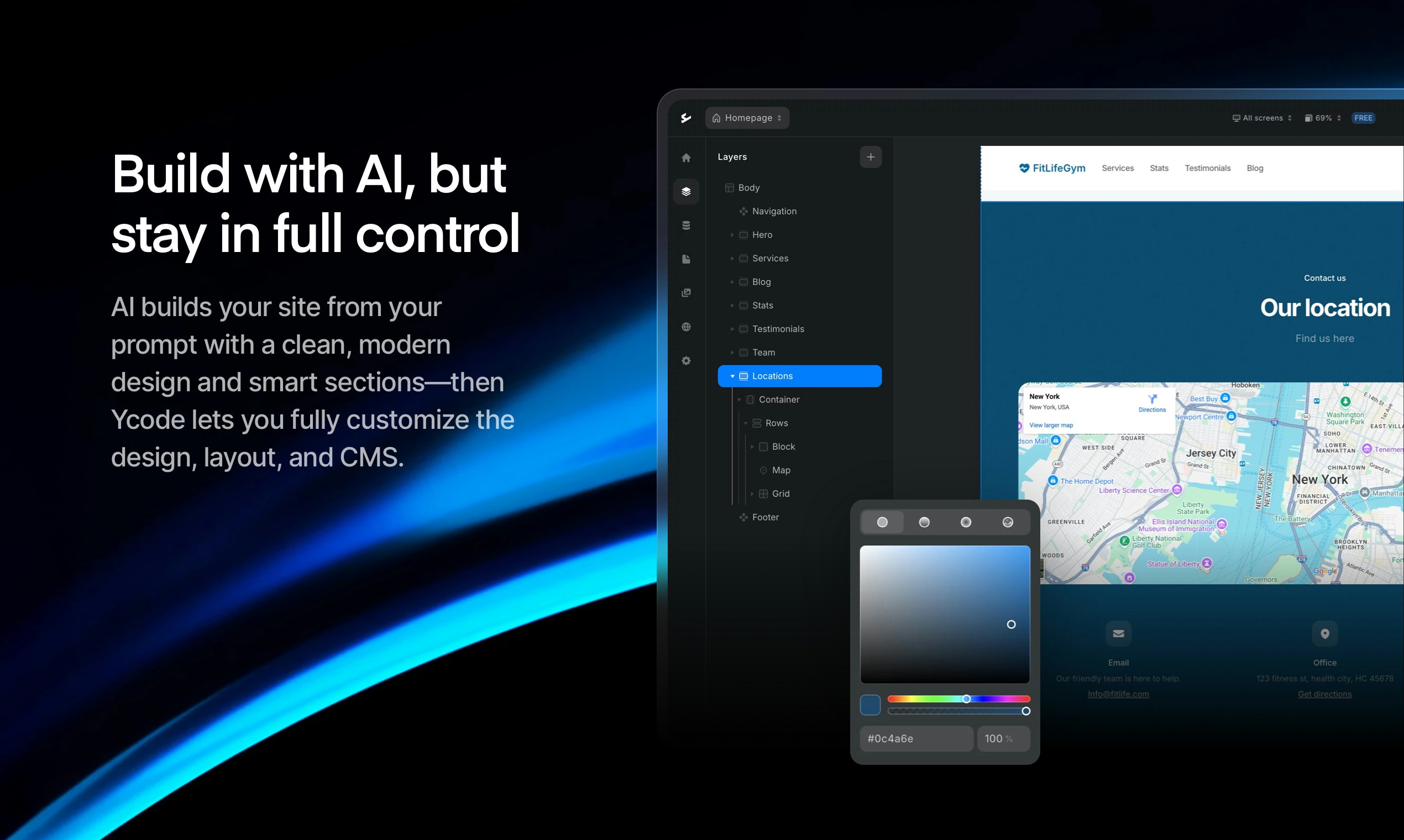
Build custom websites visually without coding, combining a modern visual builder with open-source flexibility. It targets creators and agencies who need full control over design, content, and infrastructure. Users can self-host the platform or opt for a fully managed cloud setup, offering a flexible alternative to closed platforms.
For who
Creators and agencies building custom websites
Solves what
Building custom websites visually without coding, with open-source flexibility.
- Visual website builder
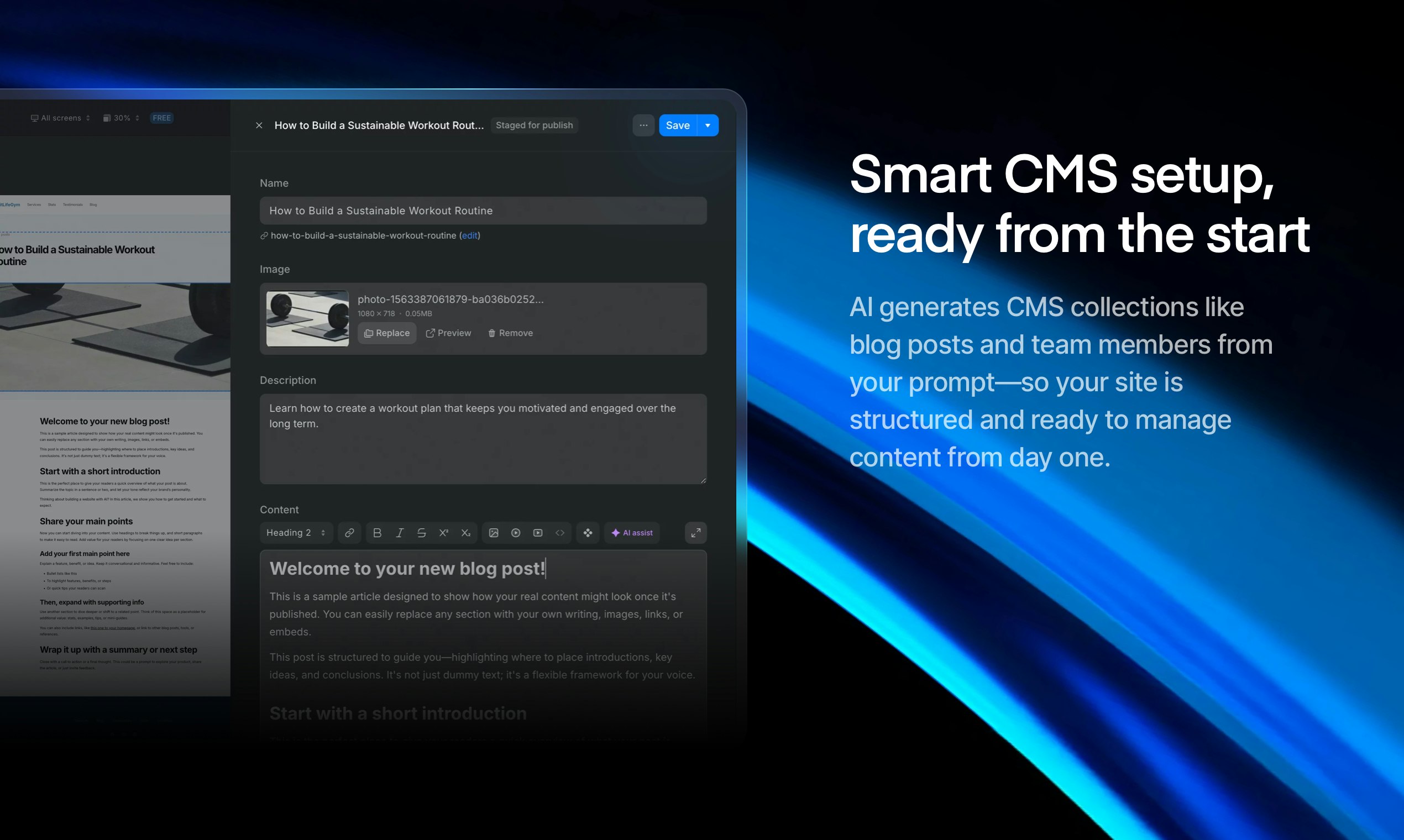
- Open-source CMS
- Self-hosting option
In their own words
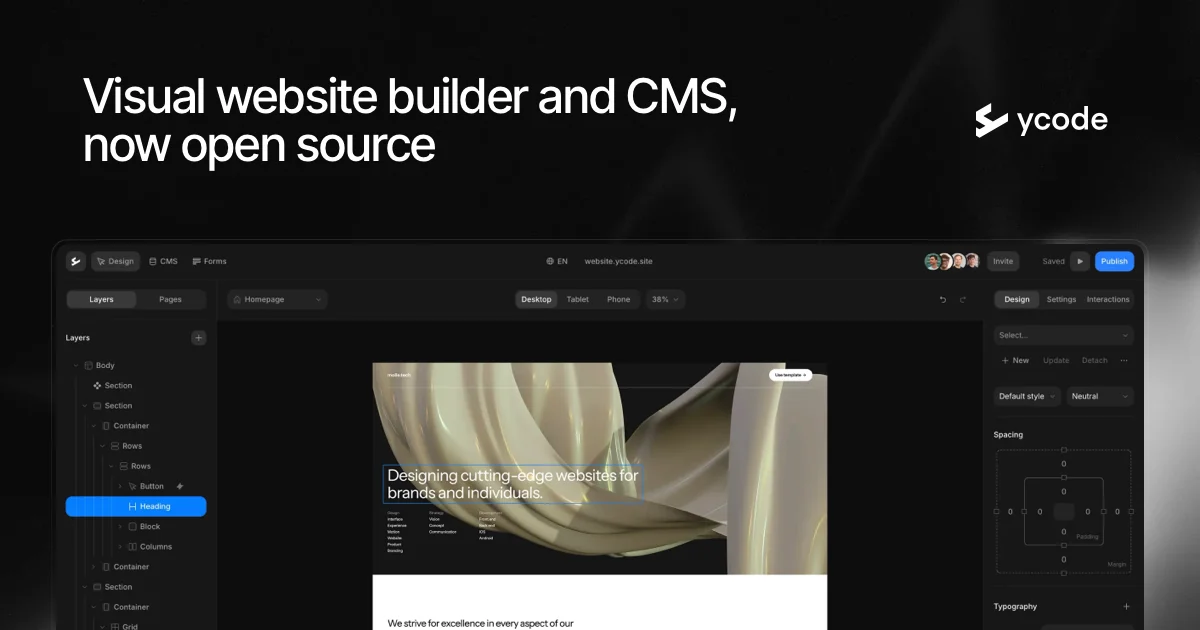
Visual website builder and CMS, now open source
Use Ycode Cloud to get started in minutes, or self-host it on your own infrastructure.
Ycode combines a modern visual builder with the freedom of open source — so you can self-host it on your own infrastructure or use Ycode Cloud if you prefer a fully managed setup.
Commercial cues
Model
contact only
Free tier
Yes
Trial
Available
Pricing Strategy
Ycode AI offers a free Open source Ycode platform tier, with Fully managed Ycode hosting handled through custom pricing.
- • A free open-source tier attracts users who prioritize self-hosting and infrastructure control.
- • Custom pricing for managed hosting serves users preferring convenience and cloud operations.
- • Visible limits define plan boundaries.
Operator context
Operating setup
Founded
Jun 2025
Platform
Web app
Audience
Creators
Social footprint
Tech stack
Market demand
Ycode AI keyword demand
5 keywords
Market demand is Starter-tier market intelligence.
Derived from this product’s latest SimilarWeb keyword mix — directional demand, not proof.
Builder Strategy
- Strategy Type
- Wedge Expand
- Stage
- Vc Growth
- Effort
- Small Team
About Ycode AI Expand
Ycode AI provides a visual website builder and an open-source CMS, enabling creators and agencies to build custom websites without writing code. It offers the unique advantage of open-source flexibility, allowing users to self-host their projects on their own infrastructure.
For those who prefer a hands-off approach, a fully managed cloud hosting option is also available. This dual offering positions Ycode AI as a strong alternative to more restrictive platforms, serving users who prioritize control over their website's design, content, and deployment environment.