
A TypeScript framework for building and deploying Model Context Protocol (MCP) servers.


Product memo
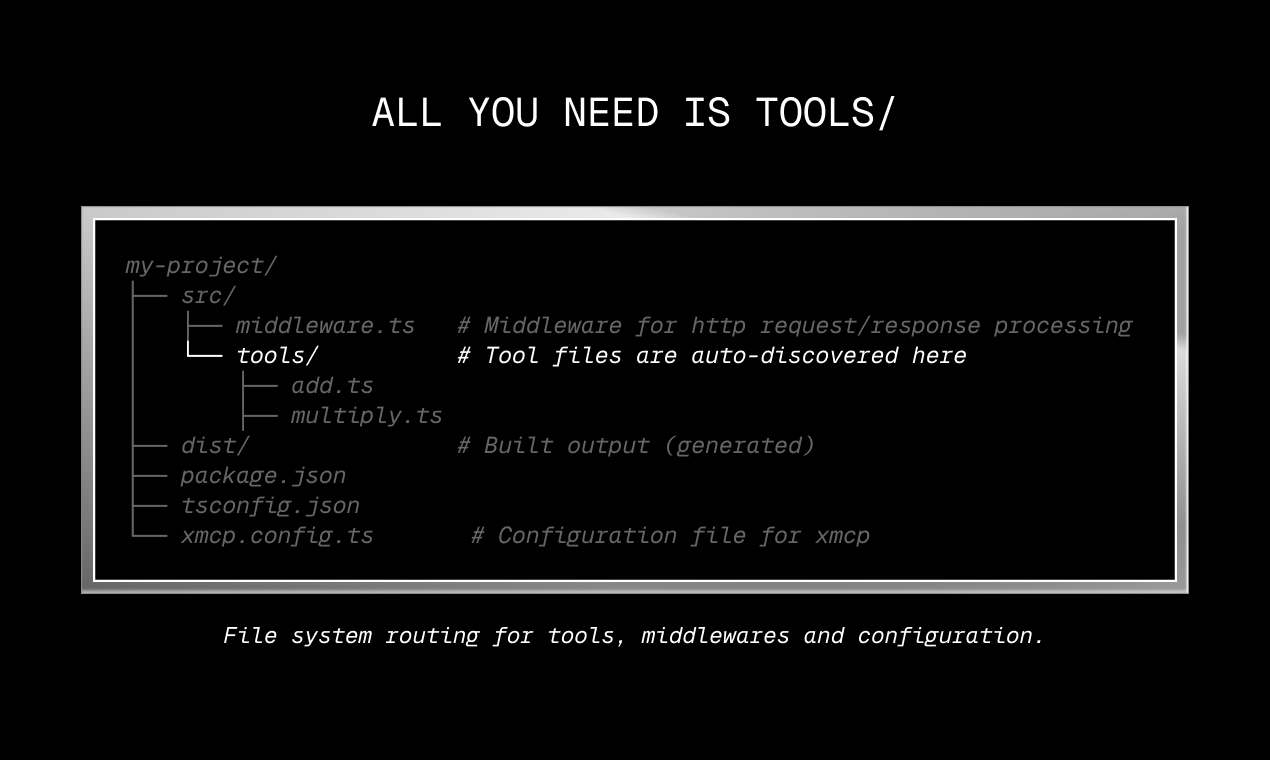
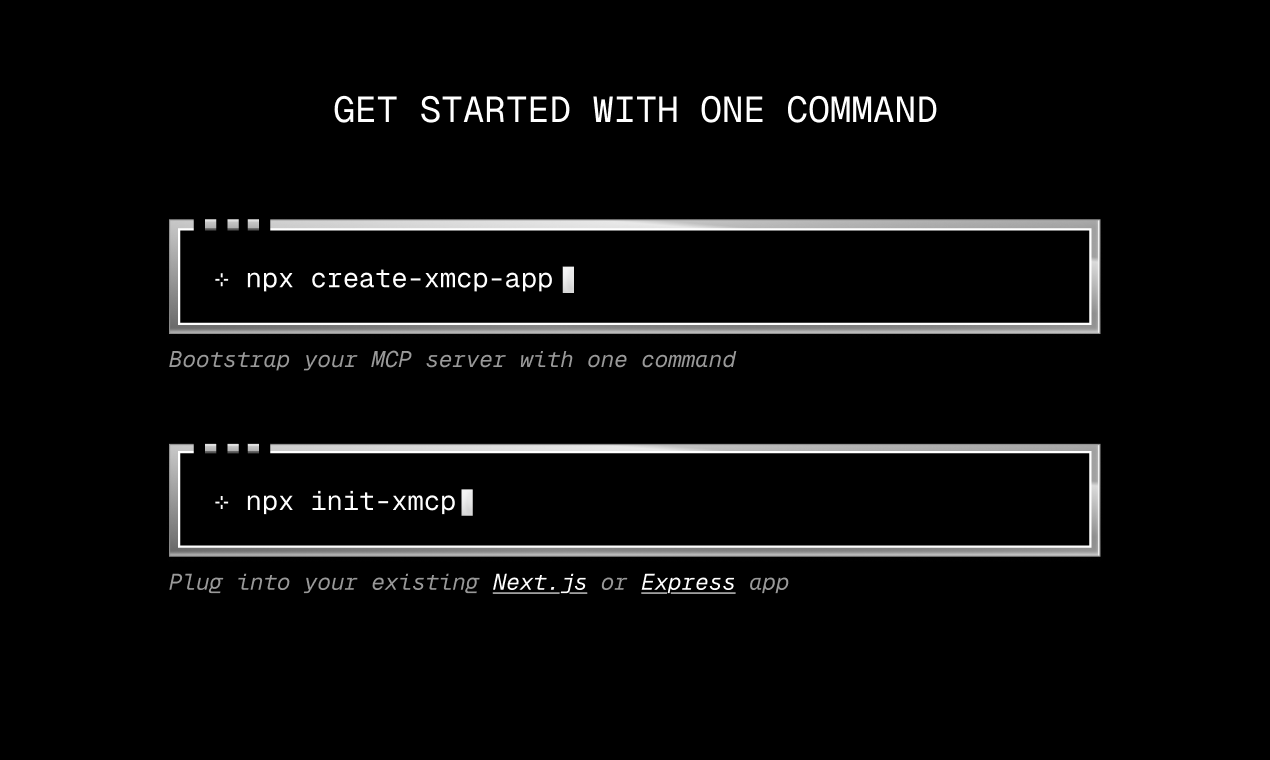
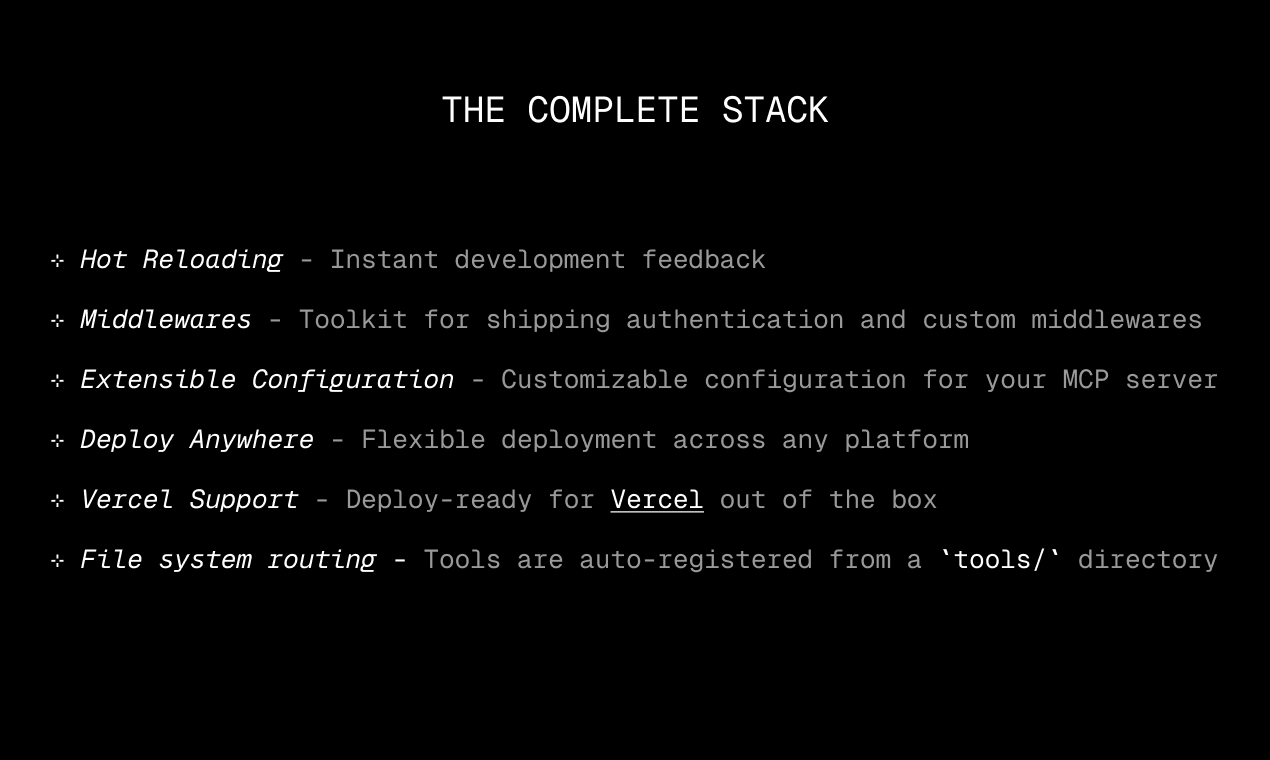
Developers building for the Model Context Protocol (MCP) ecosystem use this open-source TypeScript framework to simplify server and tool deployment. It provides a complete stack with file system routing, middleware support, and integrations like Auth and Polar. This setup helps shorten the development lifecycle from initial build to production.
For who
Developers building MCP applications
Solves what
Streamlines development and deployment of MCP servers and tools
- TypeScript framework
- File System Routing
- Integrations with Auth/Polar
In their own words
The TypeScript framework for building & shipping MCP servers
Trusted by builders at
The complete stack to ship an MCP server
Commercial cues
Model
free only
Free tier
Yes
Trial
No
Pricing Strategy
Xmcp operates on a free, open-source model, offering its complete framework without direct monetization. It relies on community adoption and external integrations for ecosystem.
- • A free, open-source offering encourages widespread adoption and community contributions.
- • Integrations with services like Polar suggest an indirect monetization path.
- • Voluntary sponsorship keeps the core product free.
Operator context
Operating setup
Founded
Jul 2025
Platform
Web app
Audience
Developers
Social footprint
Tech stack
Market demand
xmcp keyword demand
5 keywords
Market demand is Starter-tier market intelligence.
Derived from this product’s latest SimilarWeb keyword mix — directional demand, not proof.
Builder Strategy
- Strategy Type
- Open Source Commercial
- Stage
- Pre Revenue
- Effort
- Solo Buildable
About xmcp Expand
Xmcp offers a broad, open-source TypeScript framework designed for developers focused on the Model Context Protocol (MCP) ecosystem. It provides a complete stack to build and deploy MCP servers and tools, featuring file system routing, middleware support, and extensible configuration.
The framework's positioning as a free, open-source project lowers the barrier for developers to adopt the protocol. It aims to become the standard development environment for MCP applications, fostering a specific community around its core tools and integrations.