
A Chrome extension sending website components to AI coding assistants.
Product memo
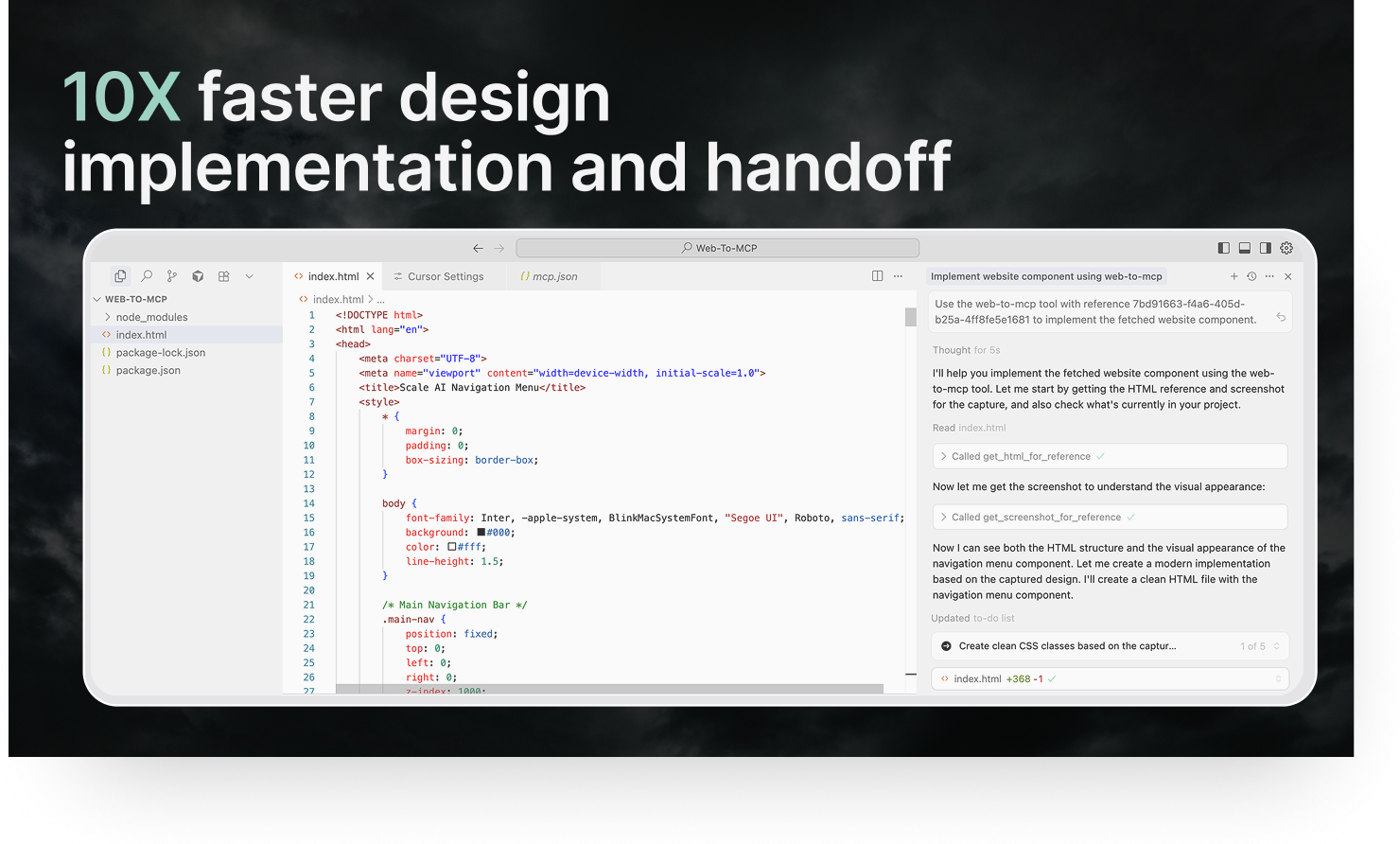
Developers and designers often struggle to translate visual designs into AI-ready code. This tool captures website components with pixel-perfect styling and context, eliminating manual descriptions and guesswork. It integrates directly with AI coding assistants via the Model Context Protocol (MCP), shortening implementation cycles and bridging the gap between design and code generation.
For who
Developers and designers bridging design and code
Solves what
Seamlessly sending website components to AI coding assistants
- Website component capture
- Direct AI assistant integration
- Pixel-perfect styling context
In their own words
Send any website component to Cursor, or Claude Code, in one click
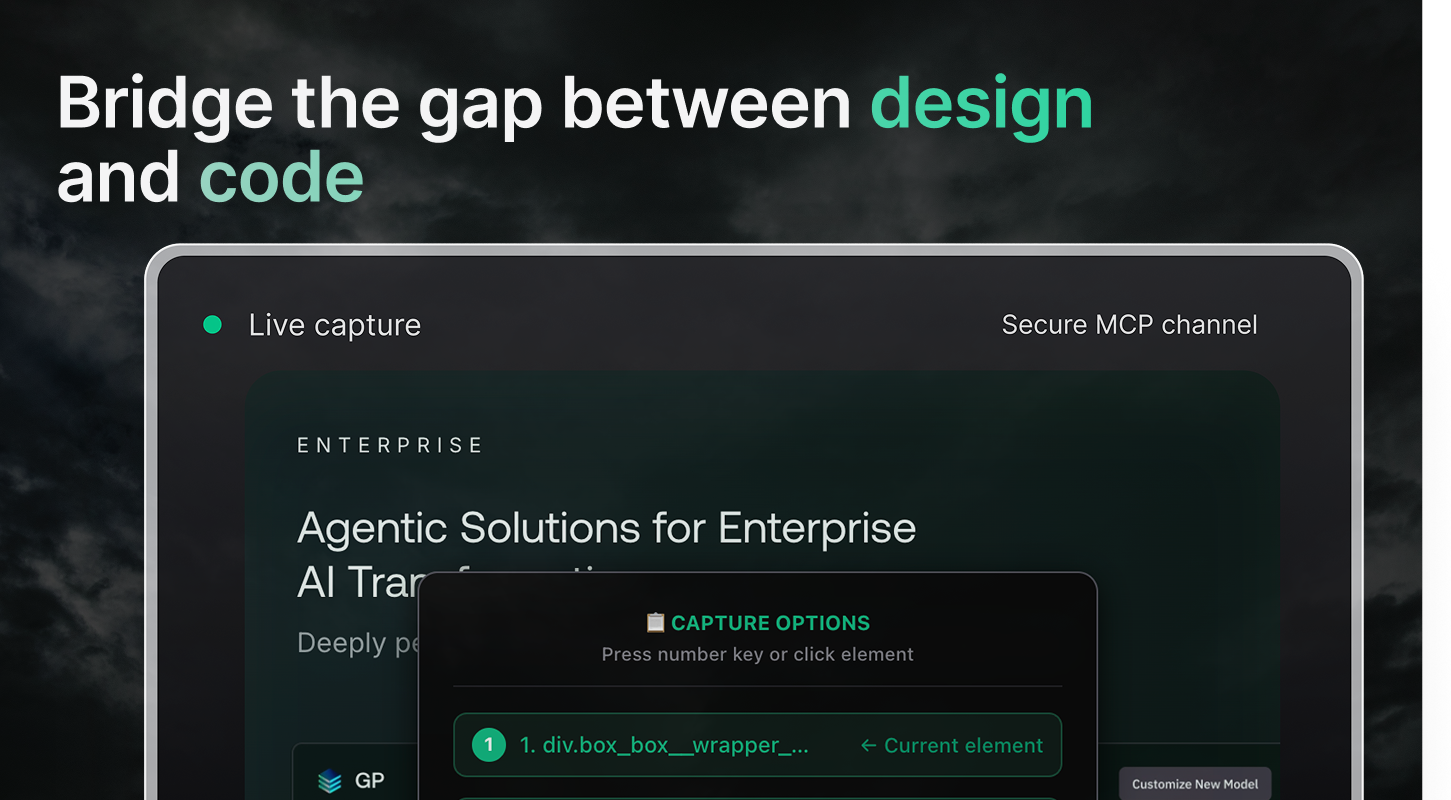
No more screenshots, descriptions, or guesswork—just seamless visual handoffs that your AI coding assistant understands perfectly. Bridge the gap between design and code.
Bridge the gap between design and code.
Commercial cues
Model
subscription
Free tier
Yes
Trial
No
Pricing Strategy
- • An annual discount incentivizes longer-term user commitment.
- • Free tier lowers testing friction.
Operator context
Team
Indie / lean
Founded
Sep 2025
Platform
Browser extension
Audience
Developers
Public footprint
Builder Strategy
- Strategy Type
- Niche Specialist
- Stage
- Bootstrapped Lean
- Effort
- Solo Buildable
About Web to MCP Expand
Web to MCP helps developers and designers simplify the handoff from visual design to AI code generation. It captures website components, including their full styling and context, and sends them directly to AI coding assistants like Cursor and Claude Code.
This integration uses the Model Context Protocol (MCP) to ensure accuracy and reduce manual effort. The product's positioning as a niche specialist, coupled with its freemium model, makes it an accessible tool for teams looking to shorten their development workflows and eliminate friction in the design-to-code process.