
Product memo
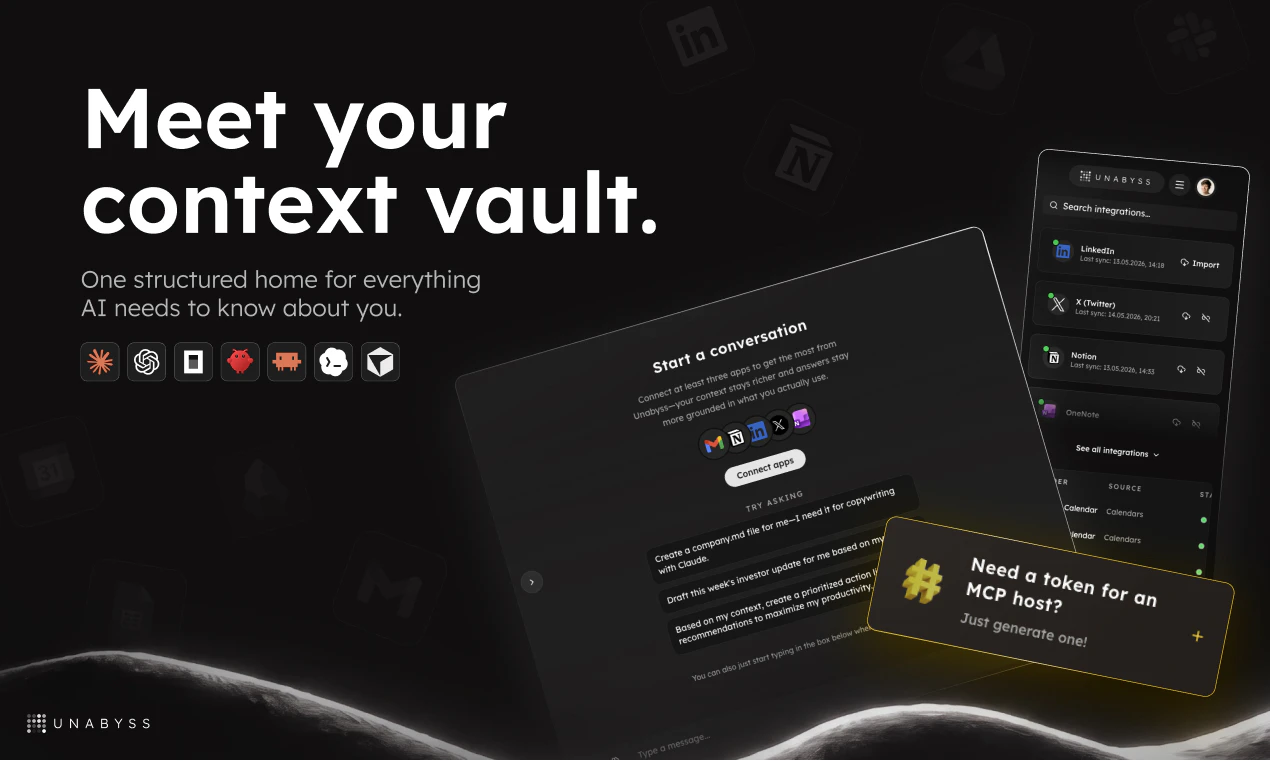
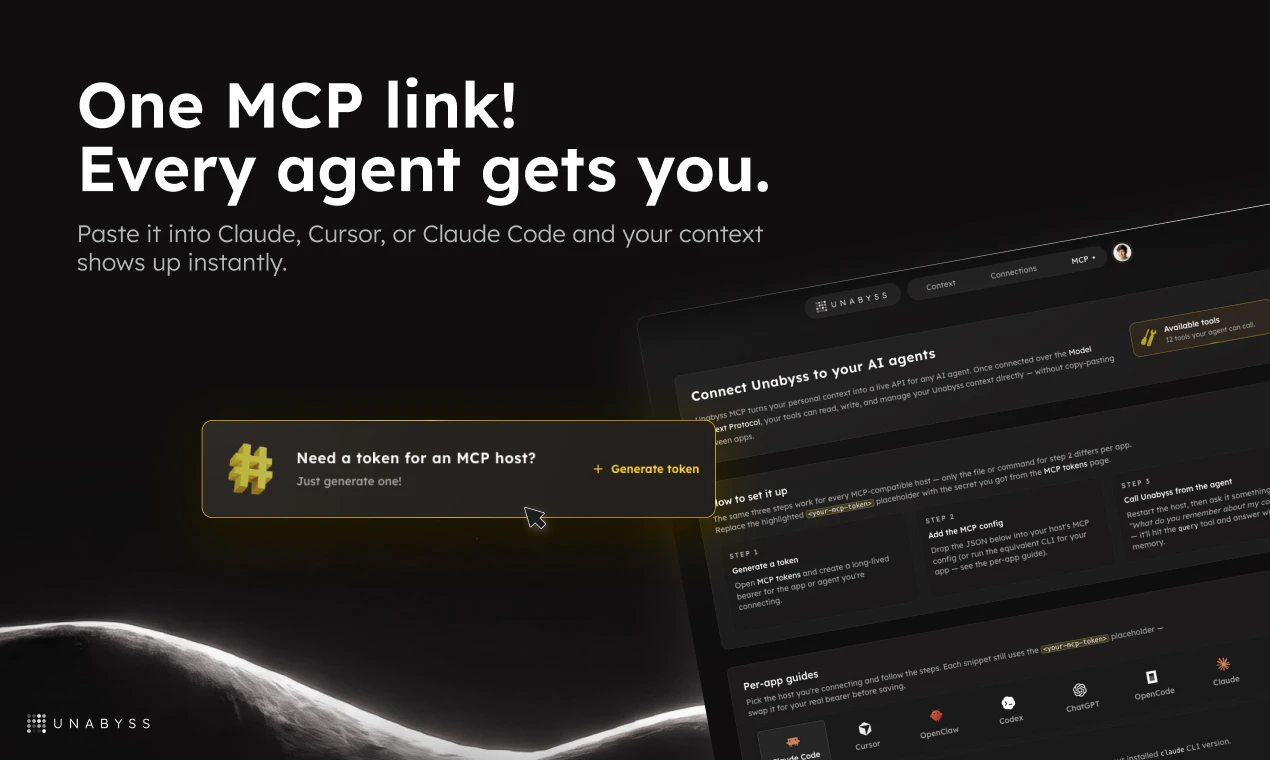
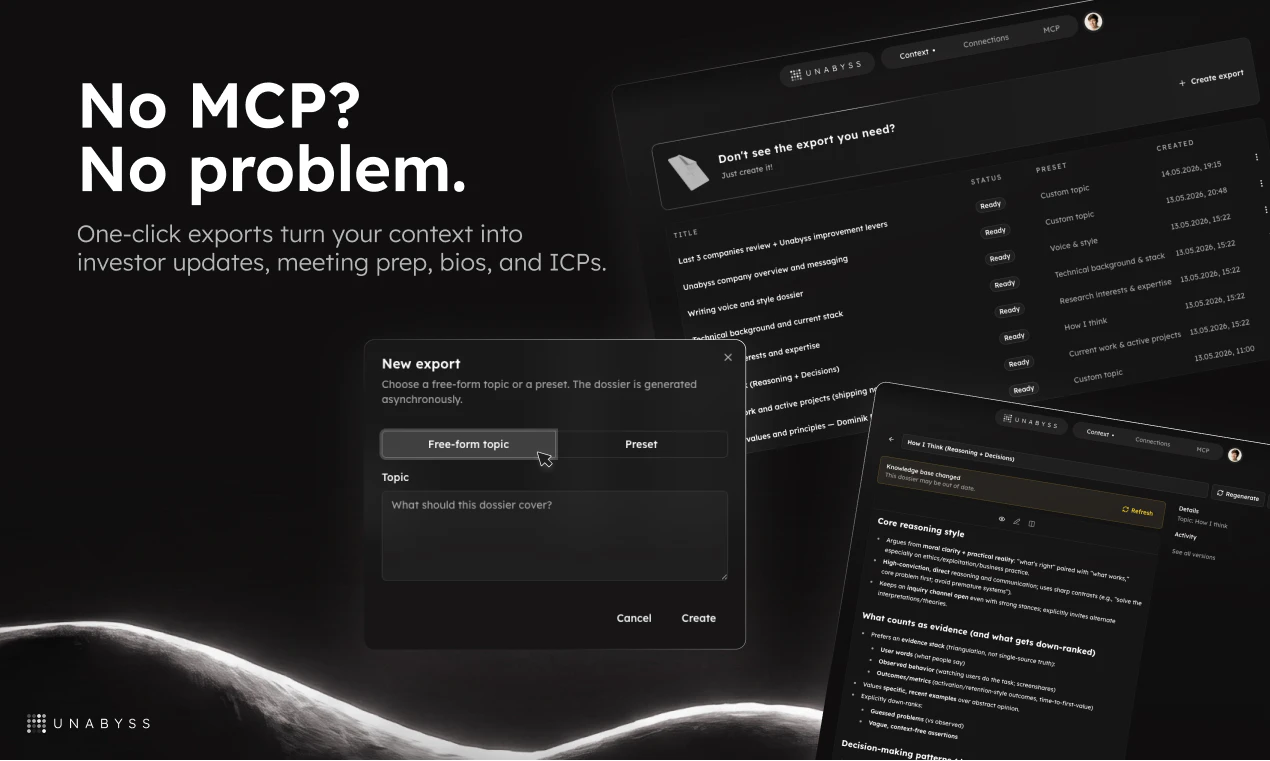
AI users and developers often struggle with fragmented, outdated information. Unabyss solves this by providing a self-updating context layer, pulling data from hundreds of connected apps. It delivers a structured, permissioned context to AI agents and LLMs via MCP, ensuring more accurate and relevant AI interactions. This approach moves beyond basic RAG by offering granular control over context segmentation and retrieval.
For who
AI users and developers
Solves what
Outdated and fragmented AI context by providing a self-updating, structured context layer.
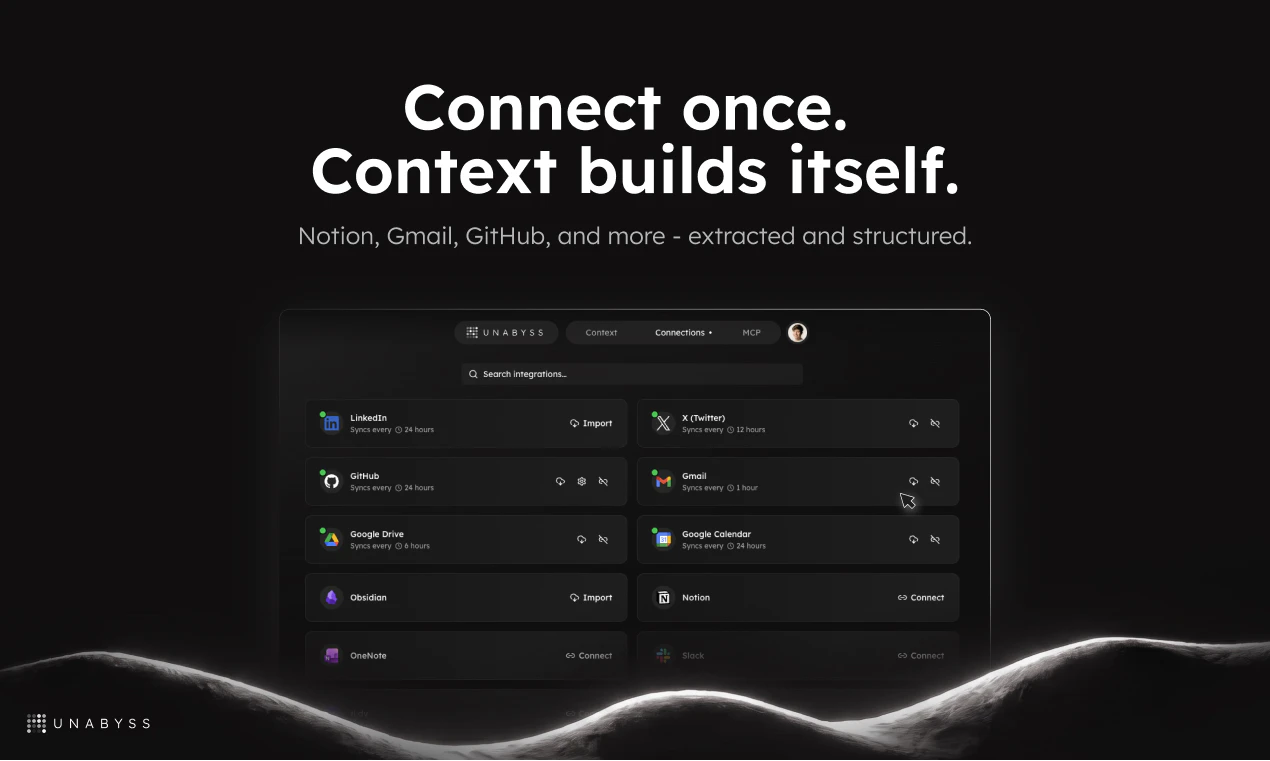
- Connects to hundreds of apps
- Automatic context segmentation
- Efficient retrieval via MCP
In their own words
Your context headquarter.
Self-updating · Available via MCP to agents and LLMs · Segmented
Commercial cues
Model
usage based
Free tier
No
Trial
Available
Pricing Strategy
- • Usage-based pricing aligns cost directly with the value derived from context requests.
- • Listed plans make pricing easy to compare.
Operator context
Operating setup
Founded
May 2026
HQ
Poland
Platform
API
Audience
Developers
Social footprint
Tech stack
Builder Strategy
- Strategy Type
- Niche Specialist
- Stage
- Vc Growth
- Effort
- Small Team
About Unabyss Expand
Unabyss addresses the challenge of outdated and fragmented information in AI applications by offering a self-updating, structured context layer. It serves AI users and developers who need to feed their AI agents and large language models (LLMs) with current, relevant data.
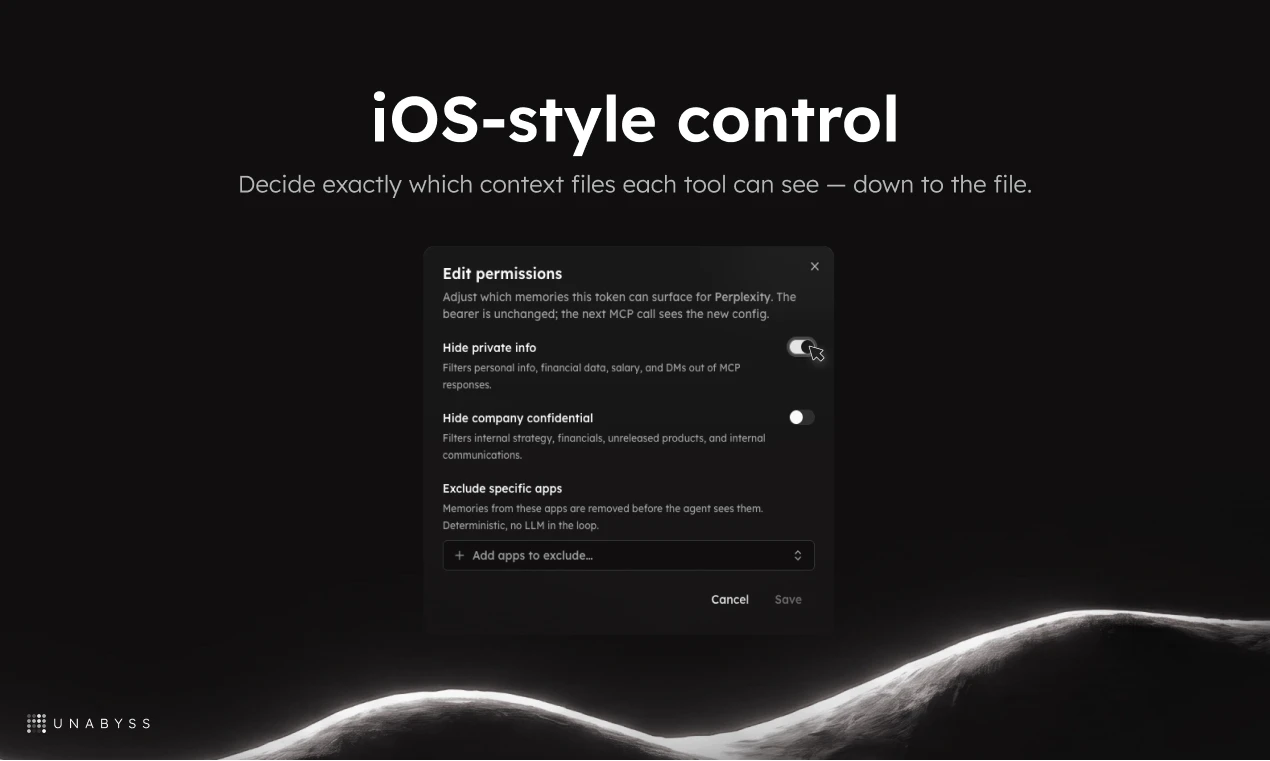
The platform connects to hundreds of applications, pulling in information and segmenting it by topic, confidence, and sensitivity. This ensures efficient retrieval and optimized token usage, moving beyond basic retrieval-augmented generation (RAG) by adding a permission layer for context access.
Its pricing strategy, which includes free credits, encourages adoption by allowing users to experience the benefits of unified context without immediate commitment.