A unified API for AI translation, OCR, and document processing across multiple engines.
Product memo
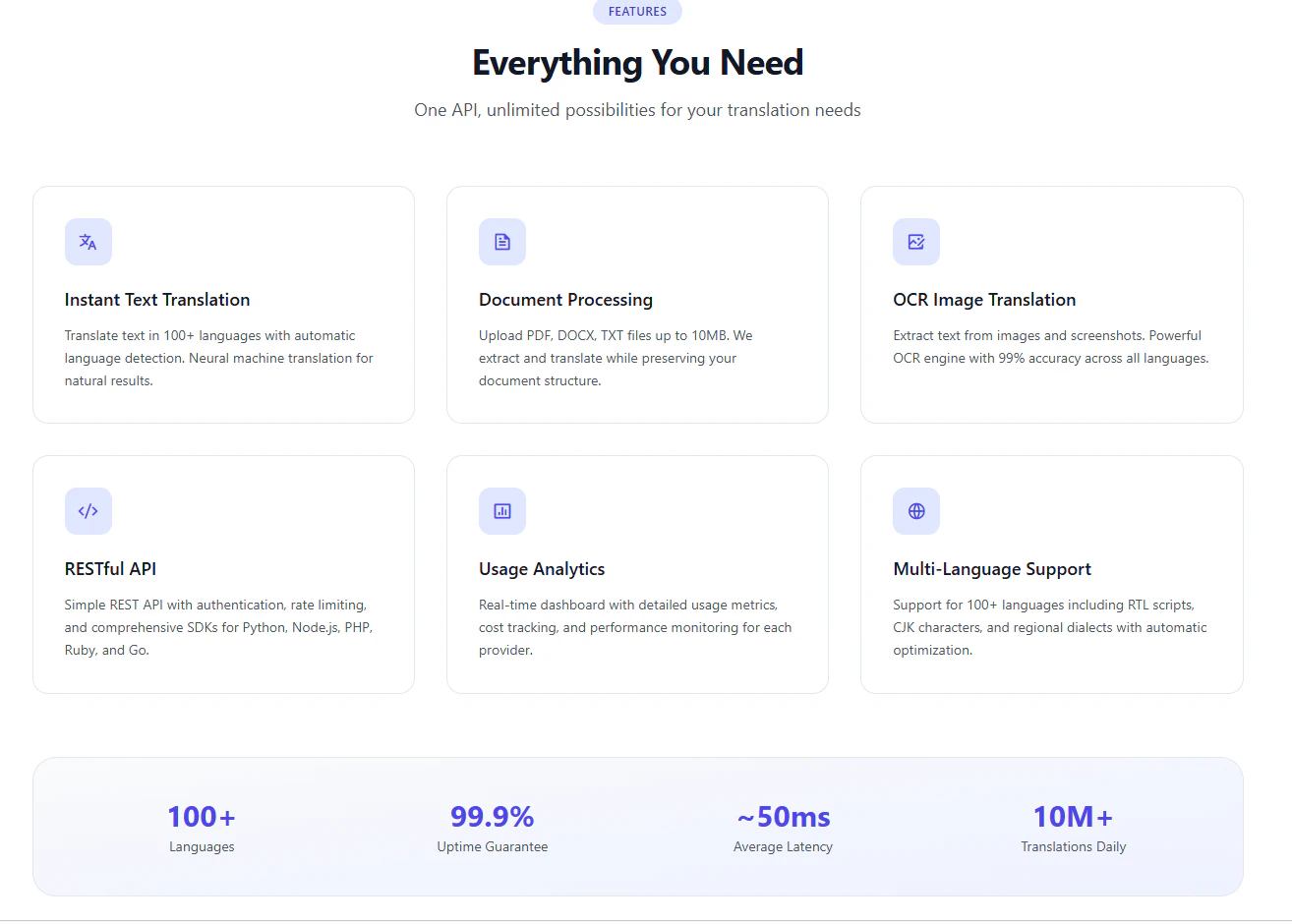
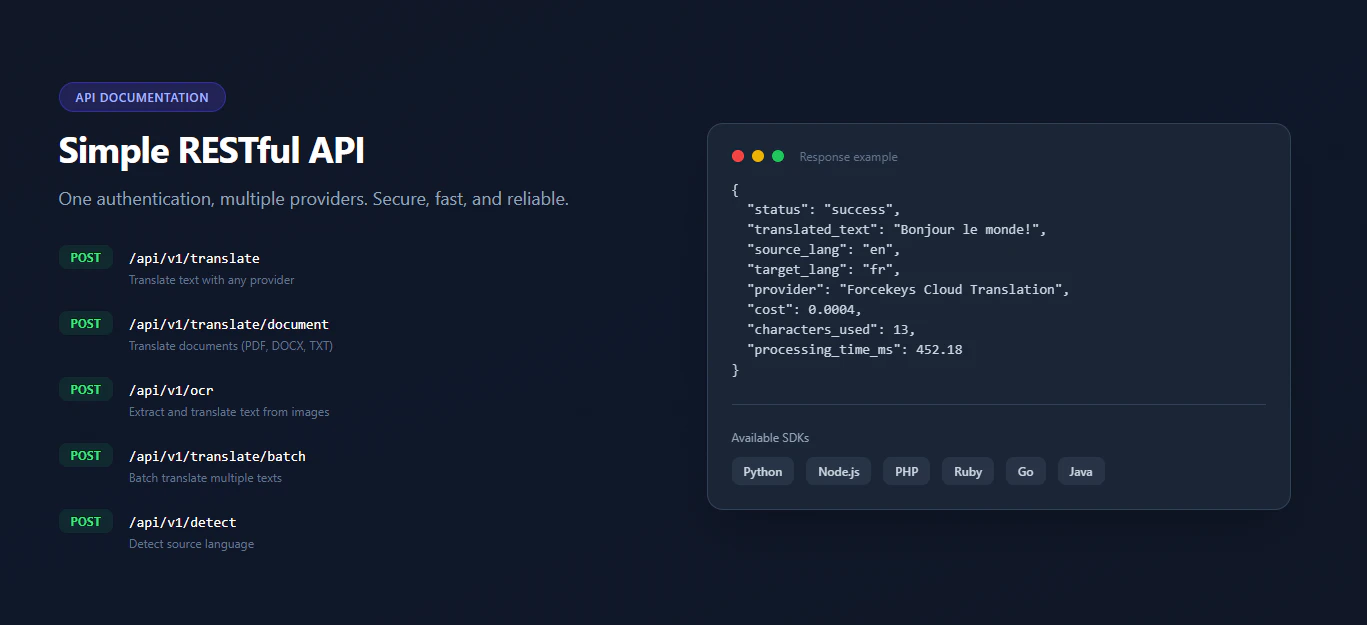
Developers and businesses gain a single integration point for AI-powered translation, OCR, and document processing. This API unifies access to multiple leading translation engines, simplifying complex workflows by abstracting provider-specific nuances. Users can easily switch engines and track usage across all services, simplifying their translation infrastructure.
For who
Developers and businesses needing translation services
Solves what
Unified API for AI-powered translation, OCR, and document processing
- Multi-provider translation gateway
- OCR image translation
- Document processing
In their own words
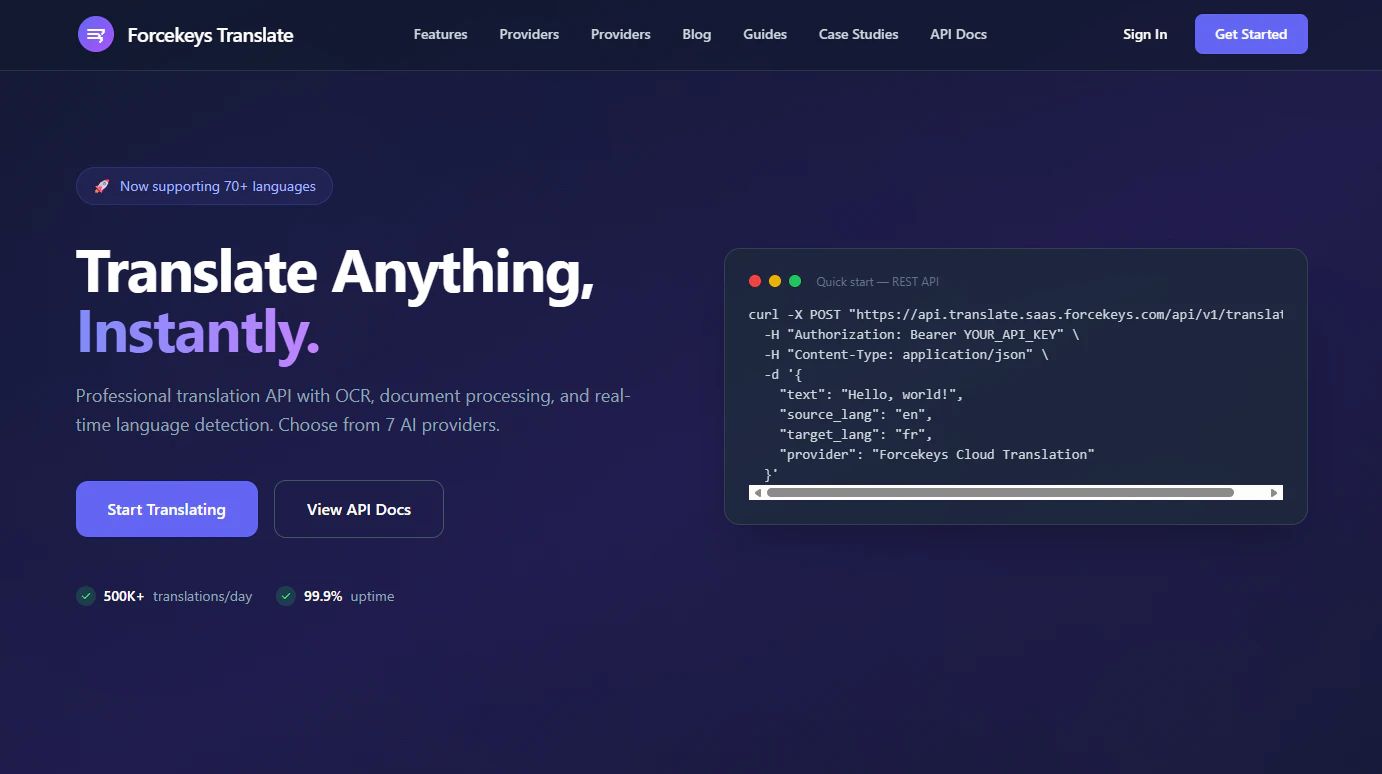
Translate Anything,
Professional translation API with OCR, document processing, and real-time language detection. Choose from 7 AI providers.
One API, unlimited possibilities for your translation needs
Commercial cues
Model
subscription
Free tier
Yes
Trial
No
Pricing Strategy
Translate Cloud API offers a free tier; paid plan details are not publicly priced.
- • Per-character pricing aligns costs directly with translation volume.
- • Provider-specific tiers allow users to optimize costs based on engine choice.
- • A free tier removes adoption friction for initial testing and low-volume use.
Operator context
Founded
May 2026
Platform
API
Audience
Developers
Public footprint
Tech stack
Builder Strategy
- Strategy Type
- Niche Specialist
- Stage
- Pre Revenue
- Effort
- Solo Buildable
About Translate Cloud API Expand
Translate Cloud API provides developers and businesses with a unified API for AI-powered translation, OCR, and document processing. It acts as a single gateway to multiple leading AI translation engines, abstracting away provider-specific integration complexities.
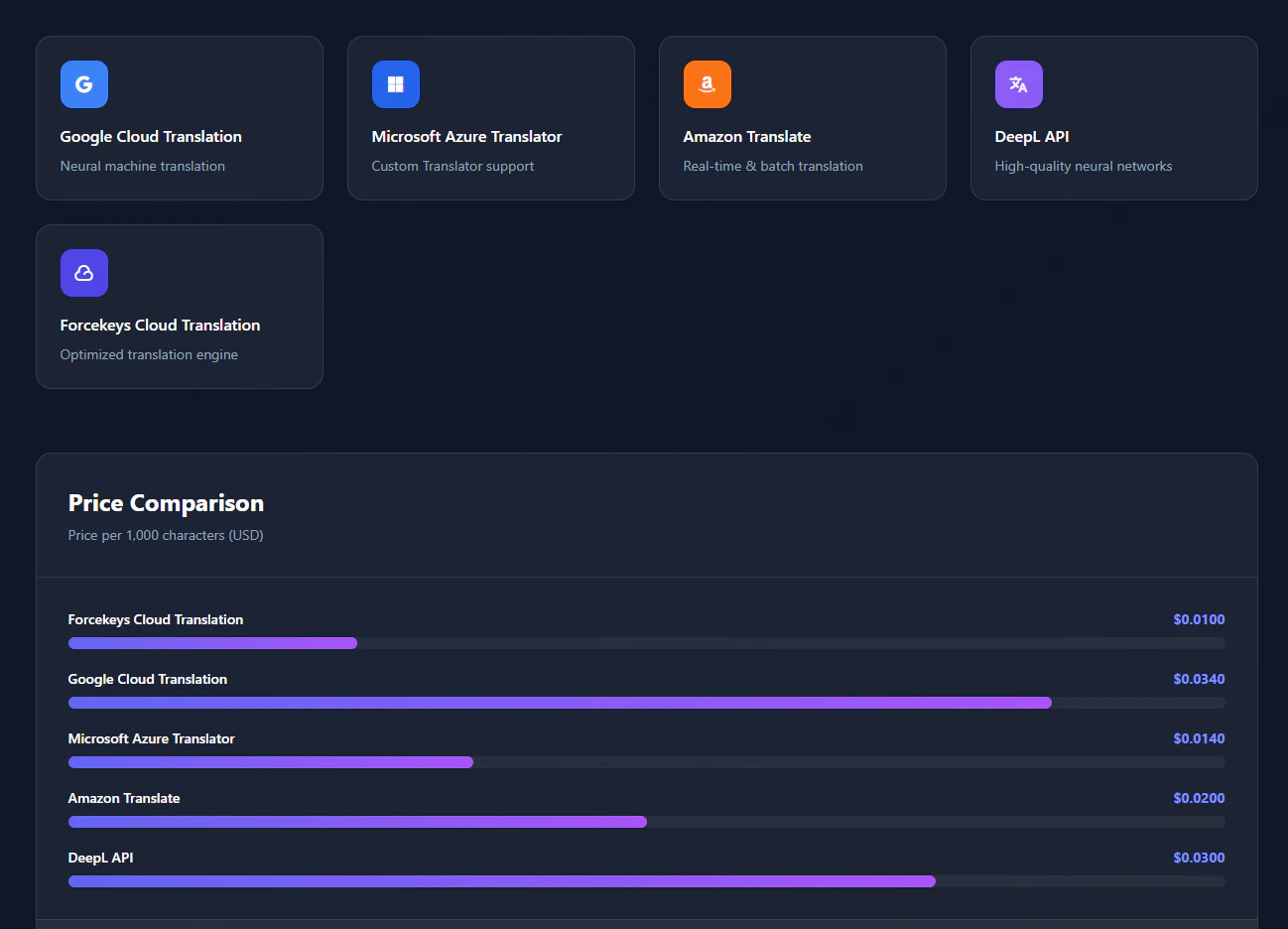
This allows users to easily switch between services like Google Cloud Translation, Microsoft Azure Translator, Amazon Translate, and DeepL API, while tracking their usage from one dashboard. The product's positioning simplifies the adoption of advanced translation capabilities, making it easier to build multilingual applications without managing multiple vendor integrations.