
Self-hosted, open-source file management for secure storage, sharing, and collaboration.
Product memo
Organizations needing full control over their data use Sync-in for secure file storage, sharing, and collaboration. It offers an open-source, self-hosted platform, allowing teams to manage files with granular permissions. This approach removes reliance on third-party cloud providers, serving buyers focused on data governance and privacy.
For who
Organizations needing secure, self-hosted file management
Solves what
Securely store, share, sync, and collaborate on files with full data control.
- Open-source platform
- Data governance & permissions
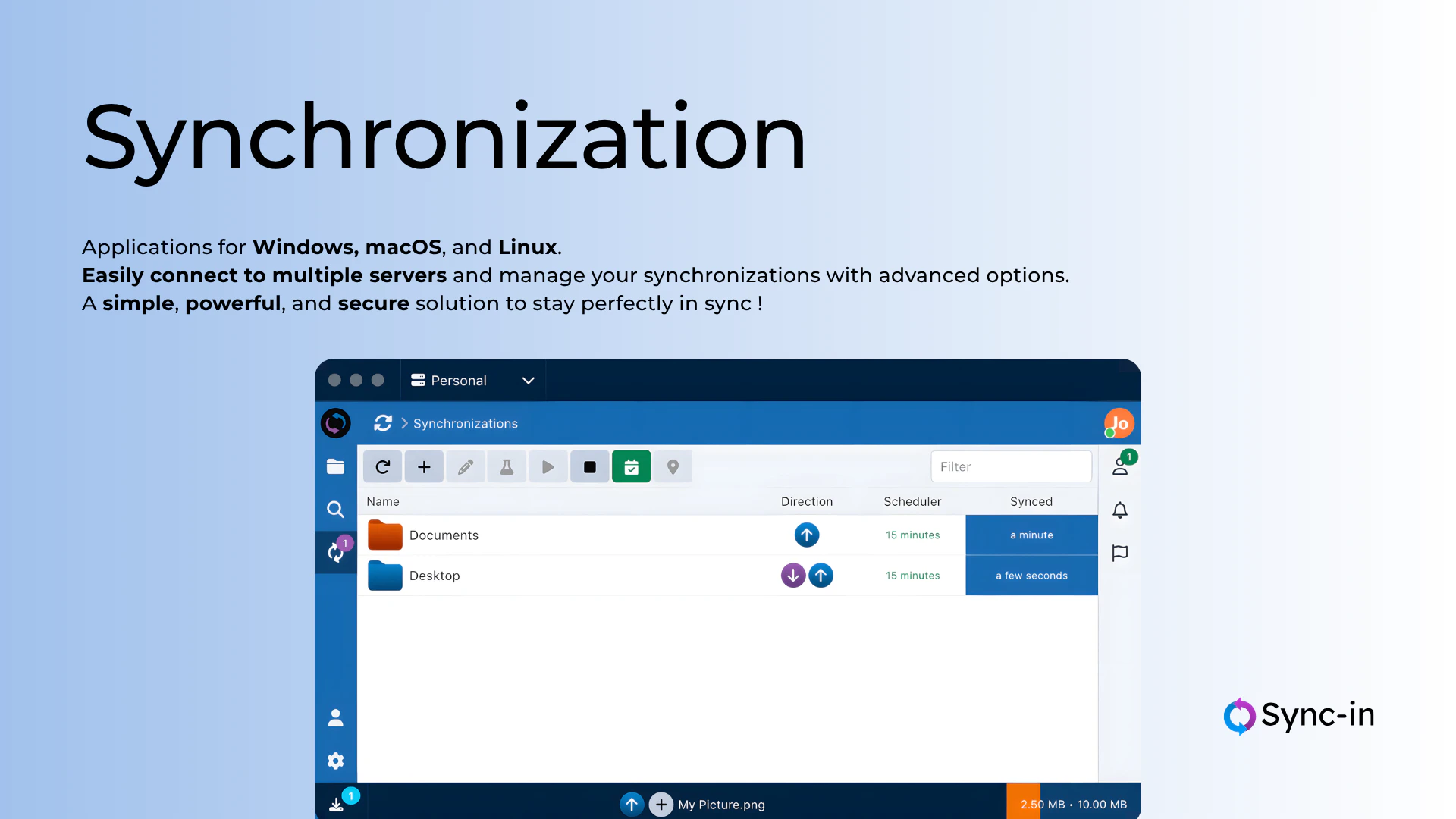
- Cross-platform access
In their own words
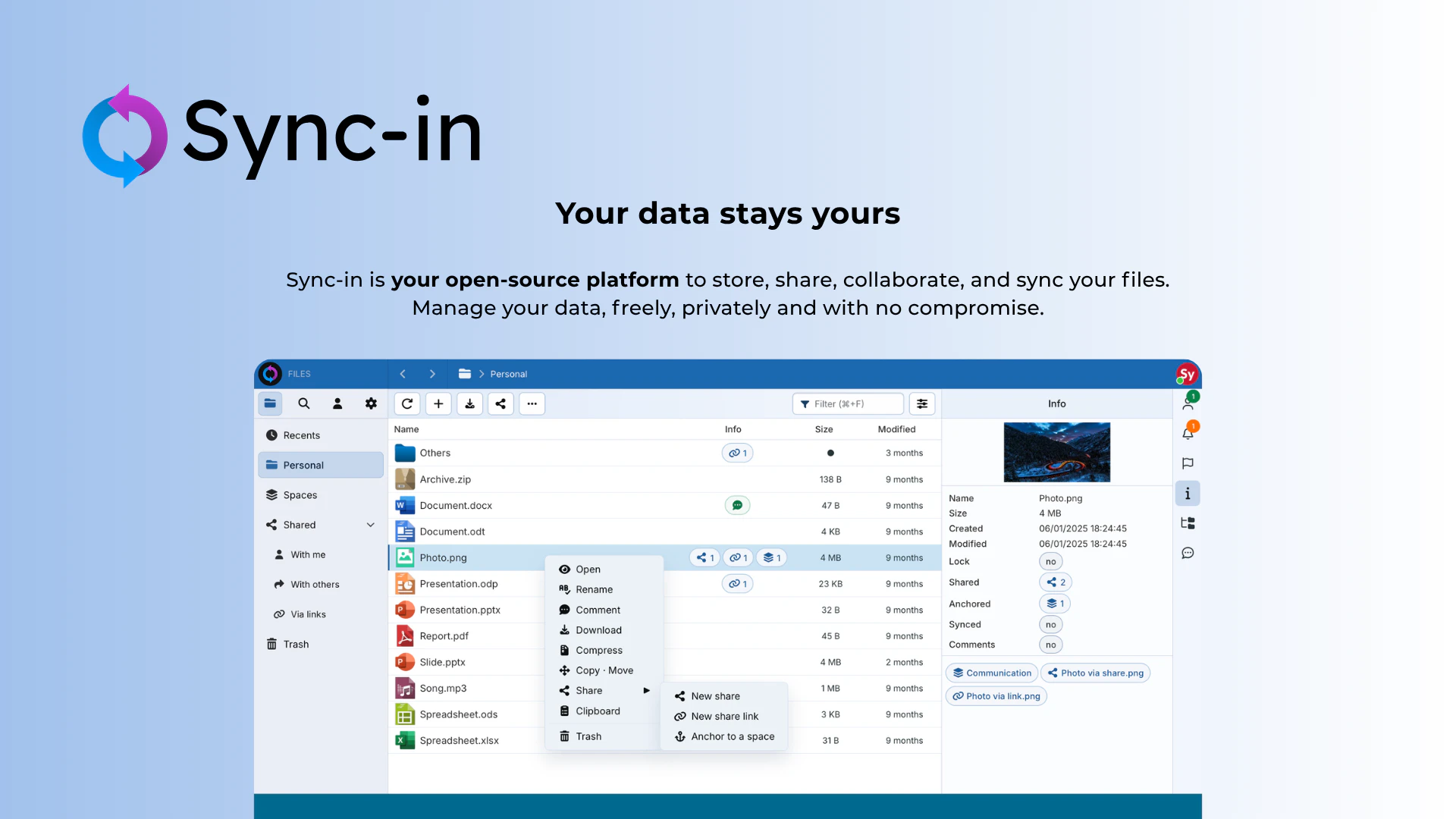
Your data stays yours
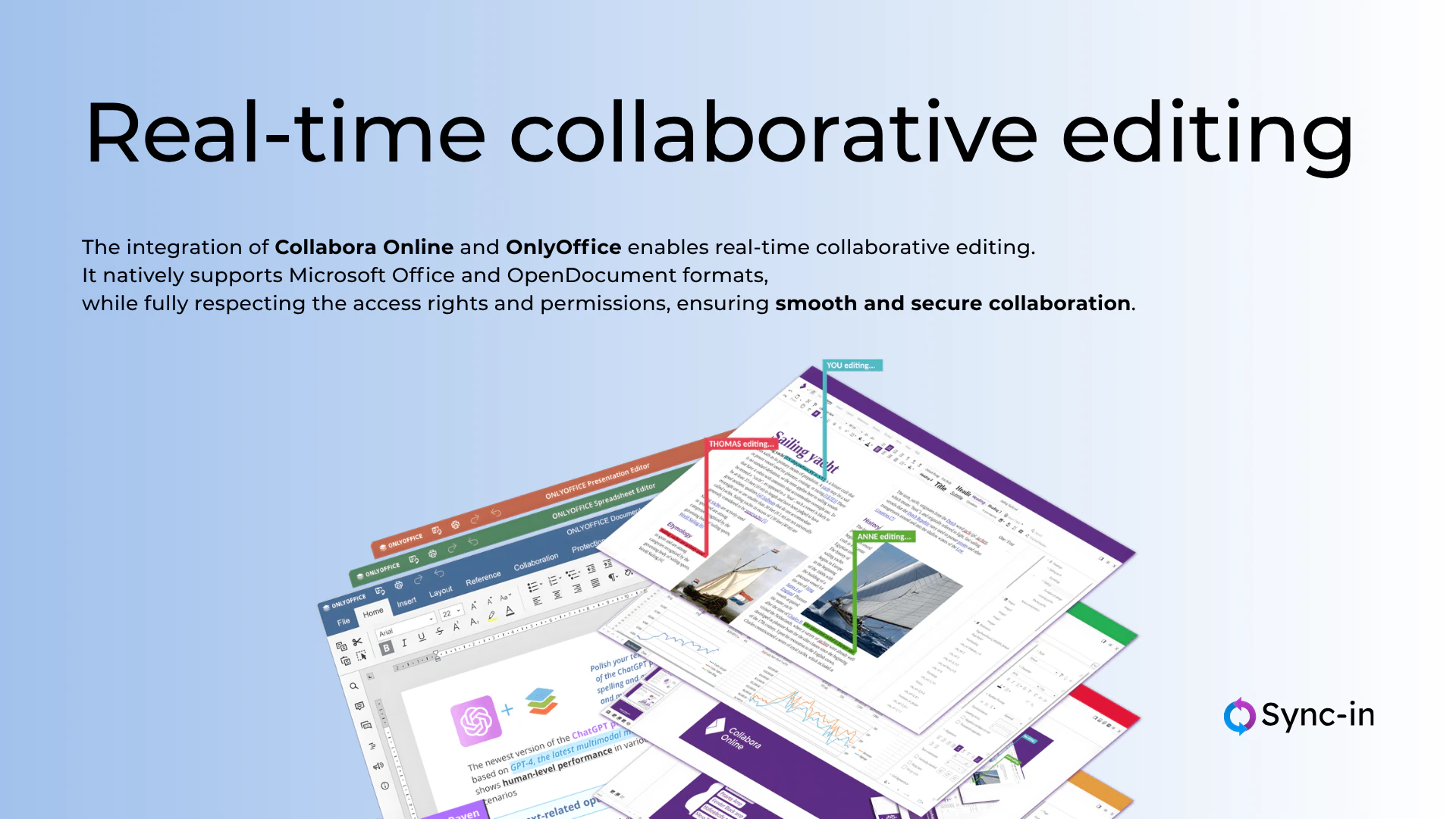
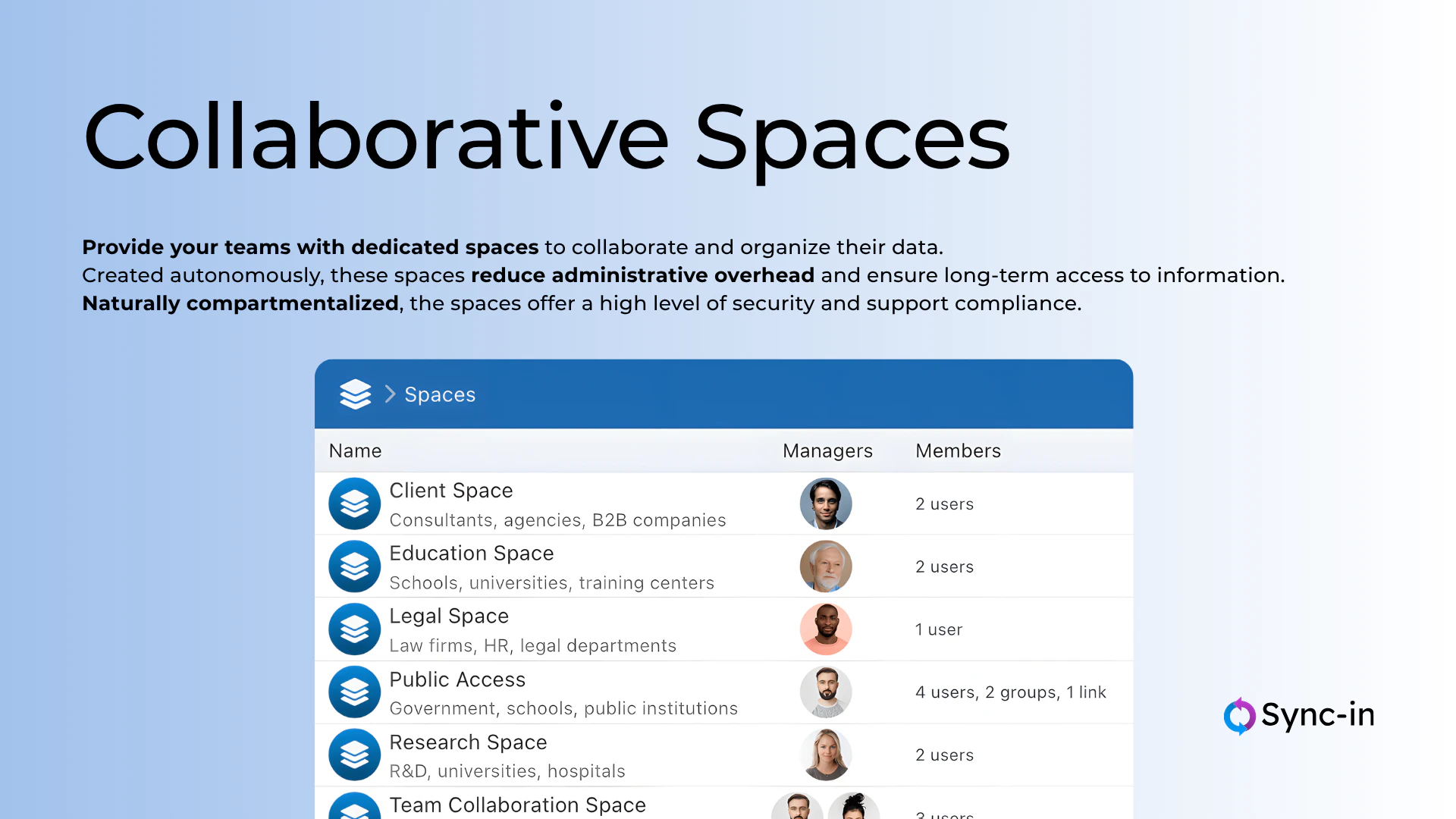
Sync-in is your open-source platform to store, share, collaborate, and sync your files.
Manage your data, freely, privately and with no compromise.
Commercial cues
Model
free only
Free tier
Yes
Trial
No
Pricing Strategy
Sync-in operates on a free, open-source, self-hosted model, giving organizations complete data control without licensing costs.
- • Self-hosting provides data sovereignty, attracting privacy-focused organizations.
- • Free Self-hosted tier lowers testing friction.
- • Voluntary sponsorship keeps the core product free.
Operator context
Operating setup
Team
Indie / lean
LLM classification
Founded
Apr 2026
Platform
Web app
Audience
Developers
Social footprint
Tech stack
Builder Strategy
- Strategy Type
- Open Source Commercial
- Stage
- Bootstrapped Lean
- Effort
- Small Team
About Sync-in Expand
Sync-in offers an open-source, self-hosted product for organizations that prioritize data control and privacy in their file management. It allows teams to securely store, share, and synchronize files, providing granular permissions to maintain data governance.
This directly addresses concerns about third-party data handling, giving users the ability to manage their own infrastructure. The platform's open-source nature fosters transparency and flexibility, making it a practical option for those seeking an alternative to cloud-based file services.