
Unified LLM API for AI developers, handling routing, billing, and monetization.
Product memo
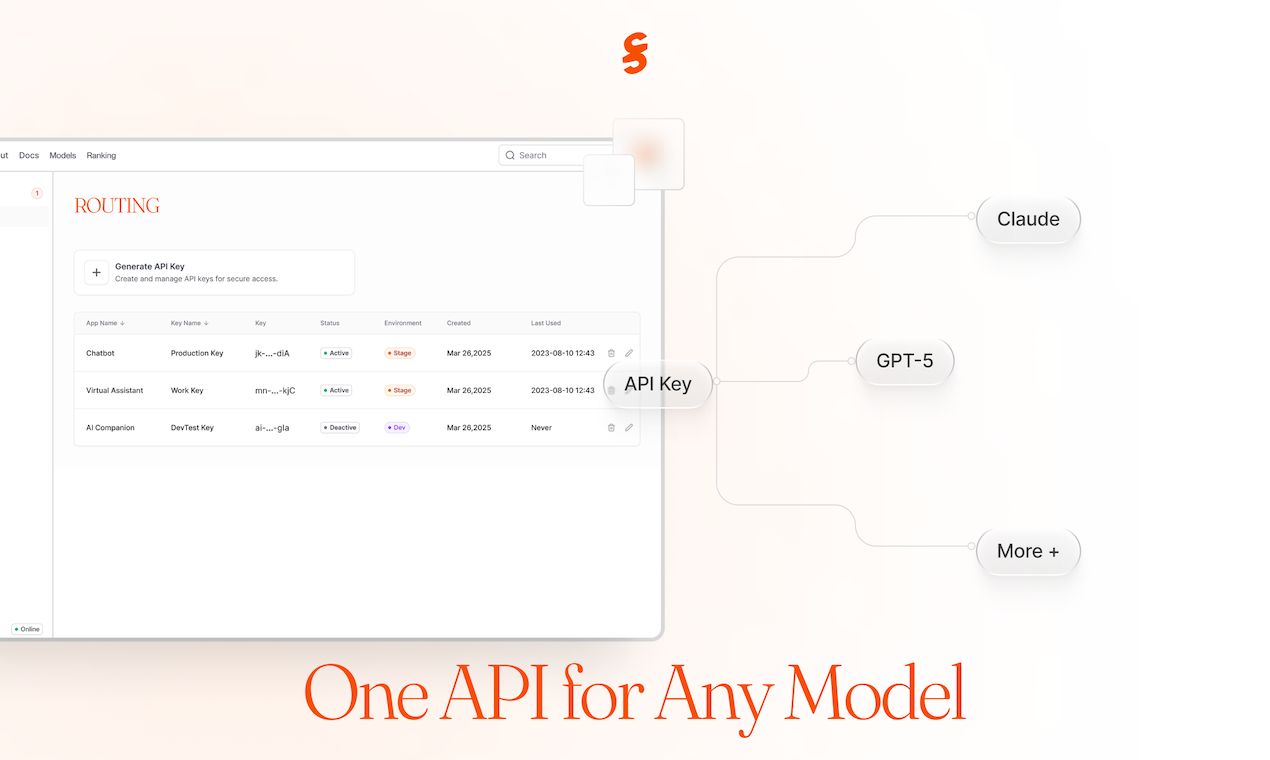
AI developers and startups use Sudo AI to simplify large language model integration. It unifies access to providers like OpenAI, Anthropic, and Gemini, managing routing, latency, and throughput. The platform also offers built-in monetization tools, letting developers generate revenue through subscriptions, usage-based billing, or AI-native ads without heavy development work.
For who
AI developers and startups
Solves what
Simplifies LLM integration, routing, and monetization for AI applications.
- Unified LLM API
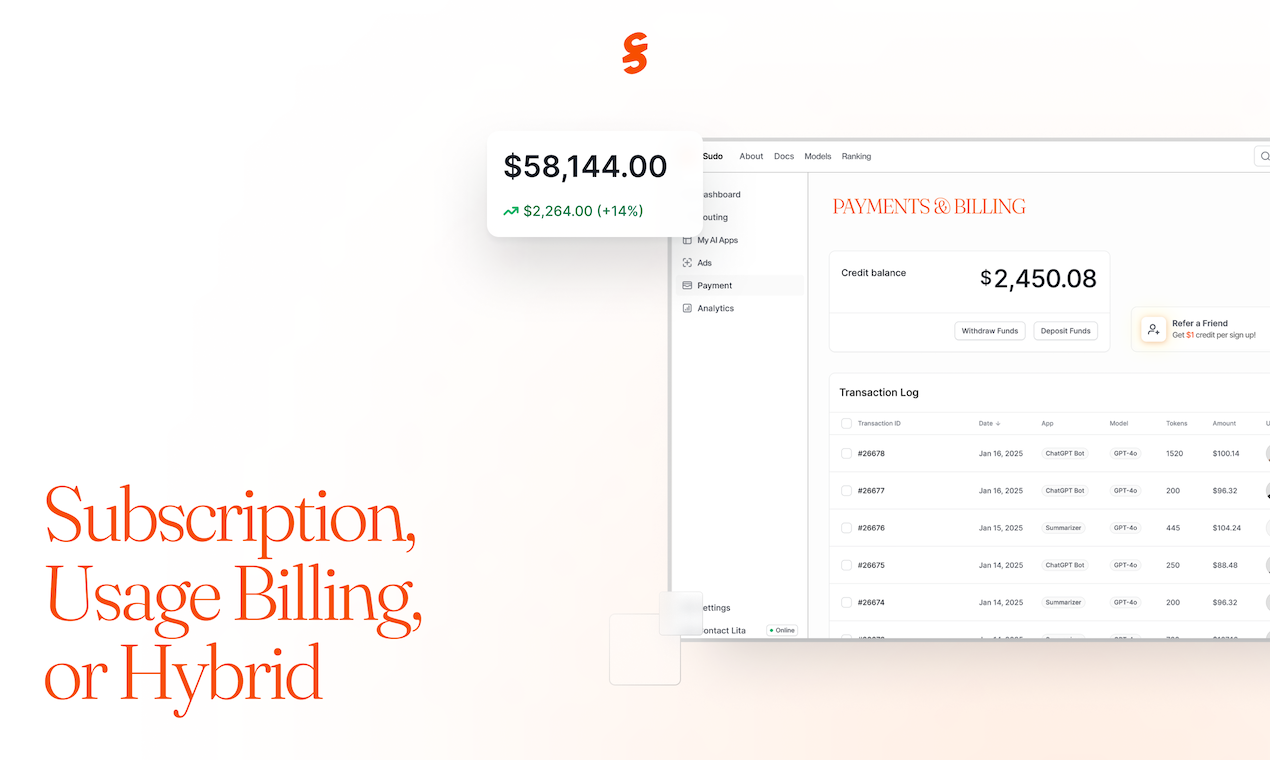
- Flexible billing models
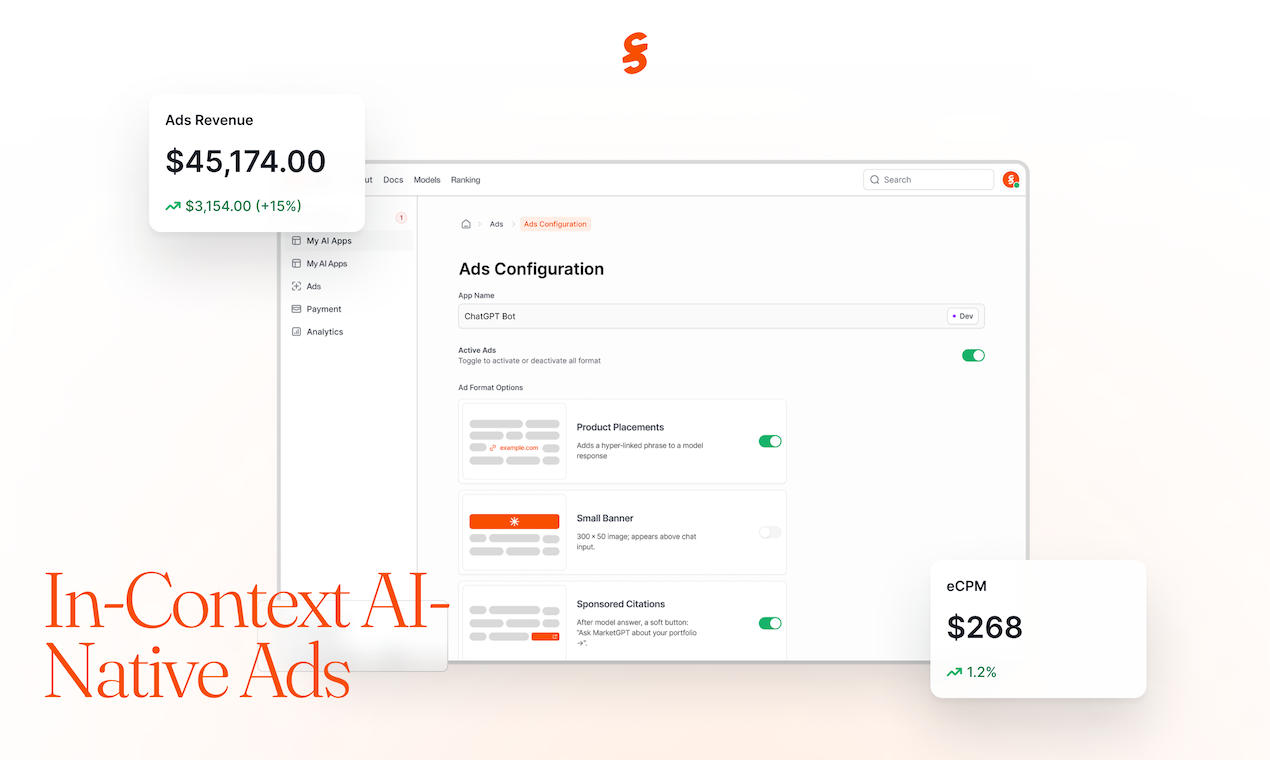
- AI-native ad integration
In their own words
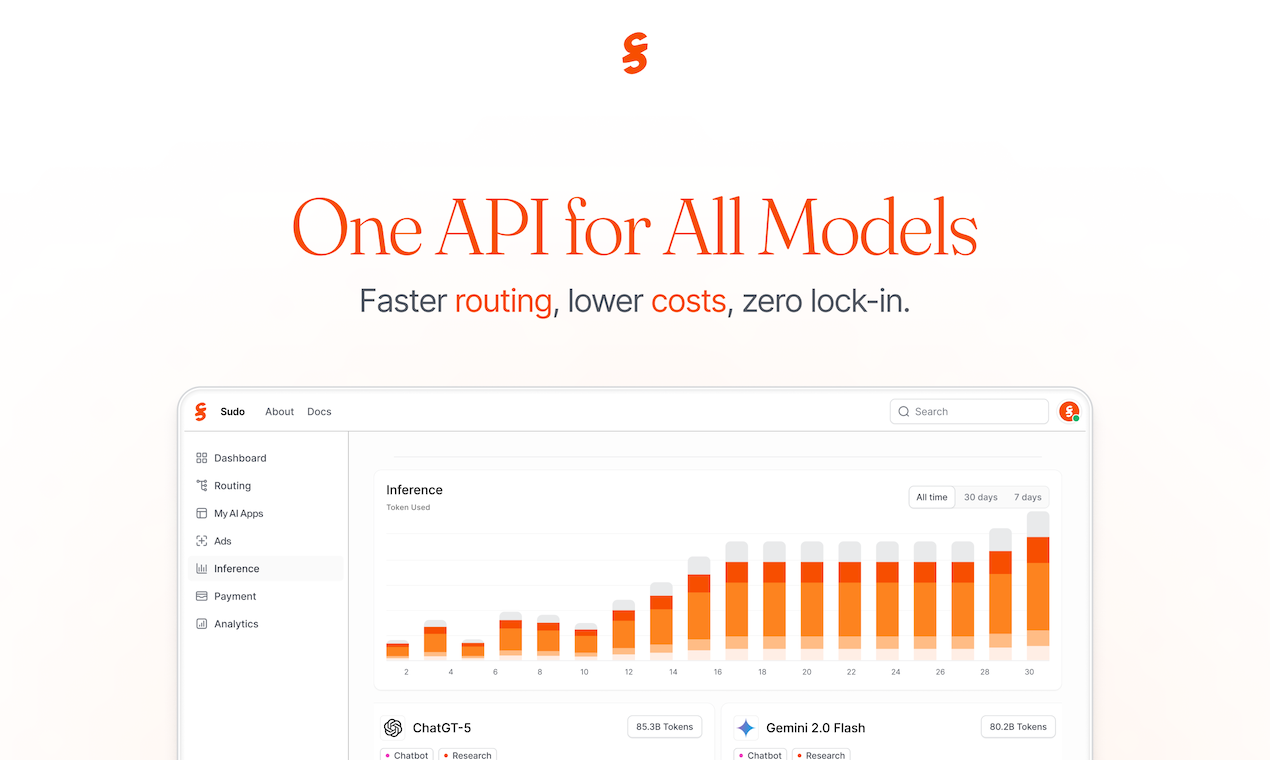
One API for All Models
Faster routing, lower costs, zero lock-in.
Turn every API call, AI generation, or user interaction into revenue—no heavy-lifting required.
Commercial cues
Model
usage based
Free tier
No
Trial
No
Pricing Strategy
Sudo AI offers a free Pay As You Go tier, with Startups handled through custom pricing.
- • Free Pay As You Go tier lowers testing friction.
- • Startups handles custom requirements.
- • Public prices are not listed.
Operator context
Operating setup
Founded
Sep 2025
Platform
API
Audience
Developers
Social footprint
Tech stack
Market demand
Sudo AI keyword demand
5 keywords
Market demand is Starter-tier market intelligence.
Derived from this product’s latest SimilarWeb keyword mix — directional demand, not proof.
Builder Strategy
- Strategy Type
- Niche Specialist
- Stage
- Vc Growth
- Effort
- Small Team
About Sudo AI Expand
Sudo AI provides a unified API product for AI developers and startups looking to integrate large language models into their applications. It simplifies the technical overhead of managing multiple LLM providers by handling routing, latency, and throughput optimization.
Beyond integration, Sudo AI helps developers price their AI applications with built-in subscription billing, usage billing, and AI-native ads. This approach allows teams to focus on core product development while offloading the complexities of backend infrastructure and revenue generation.