
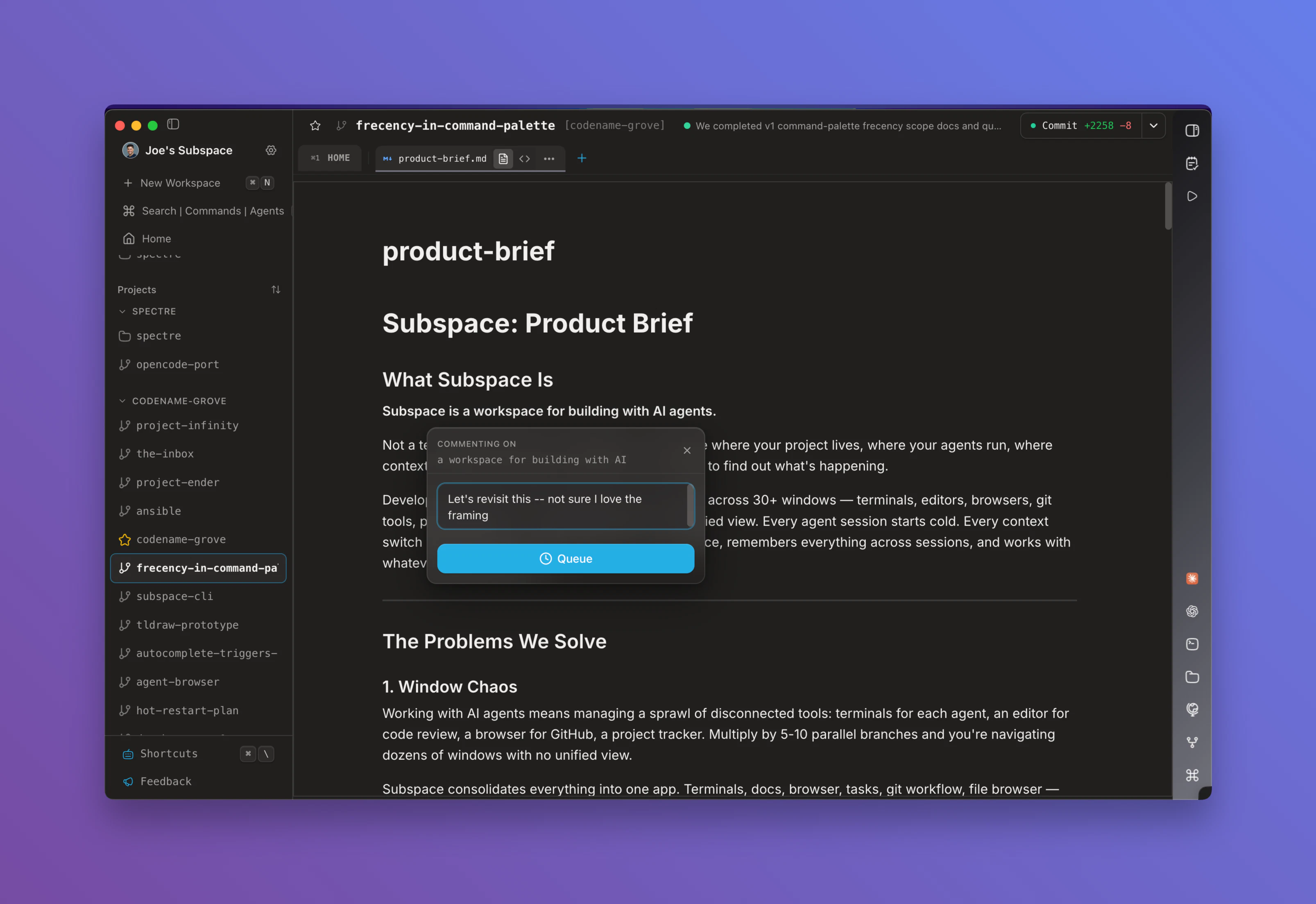
A Mac app for running AI coding agents side-by-side with shared memory.

Product memo
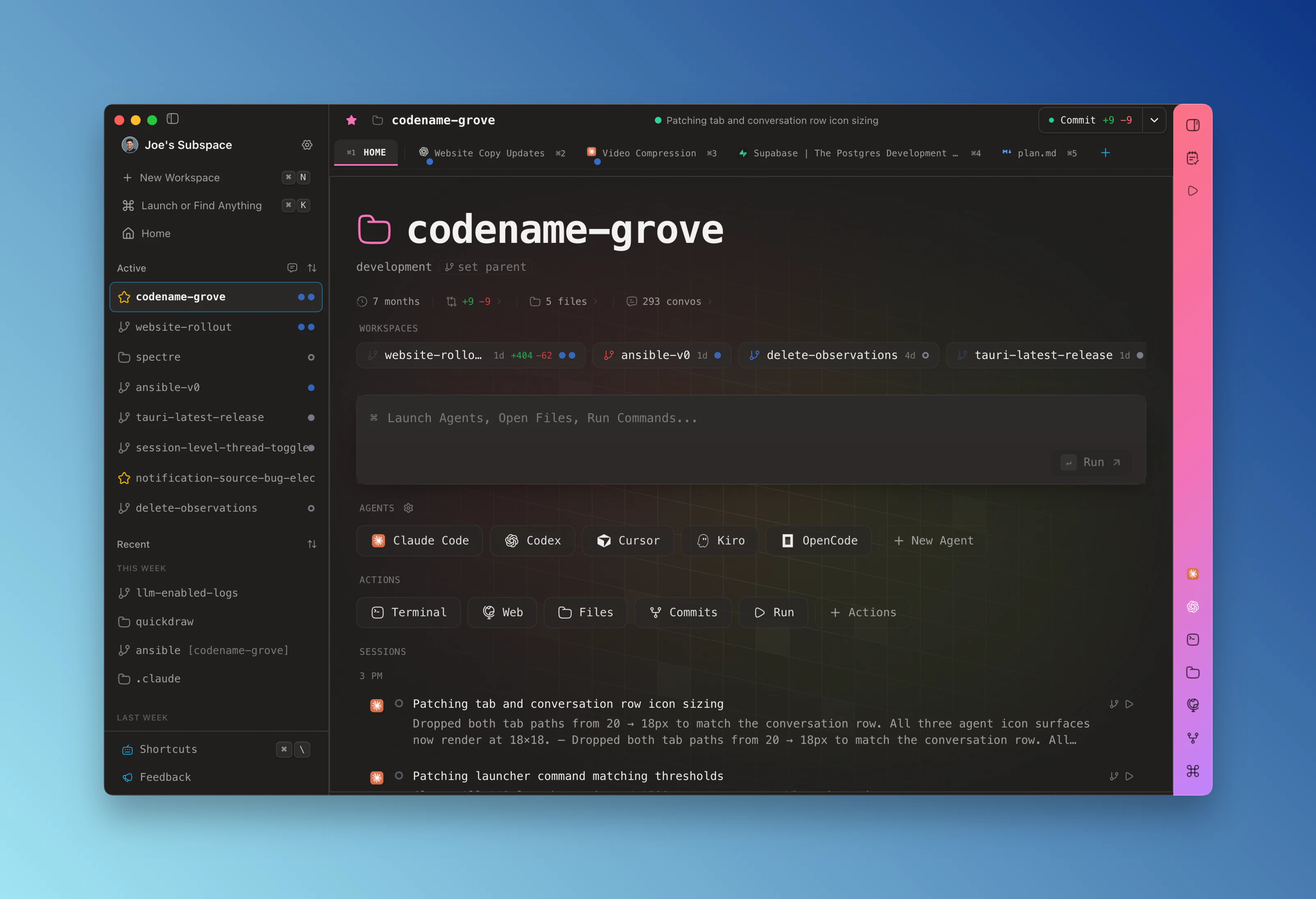
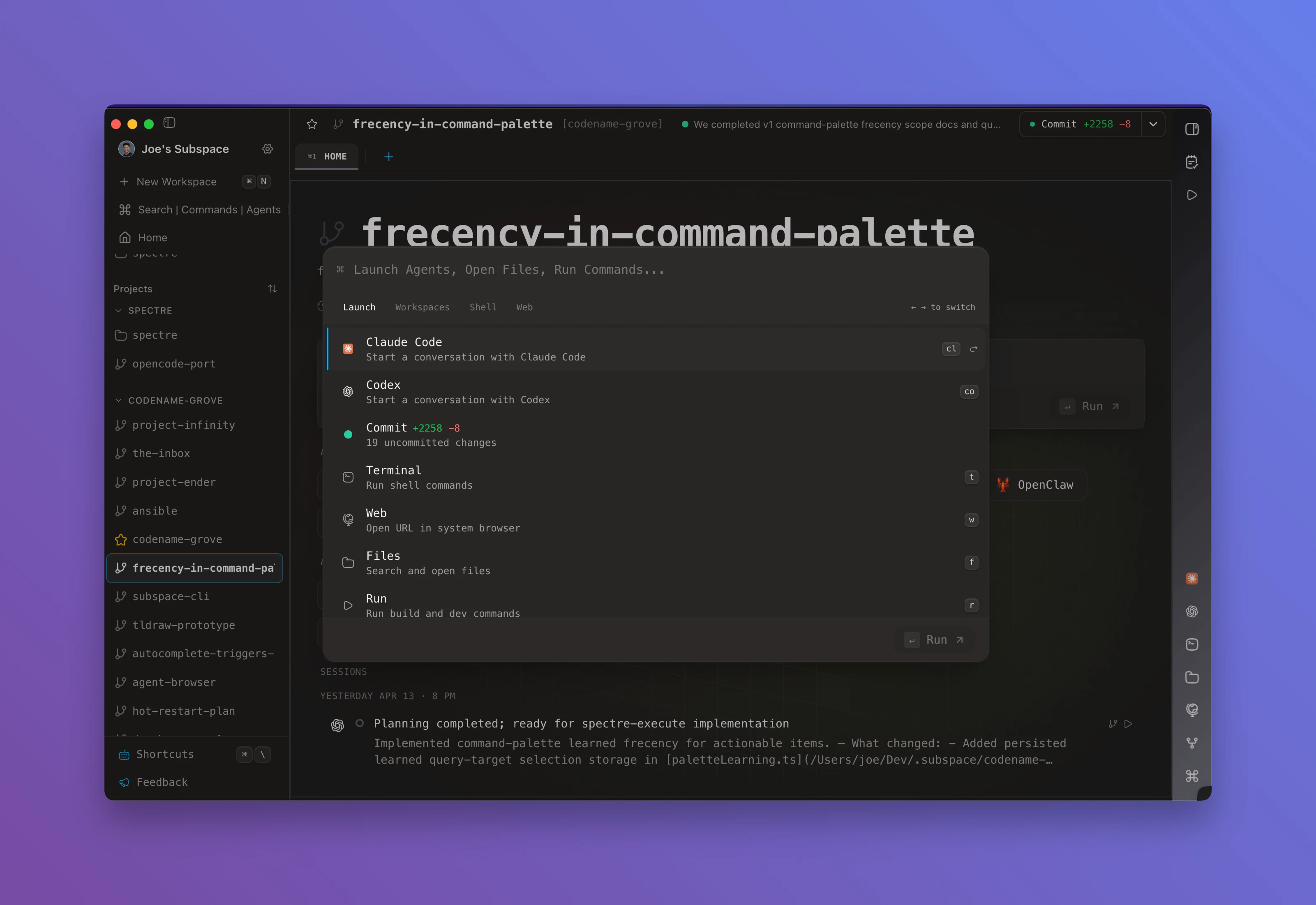
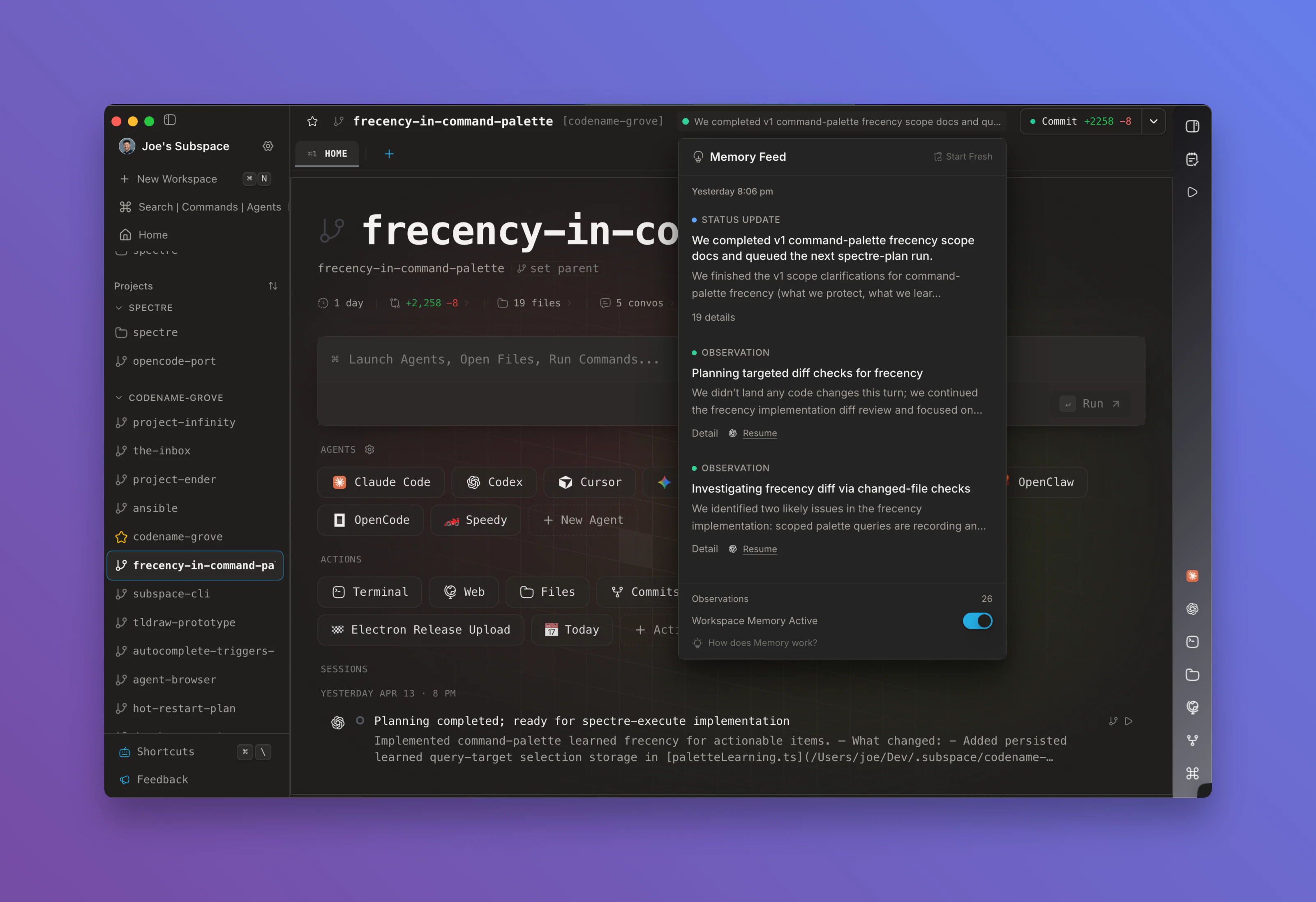
Developers adopting agent-first workflows gain a dedicated Mac app for organizing and running multiple AI coding agents. It provides a persistent, organized workspace that differentiates it from basic chat tools or IDEs. The core wedge is compounding, shared memory that enhances agent coherence across sessions and projects.
For who
Agent-first developers and builders
Solves what
Organizing and running multiple AI coding agents side-by-side
- Side-by-side agent execution
- Persistent, compounding memory
- Keyboard-first Mac app
In their own words
Stop re-explaining your codebase
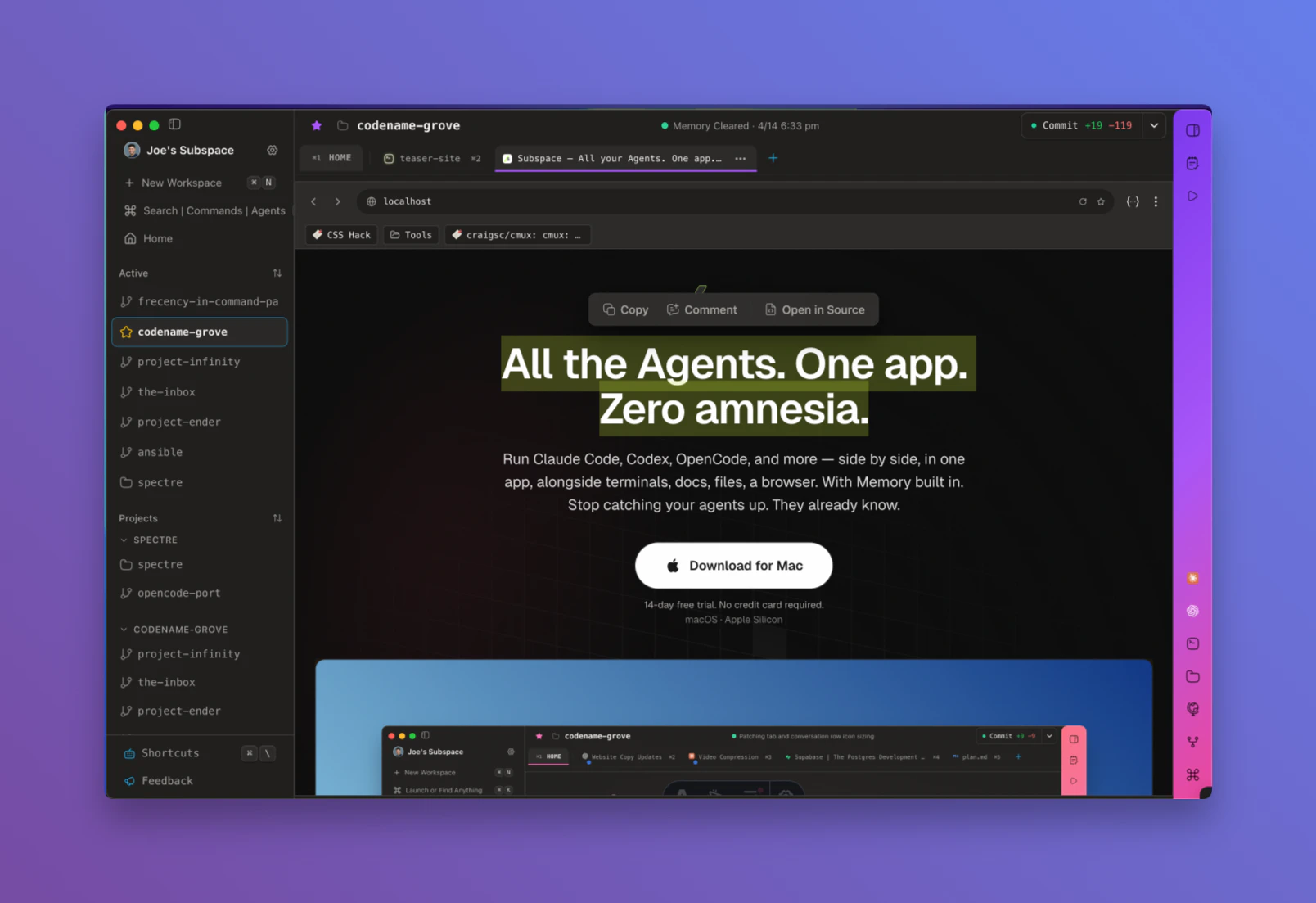
Run Claude Code, Codex, OpenCode, and other CLI agents side by side — with shared memory that makes sessions feel infinite. The lightning fast, keyboard-first Mac app for people already working agent-first.
Commercial cues
Model
subscription
Free tier
Yes
Trial
14d
Pricing Strategy
- • A generous free tier removes friction for new agent adoption.
- • The paid tier positions shared memory as a core competitive advantage.
- • 14-day trial lowers adoption risk.
Operator context
Operating setup
Founded
Apr 2026
Platform
Desktop
Audience
Developers
Social footprint
Tech stack
Market demand
Subspace keyword demand
3 keywords
Market demand is Starter-tier market intelligence.
Derived from this product’s latest SimilarWeb keyword mix — directional demand, not proof.
Builder Strategy
- Strategy Type
- Niche Specialist
- Stage
- Pre Revenue
- Effort
- Solo Buildable
About Subspace Expand
Subspace provides a dedicated Mac application for developers who use AI coding agents in their daily workflows. It helps users organize and run multiple agents, such as Claude Code and Gemini, within a single interface.
The product's core value proposition centers on its compounding, shared memory, which allows agents to maintain context and coherence across different sessions and projects. This approach offers a persistent and organized workspace, setting it apart from generic chat interfaces or traditional IDEs by focusing on the specific needs of agent-first development.