
AI virtual receptionist for medical clinics, automating booking, payments, and reducing no-shows.
Product memo
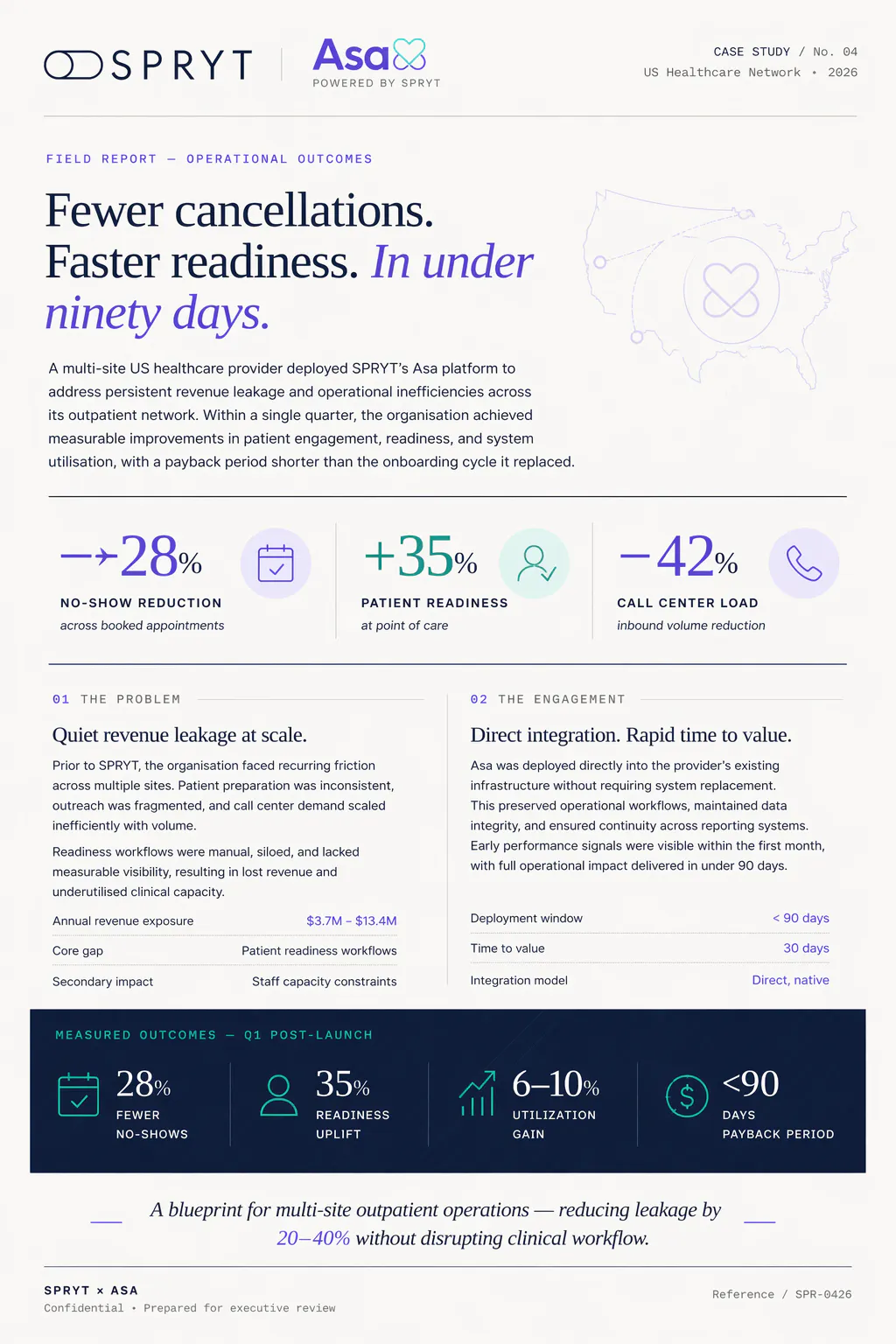
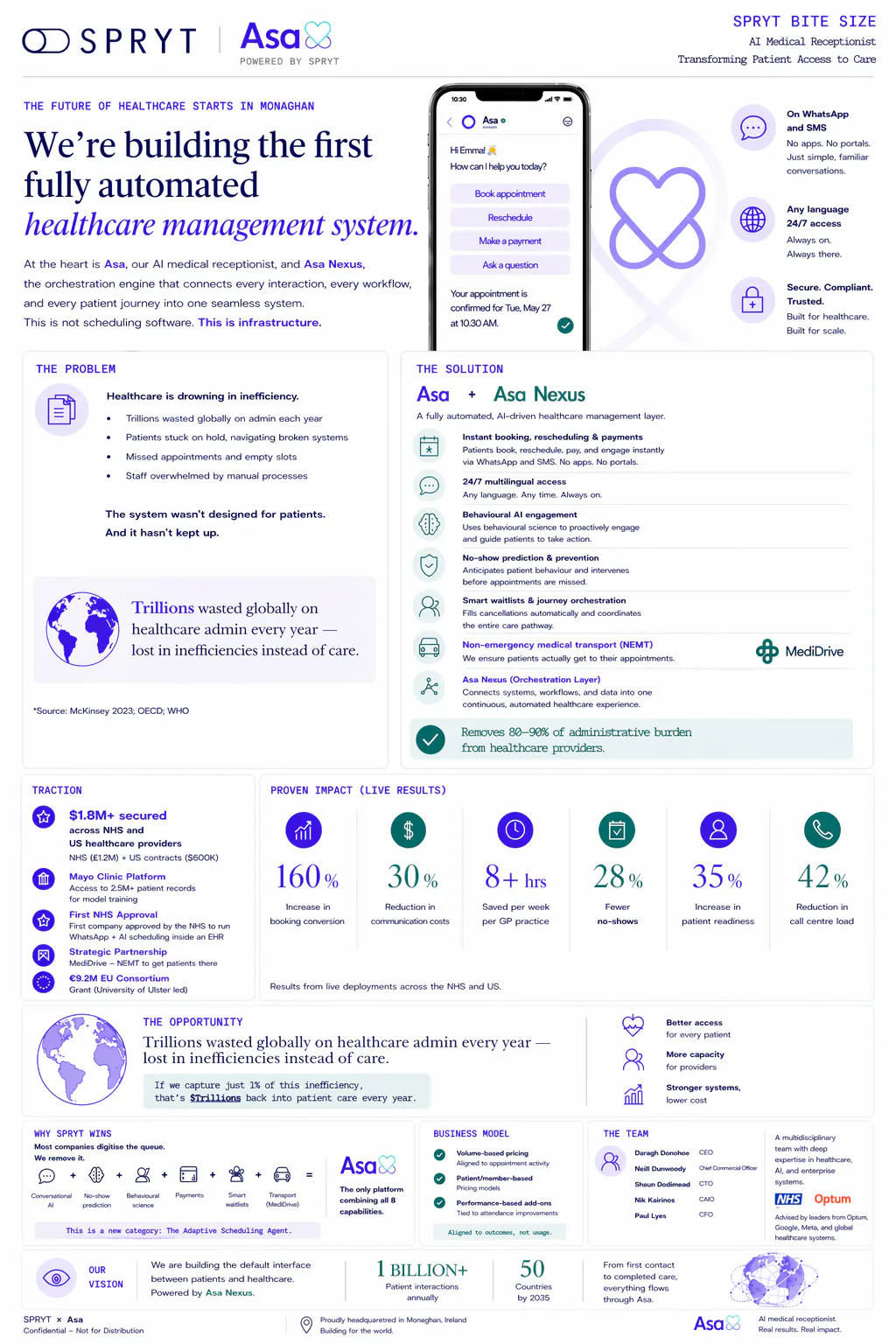
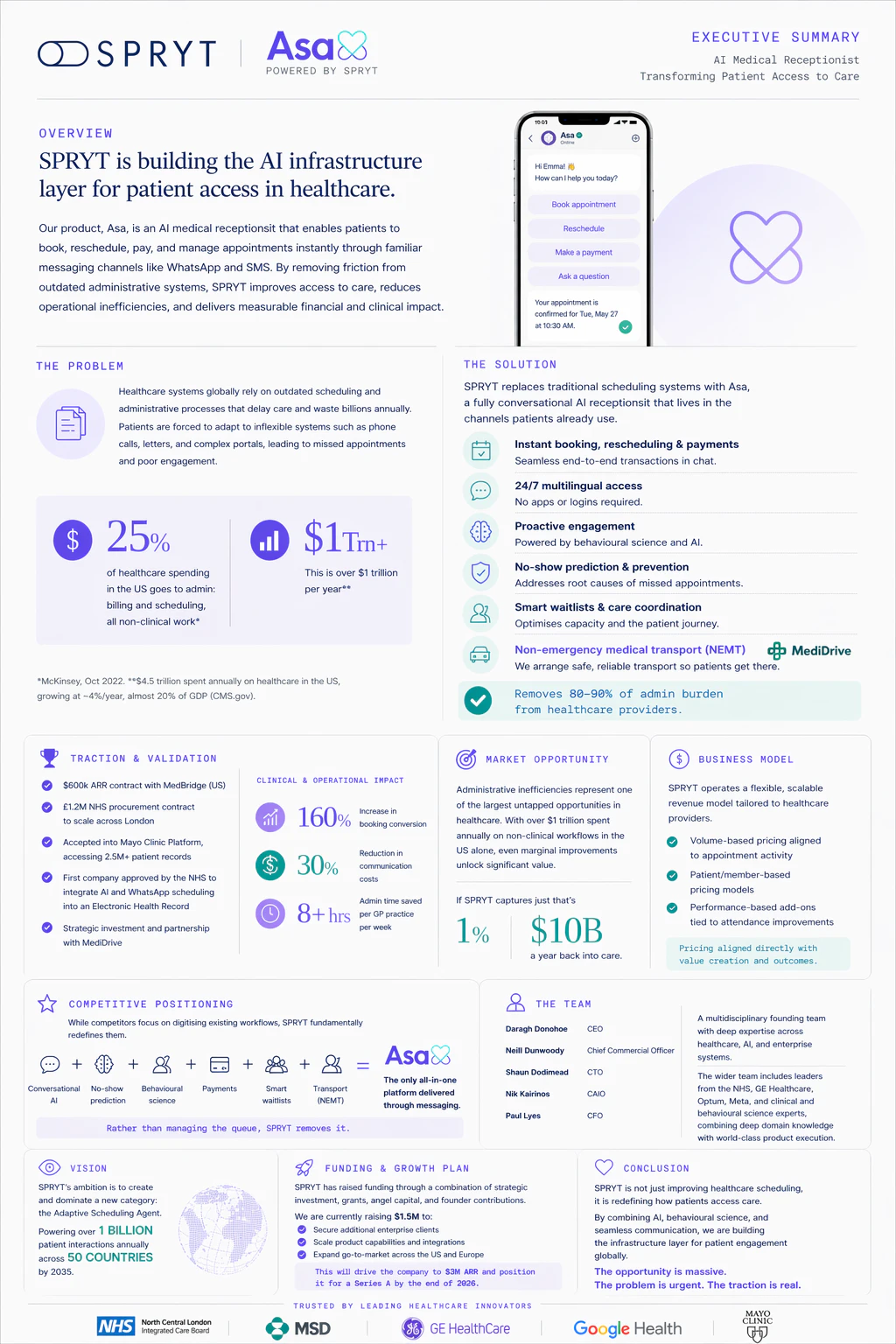
Asa by Spryt acts as an AI virtual receptionist, automating patient interactions via messaging and voice. It reduces administrative load and improves appointment attendance by letting patients manage bookings through familiar platforms like WhatsApp. The system also predicts no-shows and uses personalized language to encourage attendance, specifically for oncology screening and diagnostic care pathways.
For who
Medical clinics and healthcare systems
Solves what
Automates patient communication, booking, and payments, reducing administrative burden and no-shows.
- AI virtual receptionist
- WhatsApp/SMS/Voice booking
- No-show prediction & prevention
In their own words
Empowering patients to take control of their appointments.
Our AI receptionist Asa enables patients to book, change and pay for appointments via instant message (WhatsApp/iMessage/SMS), predicts no-shows, and provides personalised language to encourage attendance at preventative healthcare appointments. Patient's can interact with Asa like they would with a human receptionist.
Asa automates 80-90% of the administrative burden, freeing up the medical admin to focus on underserved patients, less tech-savvy patients, and other critical tasks. We will shift the view of medical admin from gatekeepers to facilitators of care.
Operator context
Operating setup
Founded
Apr 2026
HQ
United Kingdom
Platform
Web app
Audience
Ops Finance
Tech stack
Builder Strategy
- Strategy Type
- Niche Specialist
- Stage
- Vc Growth
- Effort
- Small Team
About Asa by Spryt Expand
Asa by Spryt offers an AI virtual receptionist service designed for medical clinics and healthcare systems. It automates patient communication, appointment booking, and payment processing, aiming to reduce the administrative burden on staff.
By integrating with common platforms like WhatsApp, SMS, and voice, it allows patients to manage their appointments easily. The system also includes no-show prediction, using personalized language to encourage attendance, particularly for critical pathways like oncology screening and diagnostic care.
This specialized focus helps medical administrators shift from gatekeepers to facilitators of care.