
Cookieless web analytics with real-time data and session replays, built for privacy.

Product memo
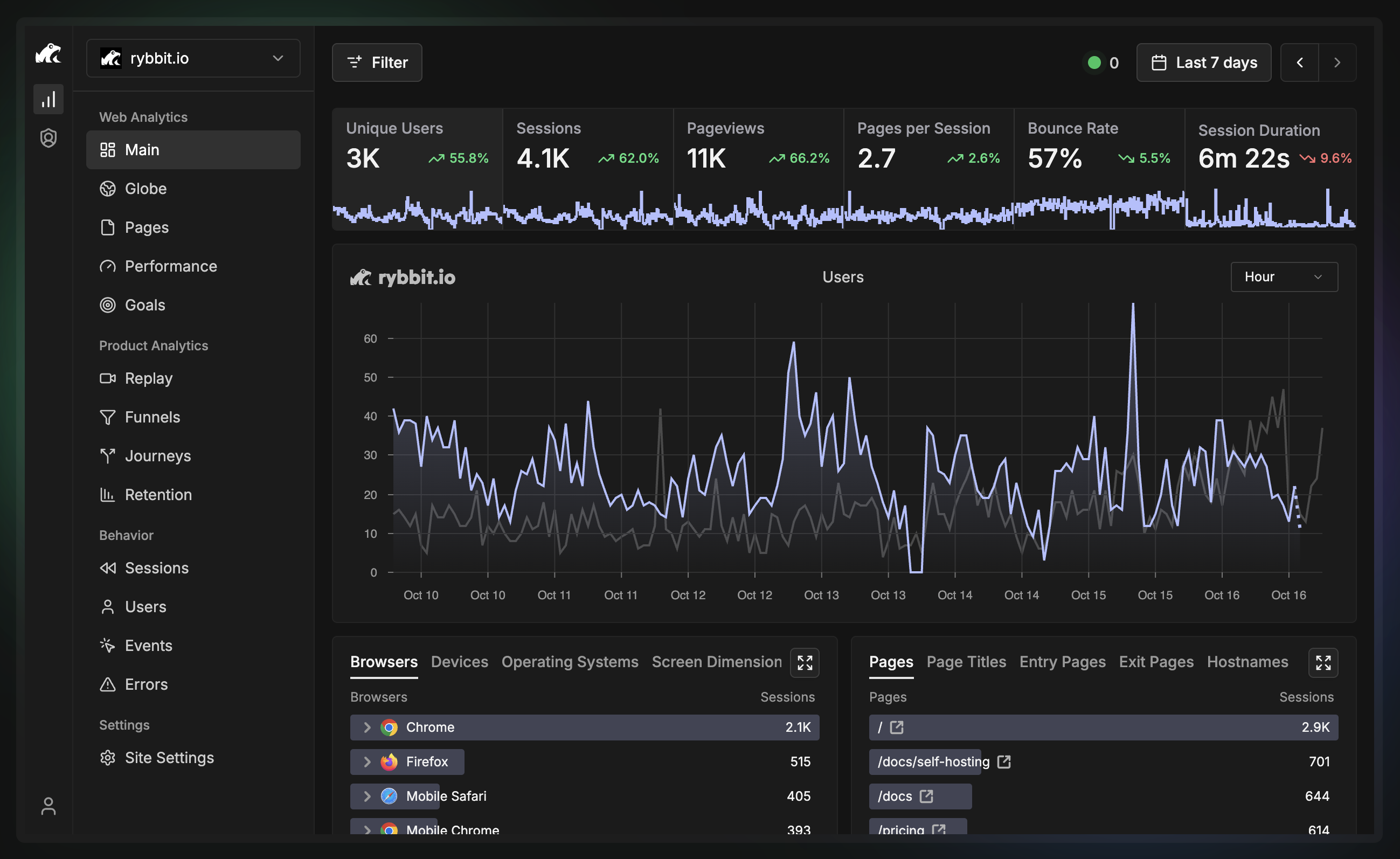
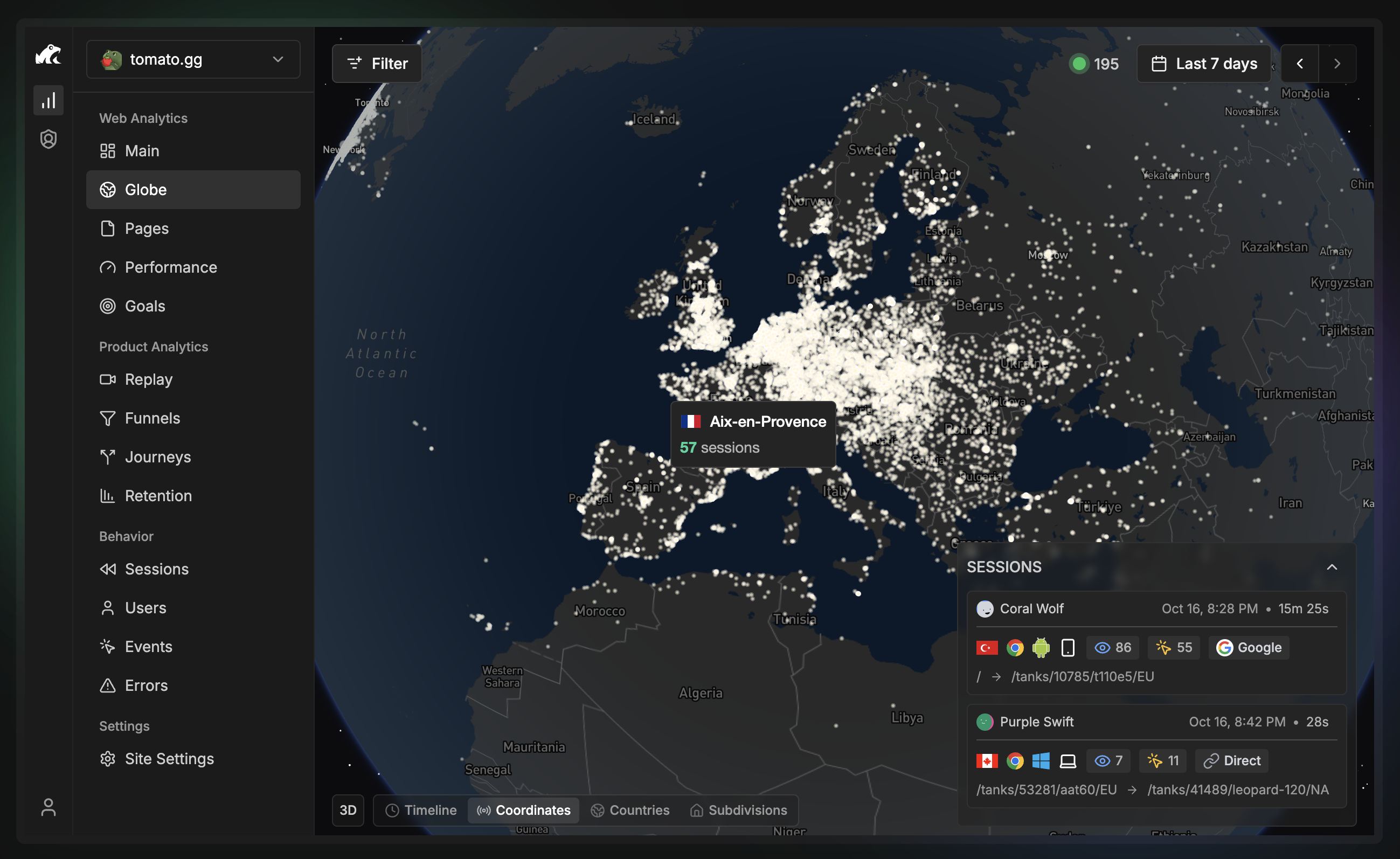
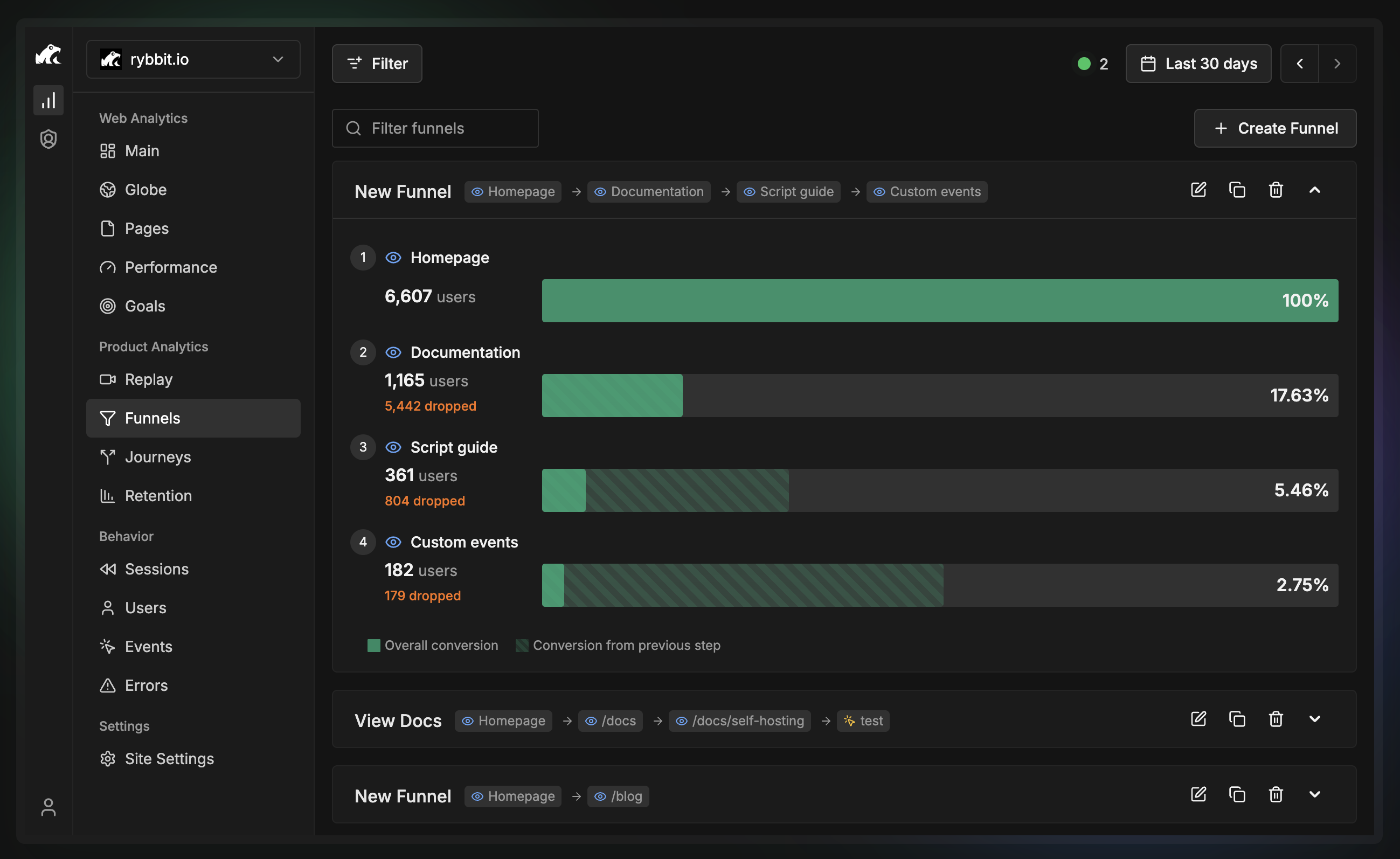
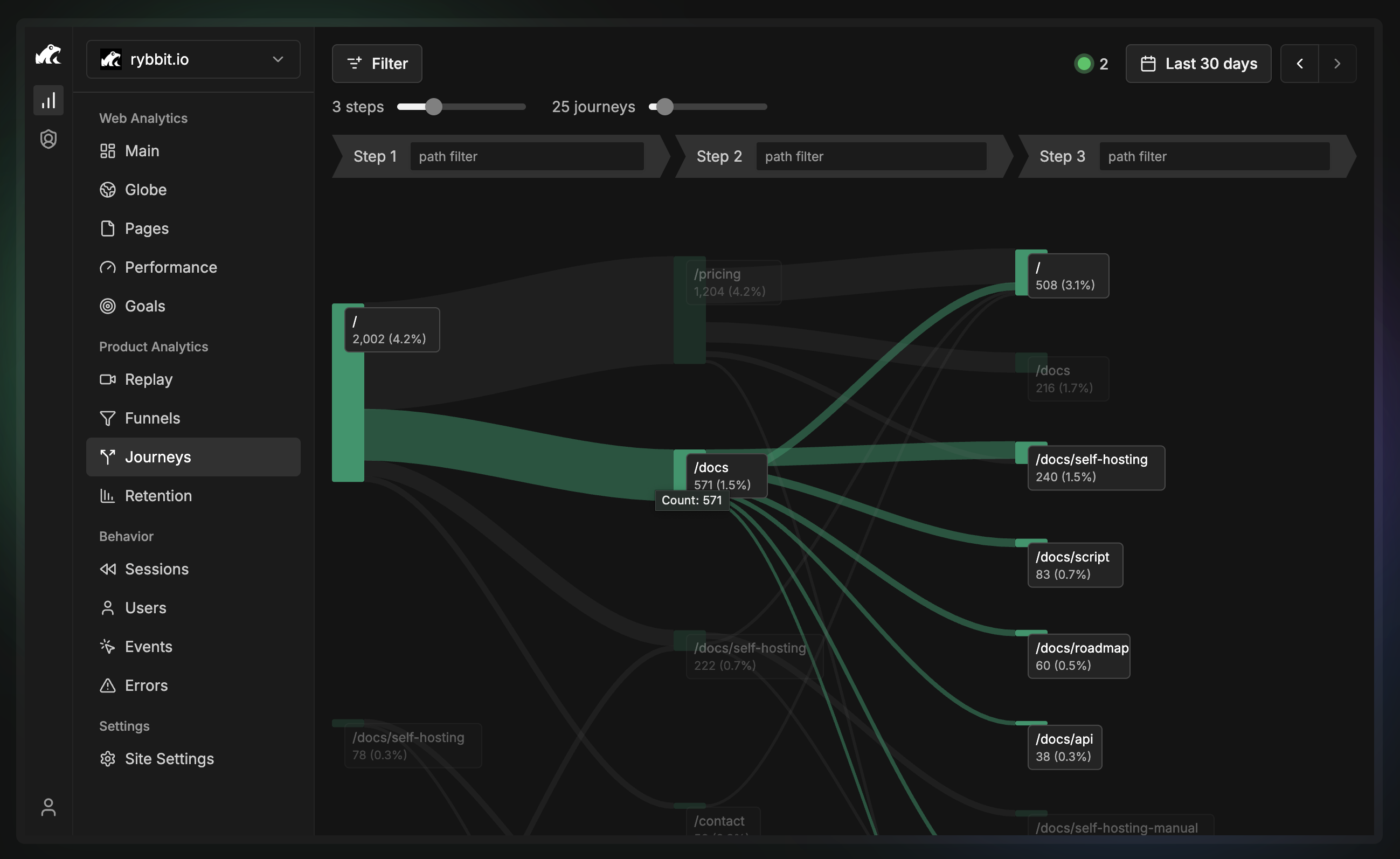
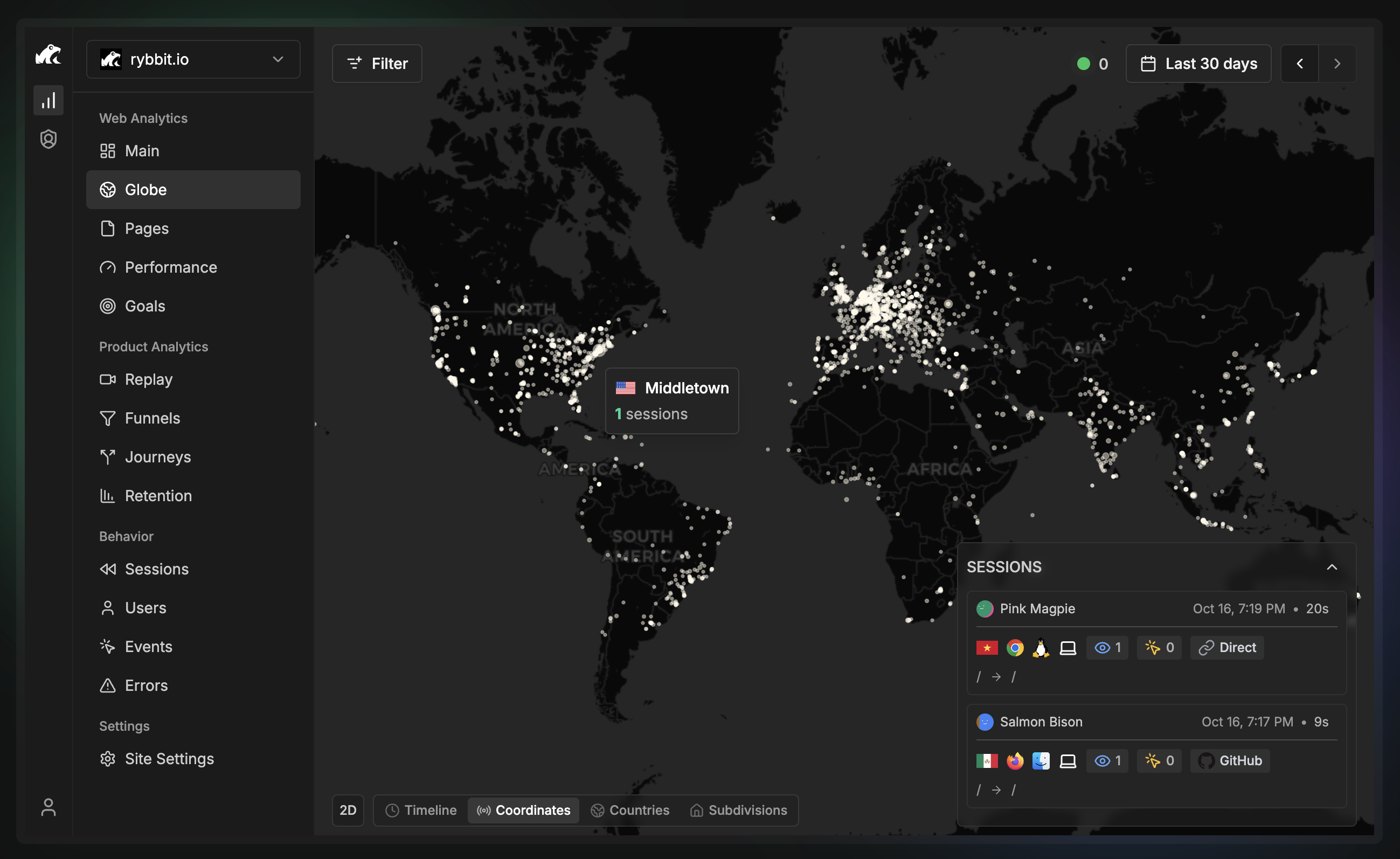
Organizations seeking privacy-friendly analytics use Rybbit for GDPR-compliant web and product insights. It provides cookieless tracking, real-time data, and session replays, offering a clear alternative to traditional analytics platforms. The platform focuses on ease of use, making specific analytics accessible without complex setups.
For who
Organizations and businesses seeking privacy-friendly analytics
Solves what
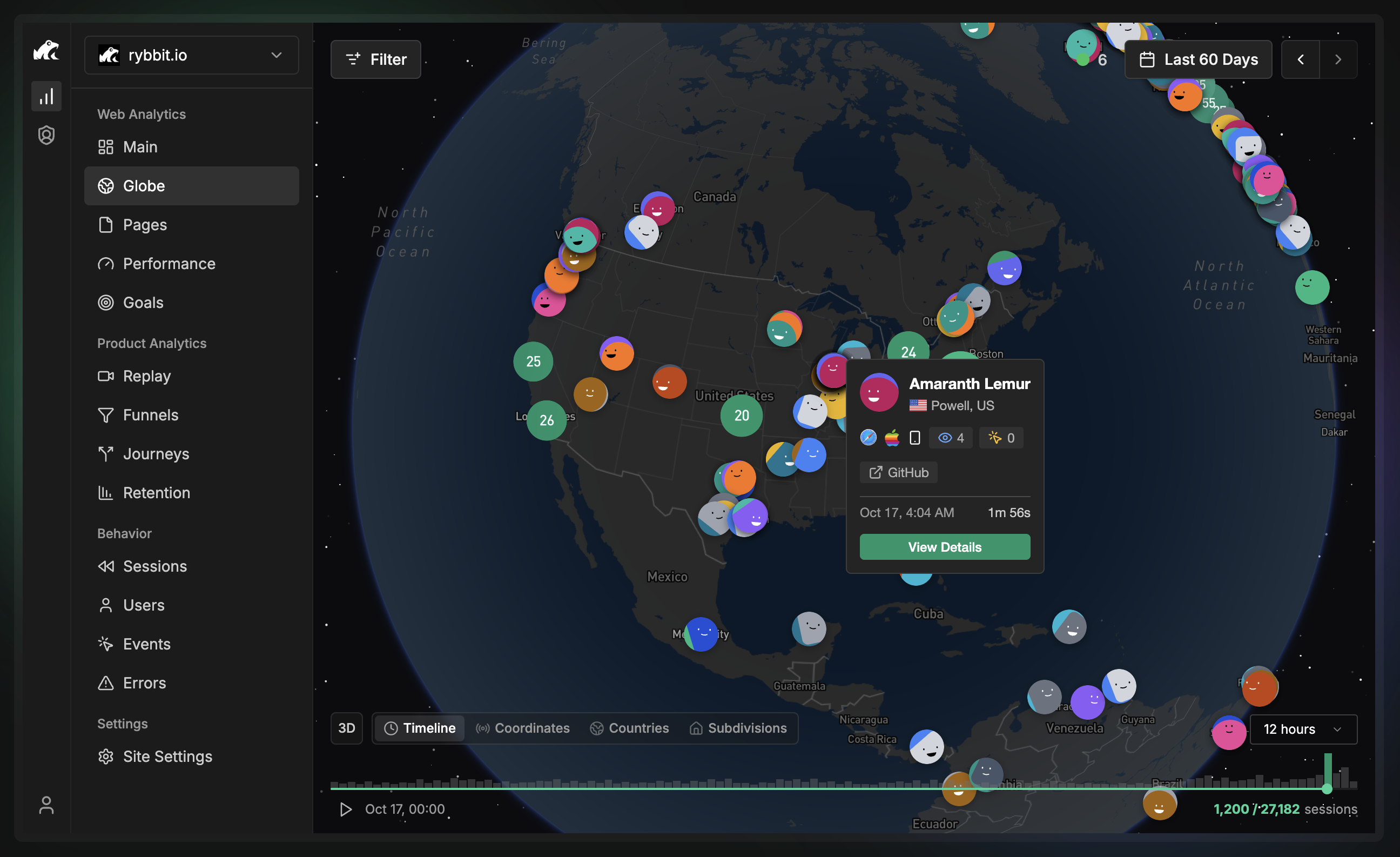
Provides cookieless, GDPR-compliant web and product analytics with real-time data and session replays.
- Cookieless & GDPR compliant
- Real-time analytics
- Session replay analysis
In their own words
The Modern Google Analytics Replacement
Rybbit is powerful, lightweight, and super easy to use analytics. Cookieless and GDPR compliant. Hosted on EU infrastructure in Germany
Powerful analytics without the complexity. Privacy-friendly tools that just work.
Commercial cues
Model
subscription
Free tier
Yes
Trial
7d
Pricing Strategy
- • A free tier attracts users, converting them with feature and usage limitations.
- • The Standard and Pro tiers differentiate clearly on website and team member.
- • 7-day trial lowers adoption risk.
Operator context
Operating setup
Founded
Jan 2024
HQ
United States
Platform
Web app
Audience
General
Payments
Stripe
Detected via TrustMRR
Social footprint
Tech stack
Market demand
Rybbit keyword demand
5 keywords
Market demand is Starter-tier market intelligence.
Derived from this product’s latest SimilarWeb keyword mix — directional demand, not proof.
Builder Strategy
- Strategy Type
- Niche Specialist
- Stage
- Vc Growth
- Effort
- Small Team
About Rybbit Expand
Rybbit offers web and product analytics designed for organizations prioritizing data privacy and compliance. It provides cookieless tracking and adheres to GDPR standards, making it a practical choice for businesses worldwide.
The platform delivers real-time data and session replays, allowing teams to visualize offer paths and understand user behavior without compromising privacy.