
An API and SDK for integrating calendars and scheduling into applications.

Product memo
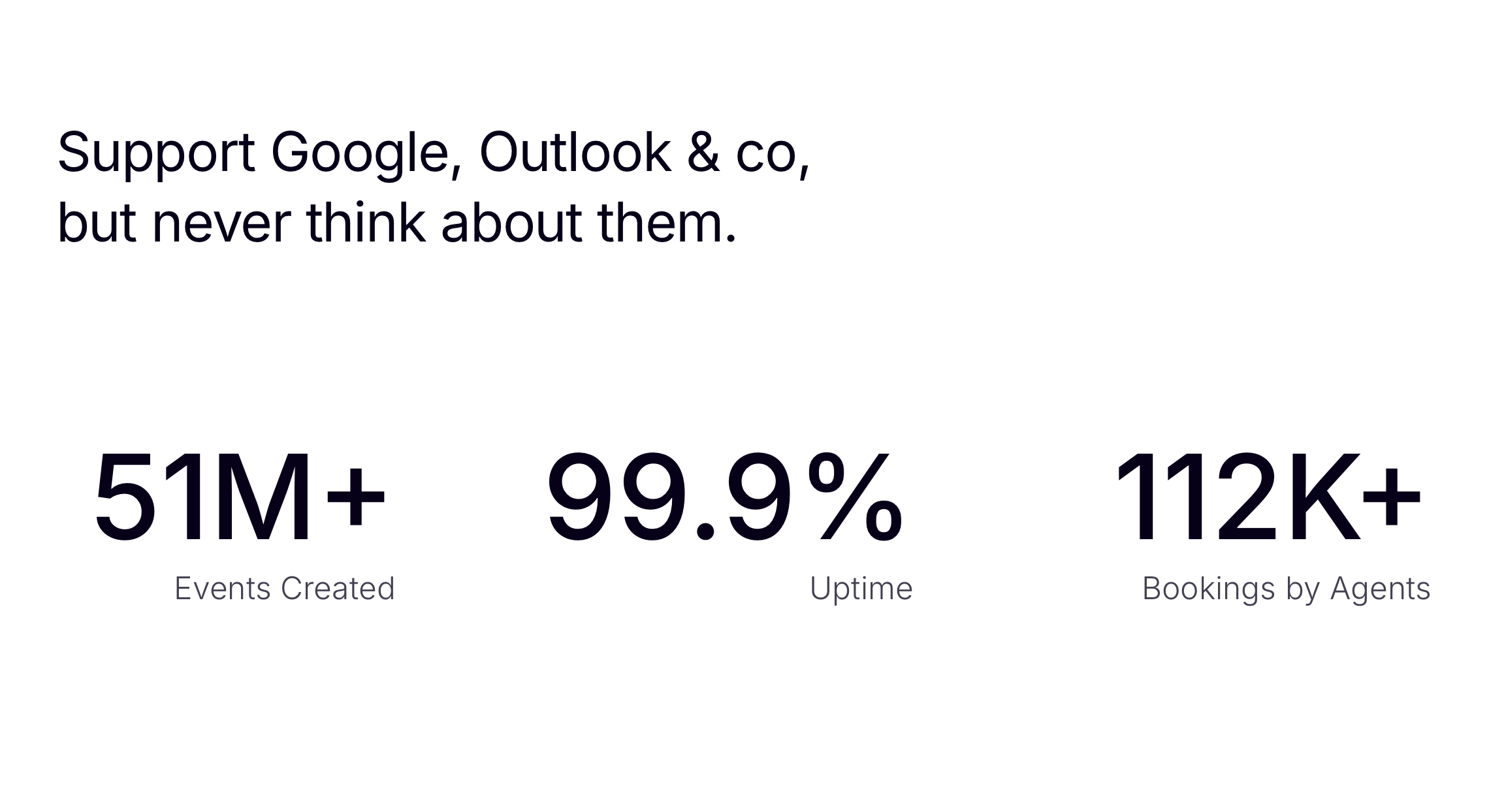
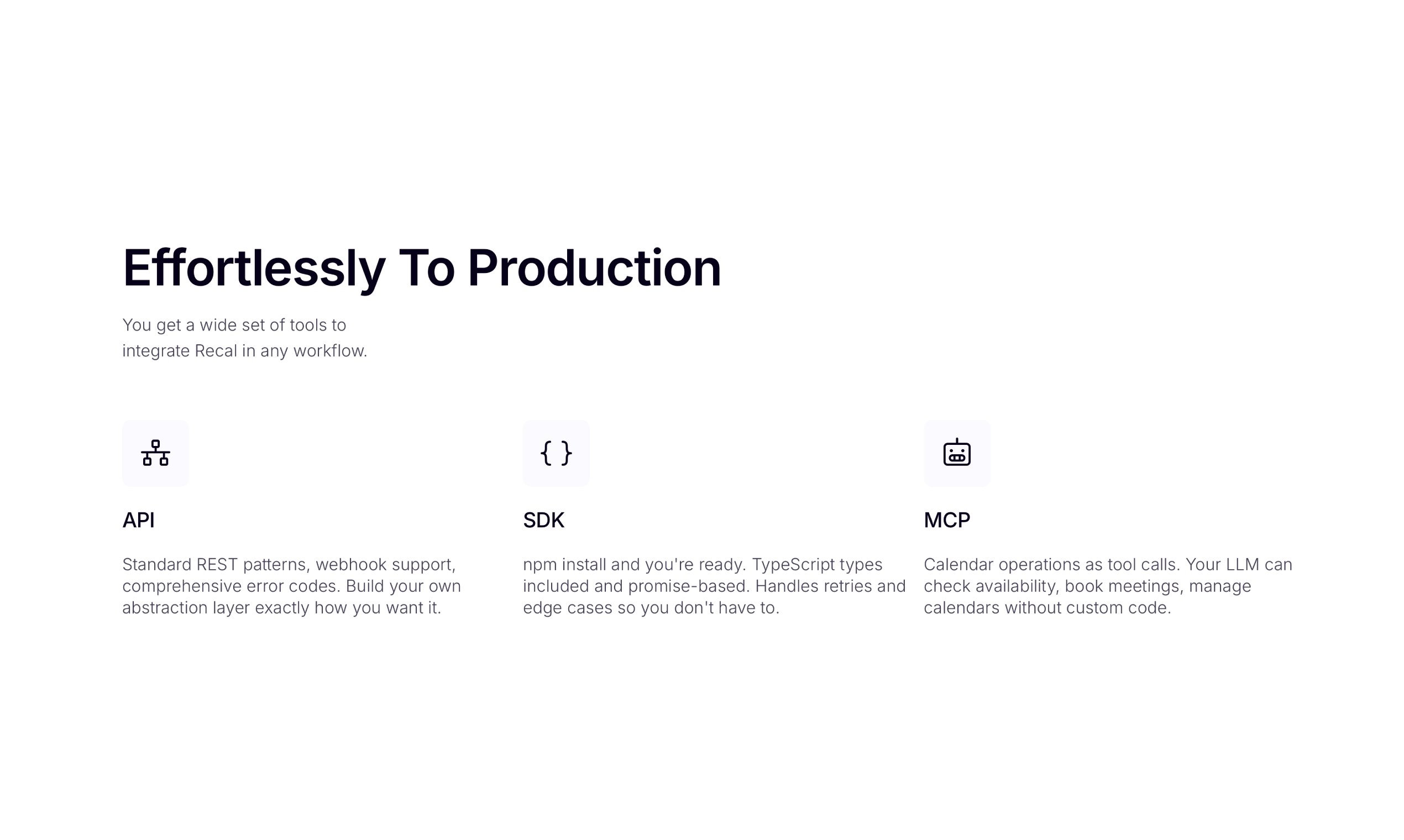
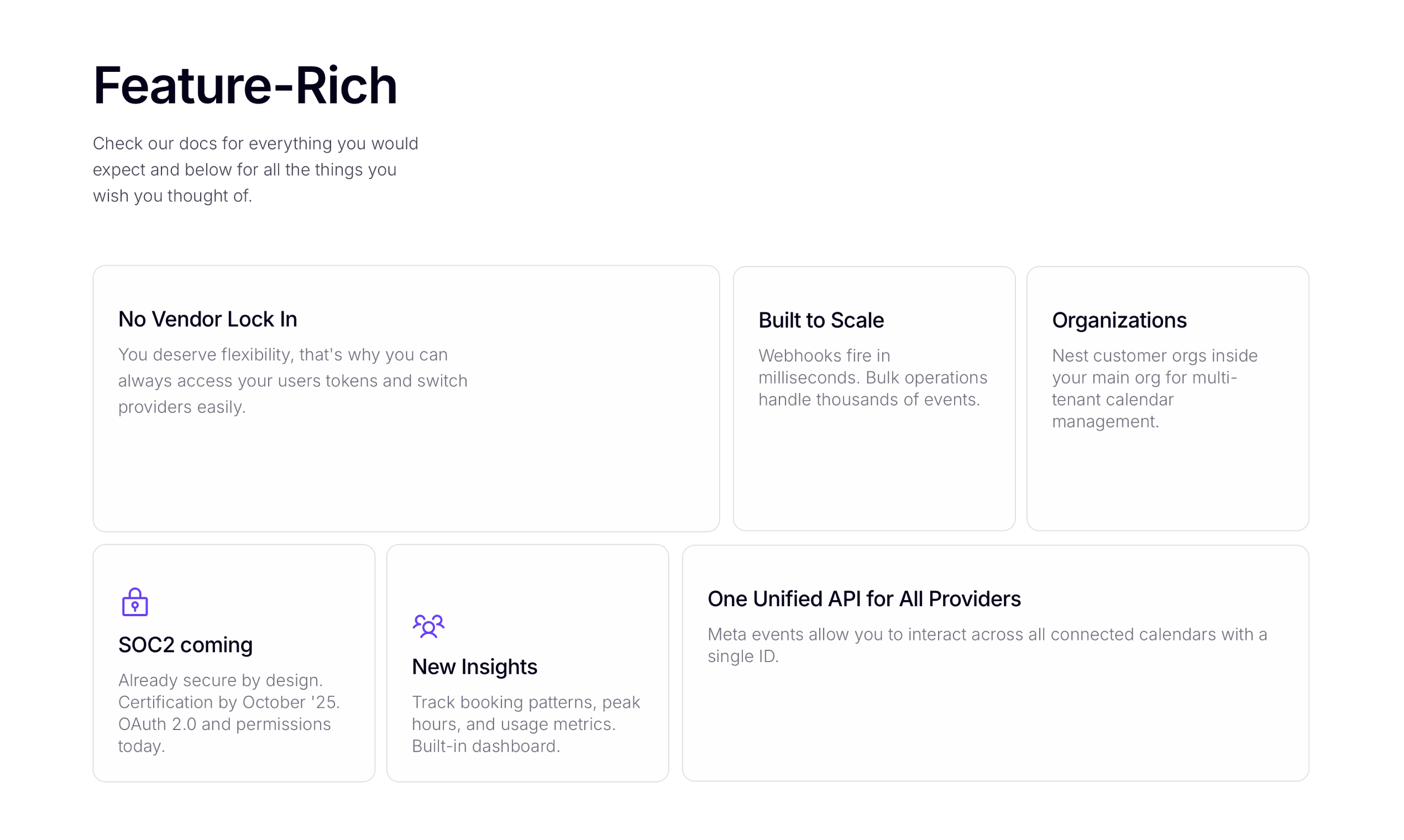
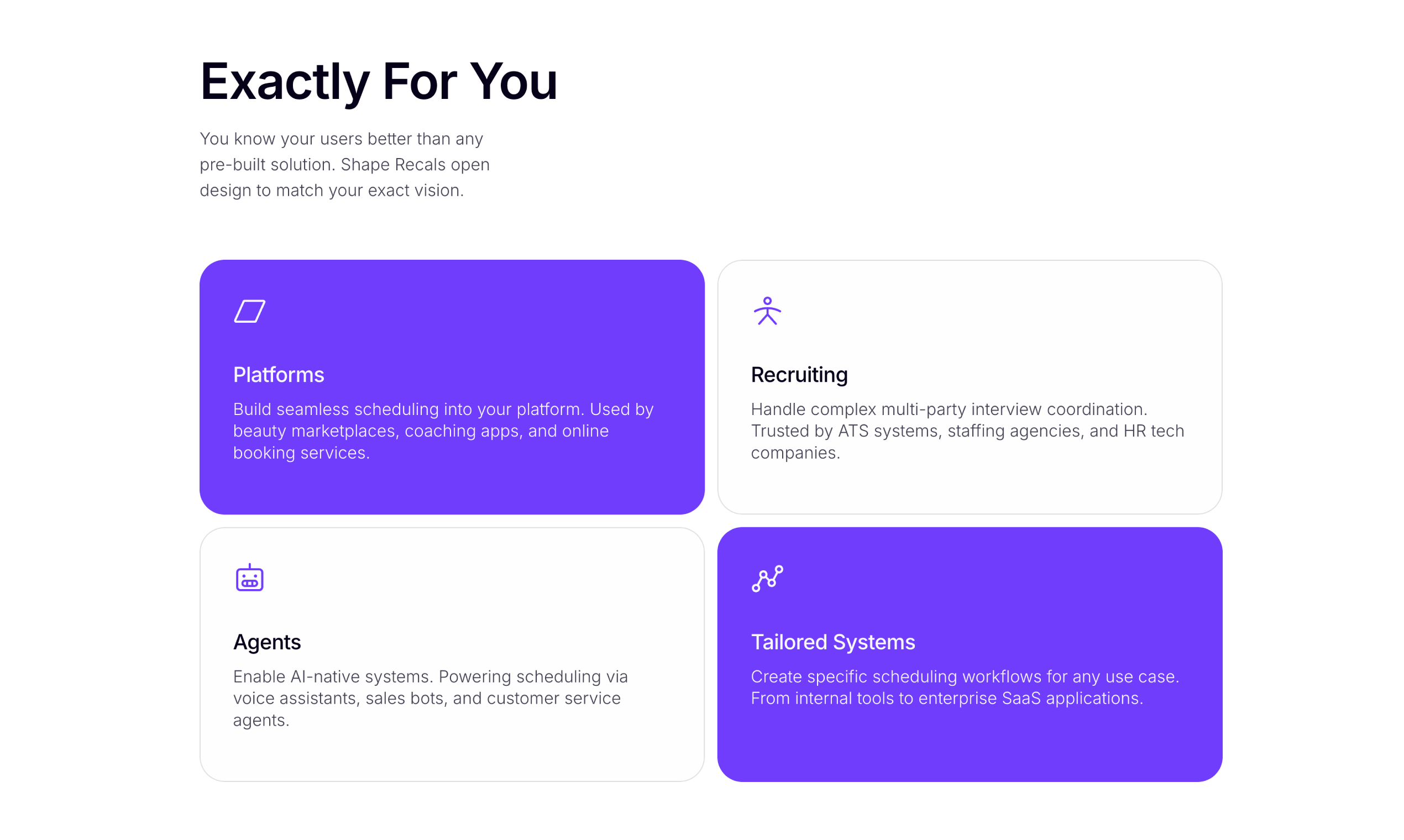
Developers building booking systems use Recal to embed calendar and scheduling features without months of custom integration work. It provides an API and SDK that handles complex tasks like OAuth and multi-calendar support. This approach allows teams to quickly deploy specific scheduling functionality into their applications.
For who
Developers building booking systems
Solves what
Calendar and scheduling integration via API and SDK
- Calendar integration API
- Scheduling SDK
- OAuth handling
In their own words
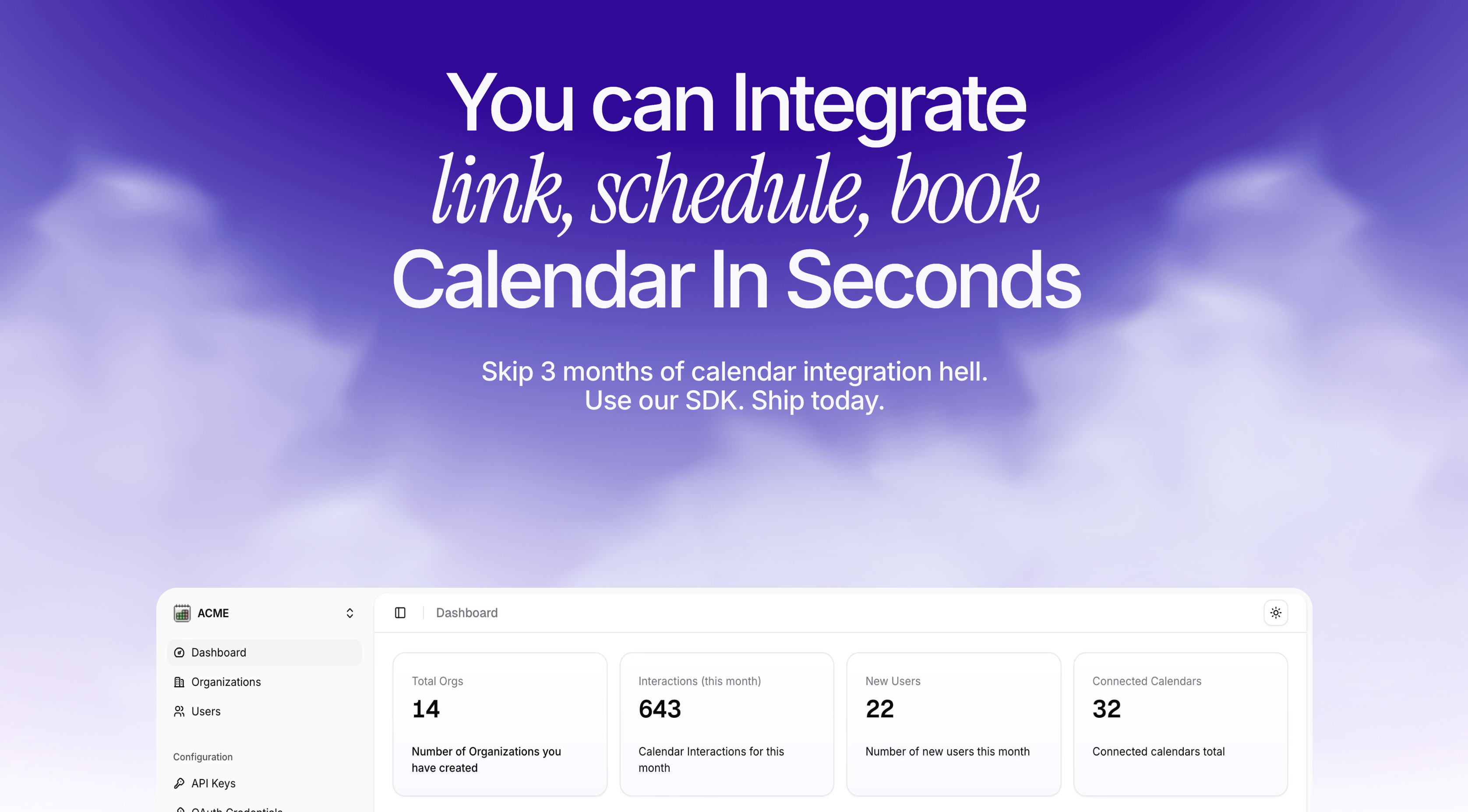
You Can Ship
Calendar & Scheduling In Seconds
Skip 3 months of integration hell. Use our SDK. Ship today.
Commercial cues
Model
subscription
Free tier
Yes
Trial
No
Pricing Strategy
- • Custom enterprise pricing addresses large-scale needs and specific service level agreements.
- • Free tier lowers testing friction.
Operator context
Operating setup
Founded
Sep 2025
Platform
API
Audience
Developers
Tech stack
Market demand
Recal keyword demand
4 keywords
Market demand is Starter-tier market intelligence.
Derived from this product’s latest SimilarWeb keyword mix — directional demand, not proof.
Builder Strategy
- Strategy Type
- Niche Specialist
- Stage
- Vc Growth
- Effort
- Small Team
About Recal Expand
Recal provides a specialized API and SDK for developers, simplifying the integration of calendar and scheduling capabilities into new or existing applications. It targets teams that need to build booking systems quickly, offering pre-built products for common challenges like OAuth handling and connecting to multiple calendar providers such as Google Calendar.
This focus on developer experience and rapid deployment helps teams avoid lengthy manual integration processes, allowing them to ship scheduling features faster and more reliably. The product's design reduces the technical overhead associated with managing diverse calendar ecosystems.