
Aggregates vendor status, incidents, and SLA data into one engineering dashboard.
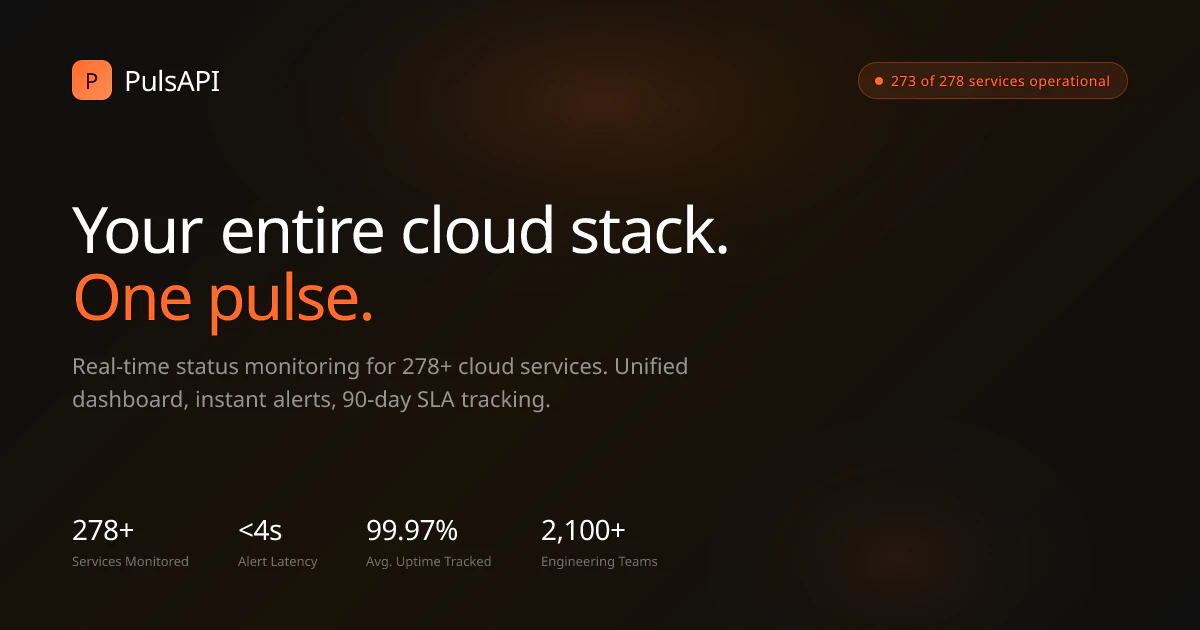
Product memo
Engineering teams depending on cloud services use PulsAPI to centralize vendor status, incident timelines, and SLA data. It pulls information from over 278 cloud provider status pages, normalizing alerts and tracking performance. This prevents downtime from impacting users before teams are aware, making it a critical tool for operational reliability and accountability.
For who
Engineering teams depending on cloud services
Solves what
Aggregates vendor status, incidents, and SLA data into one dashboard.
- Real-time status dashboard
- Incident alerting
- SLA tracking
In their own words
Your entire
PulsAPI aggregates real-time operational status, incident timelines, and 90-day SLA data from every cloud provider your team depends on. Stop tab-hopping. Start knowing.
Commercial cues
Model
subscription
Free tier
Yes
Trial
30d
Pricing Strategy
- • A 30-day free trial encourages adoption and feature exploration.
Operator context
Operating setup
Founded
May 2026
Platform
Web app
Audience
Developers
Social footprint
Builder Strategy
- Strategy Type
- Niche Specialist
- Stage
- Vc Growth
- Effort
- Small Team
About PulsAPI Expand
PulsAPI provides engineering teams with a unified dashboard to monitor the operational status of their critical cloud services. It centralizes real-time vendor status, incident timelines, and 90-day SLA data from over 278 cloud providers.
This helps teams proactively track uptime, manage incidents, and ensure service level agreement compliance, preventing downtime from impacting end-users. Its positioning as a niche specialist for vendor monitoring helps teams avoid manual checks across fragmented status pages.