
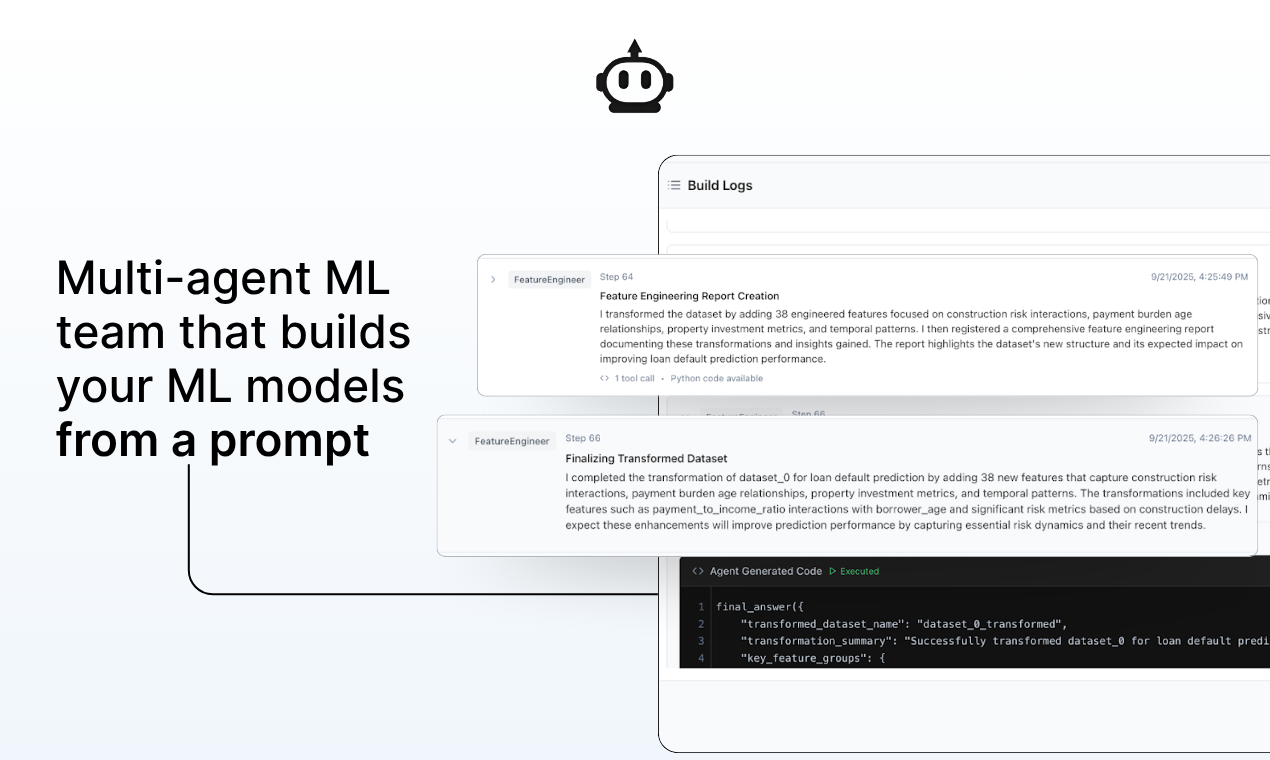
An AI agent that builds ML models from plain English prompts and raw data.

Product memo
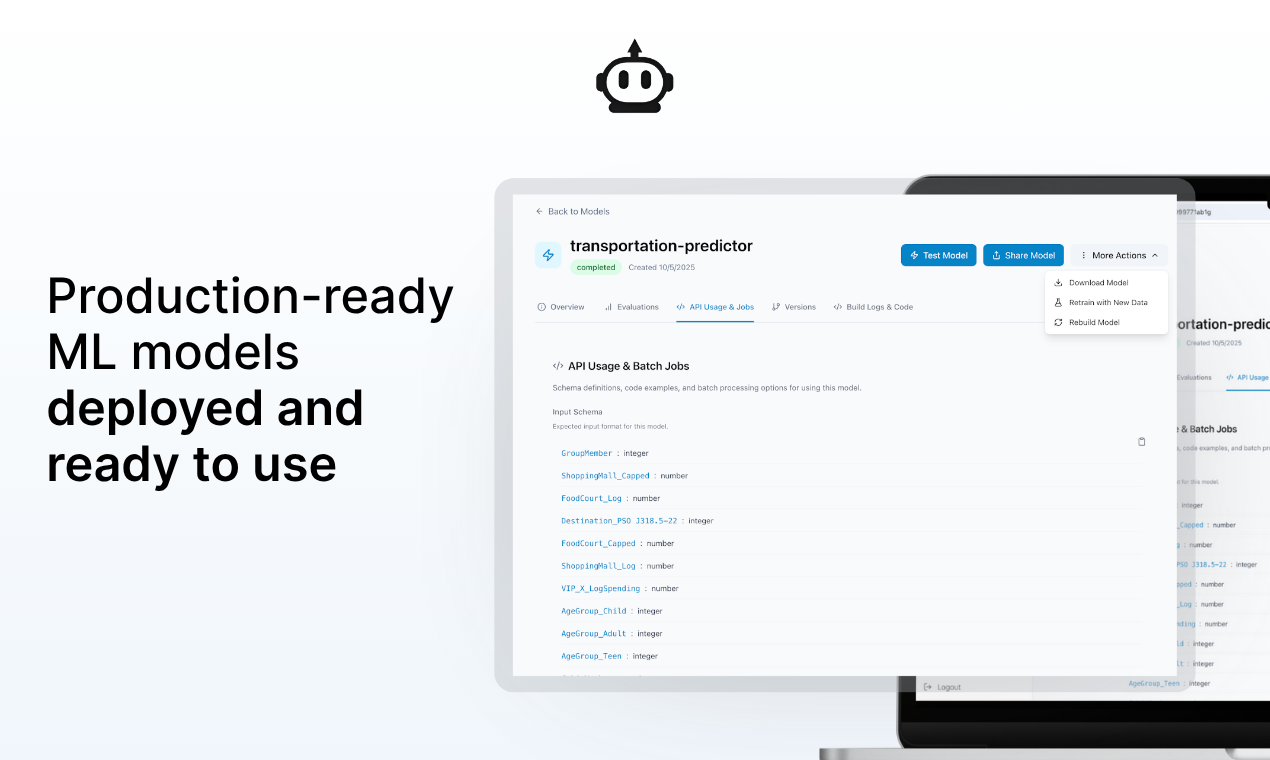
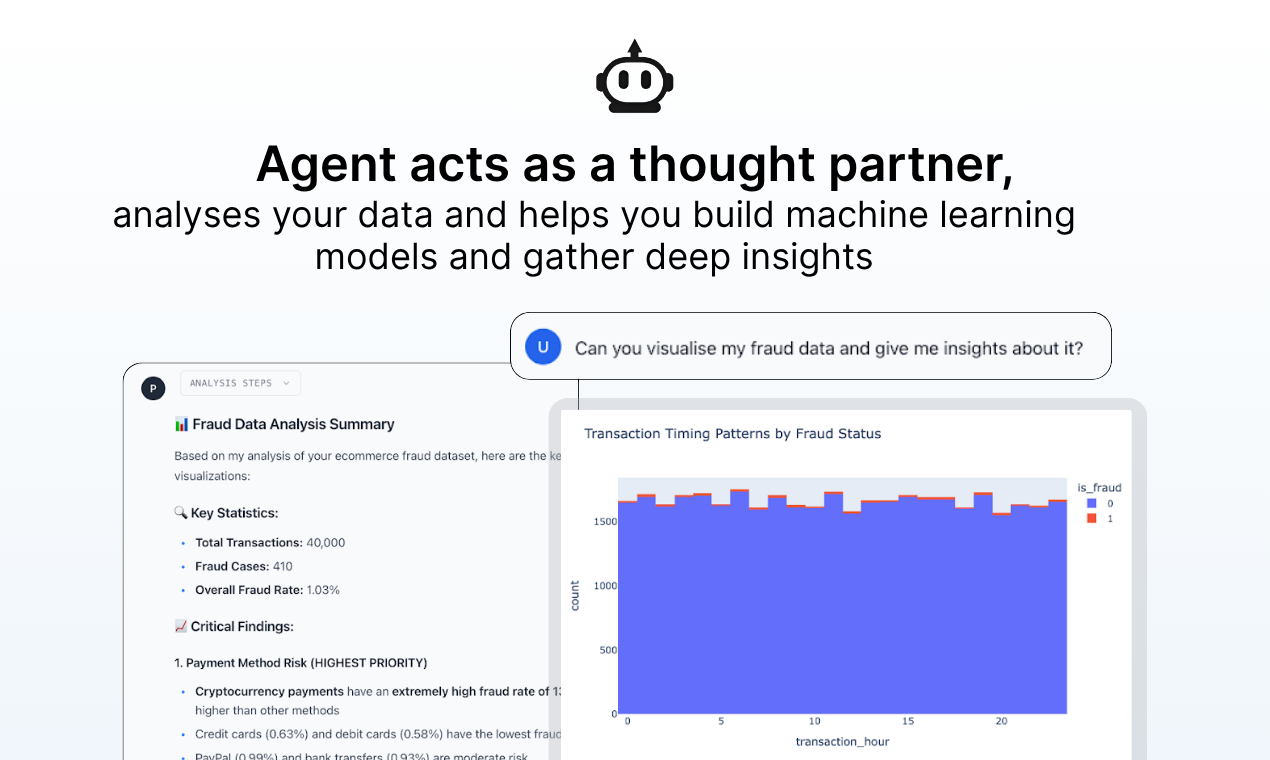
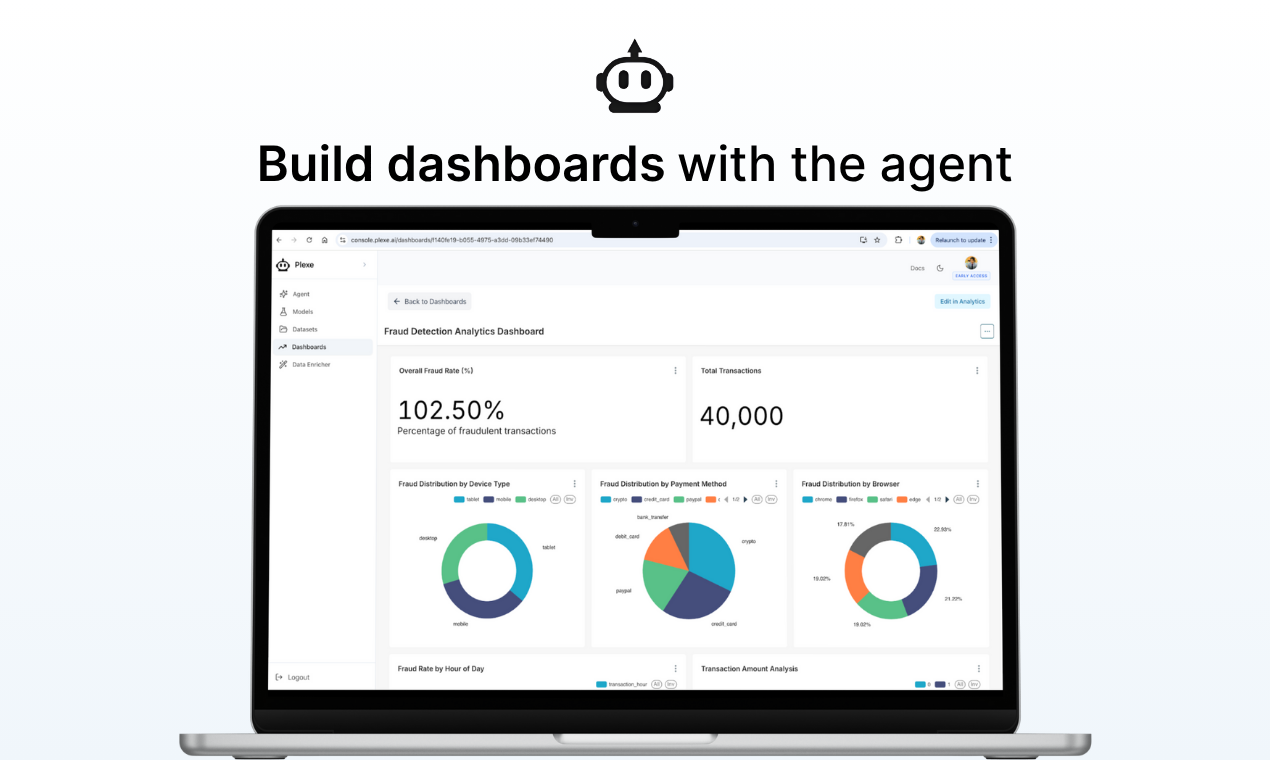
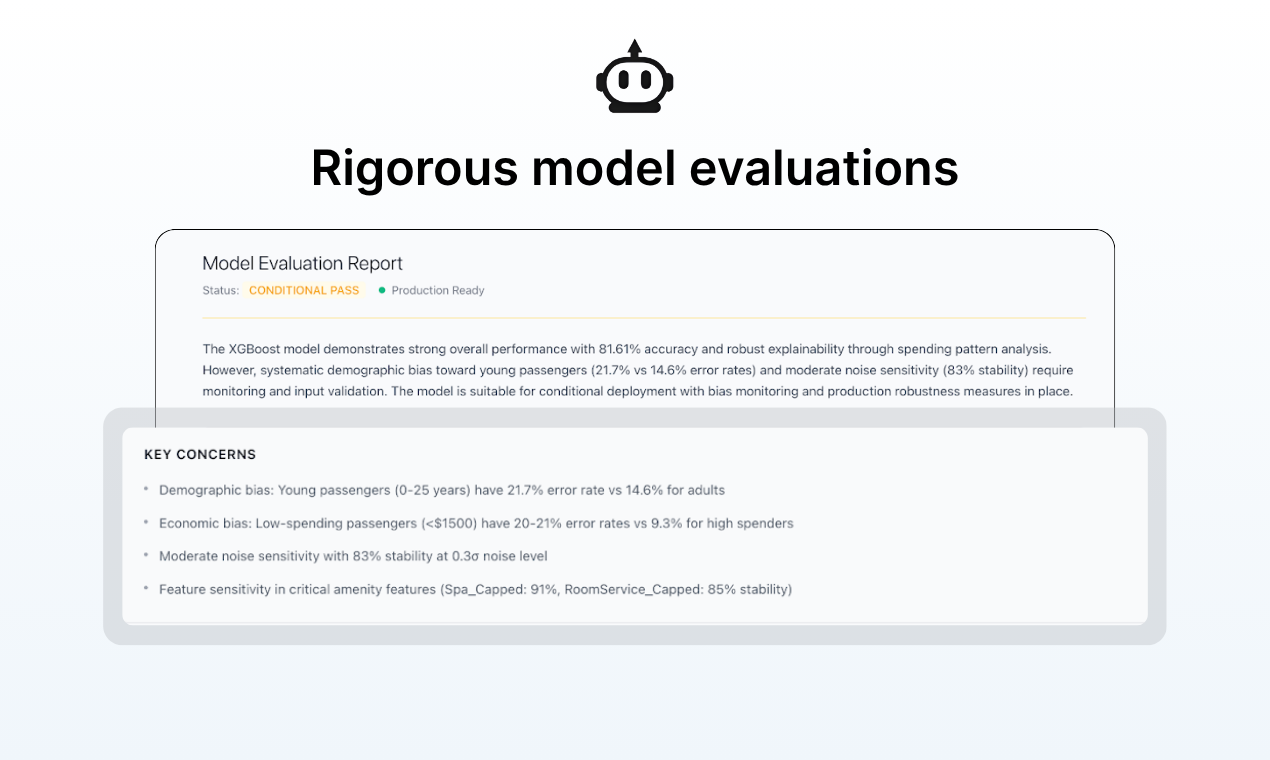
Plexe automates the full machine learning lifecycle, generating custom ML models and insights directly from raw data using plain English prompts. It targets companies that need to simplify model creation and deployment without deep ML engineering expertise. The platform handles data quality checks and serverless inference, abstracting away complex MLOps tasks.
For who
Companies building ML models from data
Solves what
Automates the full ML lifecycle from data to deployable models using plain English prompts.
- Data to ML model generation
- Plain English prompting
- Automated ML lifecycle
In their own words
AI Machine Learning Engineer
Your Agentic ML Engineering
Turn your data into custom ML models from a prompt.
Commercial cues
Model
usage based
Free tier
Yes
Trial
No
Pricing Strategy
- • A free tier removes friction for new users to test model generation.
- • Usage-based pricing aligns costs directly with model building activity.
- • Custom enterprise plans serve larger organizations with specific infrastructure needs.
Operator context
Team
VC / larger team
Founded
Oct 2025
HQ
United States
Platform
Web app
Audience
Developers
Public footprint
+1 more footprint links
Tech stack
Builder Strategy
- Strategy Type
- Ai Wrapper
- Stage
- Vc Growth
- Effort
- Complex Stack
About Plexe Expand
Plexe provides an AI-driven platform that automates the entire machine learning lifecycle, from raw data ingestion to the deployment of production-ready models. It serves companies that want to use custom ML models and generate insights without requiring extensive ML engineering expertise.
The platform's core value lies in its ability to translate plain English prompts into functional ML models, handling complex tasks like data quality checks and serverless model inference. This removes significant technical barriers, making advanced machine learning accessible to a wider range of developers and data scientists.