
Open-source uptime monitoring and public status pages for transparent incident communication.

Product memo
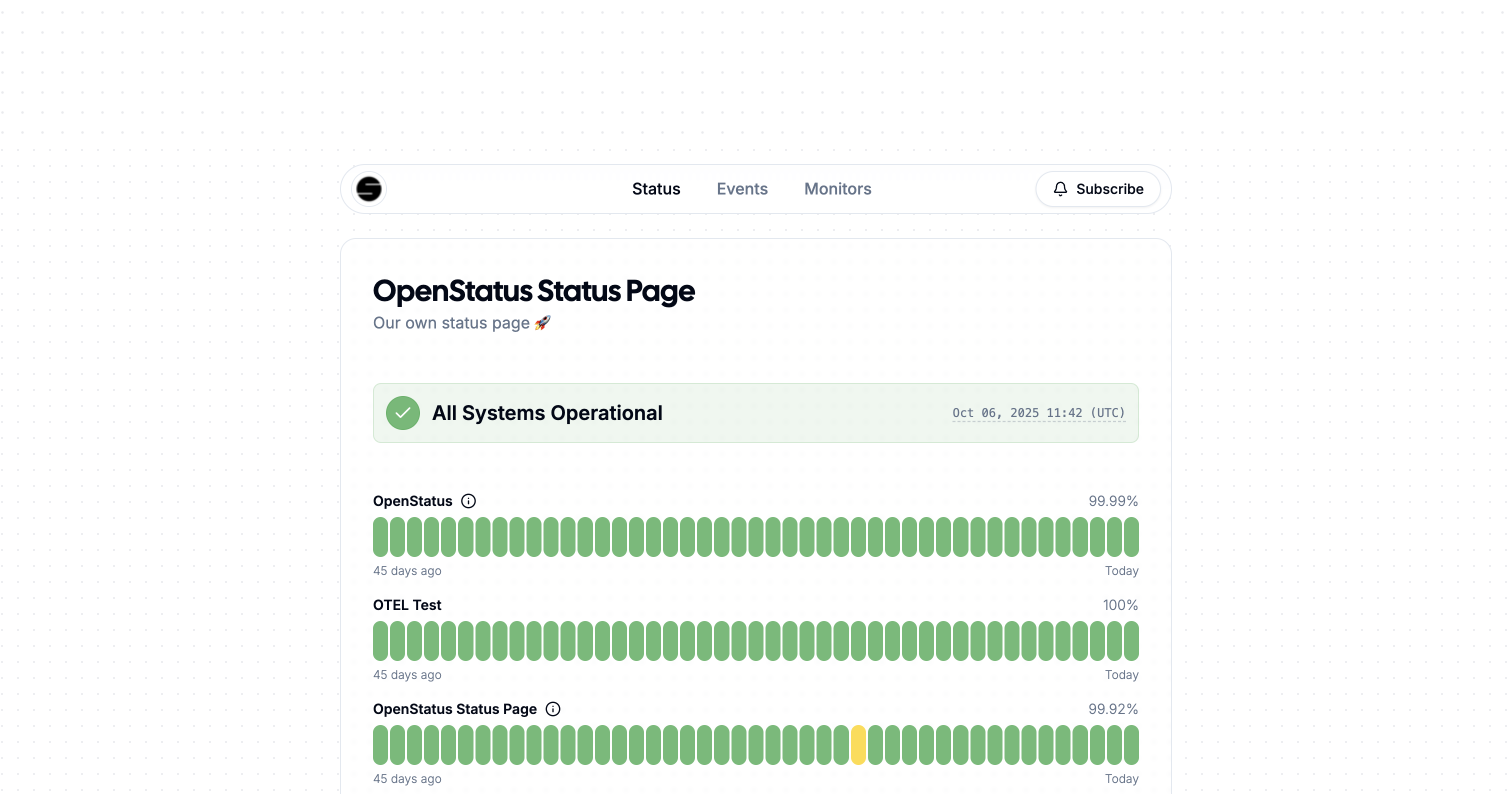
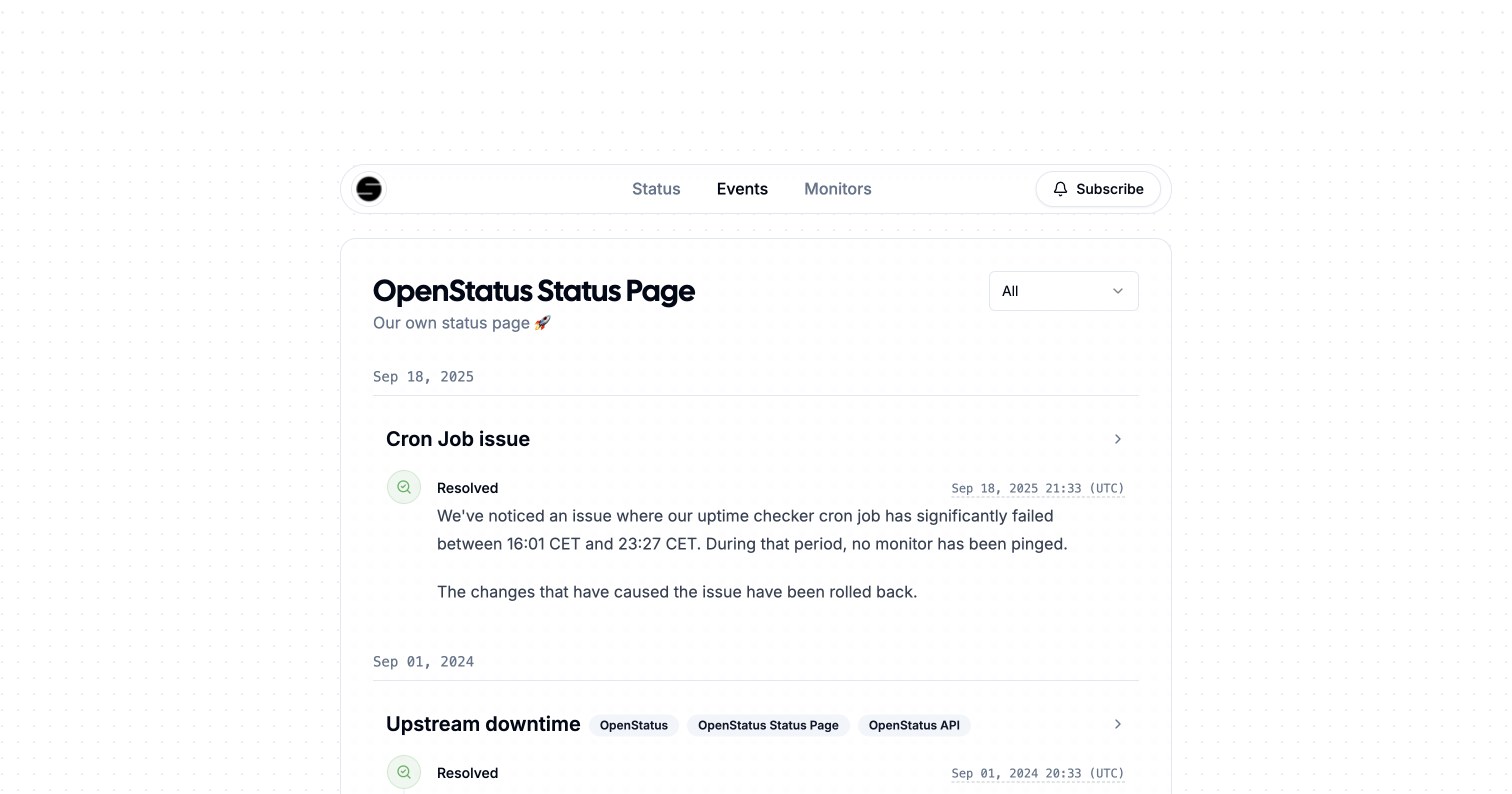
Openstatus provides open-source uptime monitoring and public status pages for growing teams. It helps them communicate incidents and prove compliance readiness, especially for SOC 2. Monitoring from 28 global regions, along with CLI and API management, appeals to developers and operations teams who prioritize transparency and auditability.
For who
Growing teams needing transparency and compliance
Solves what
Open-source uptime monitoring and public status pages
- Global uptime monitoring
- Customizable status pages
- Incident communication tools
In their own words
Ship your status page before your SOC 2 auditor asks for it
The open-source status page trusted by growing teams. Communicate incidents, prove compliance readiness, and monitor uptime from 28 global regions.
Commercial cues
Model
subscription
Free tier
Yes
Trial
Available
Pricing Strategy
- • A free tier attracts users needing basic uptime and status pages.
- • Tiered plans scale monitoring and data retention for growing teams.
Operator context
Operating setup
Team
Indie / lean
LLM classification
Founded
Oct 2025
Platform
Web app
Audience
Developers
Social footprint
Market demand
Openstatus keyword demand
5 keywords
Market demand is Starter-tier market intelligence.
Derived from this product’s latest SimilarWeb keyword mix — directional demand, not proof.
Builder Strategy
- Strategy Type
- Niche Specialist
- Stage
- Profitable Stable
- Effort
- Small Team
About Openstatus Expand
Openstatus provides an open-source product for uptime monitoring and public status pages, targeting growing teams that need to maintain transparency and demonstrate compliance readiness. It helps organizations, particularly those pursuing SOC 2, by offering global monitoring from 28 regions and extensive customization.
Developers and operations teams can manage their setup programmatically via CLI and API, ensuring control and auditability. This approach creates a strong foundation for incident communication, proving service reliability to end-users and stakeholders.