
An open-source AI coding agent that integrates with terminal, IDE, and desktop.
Product memo
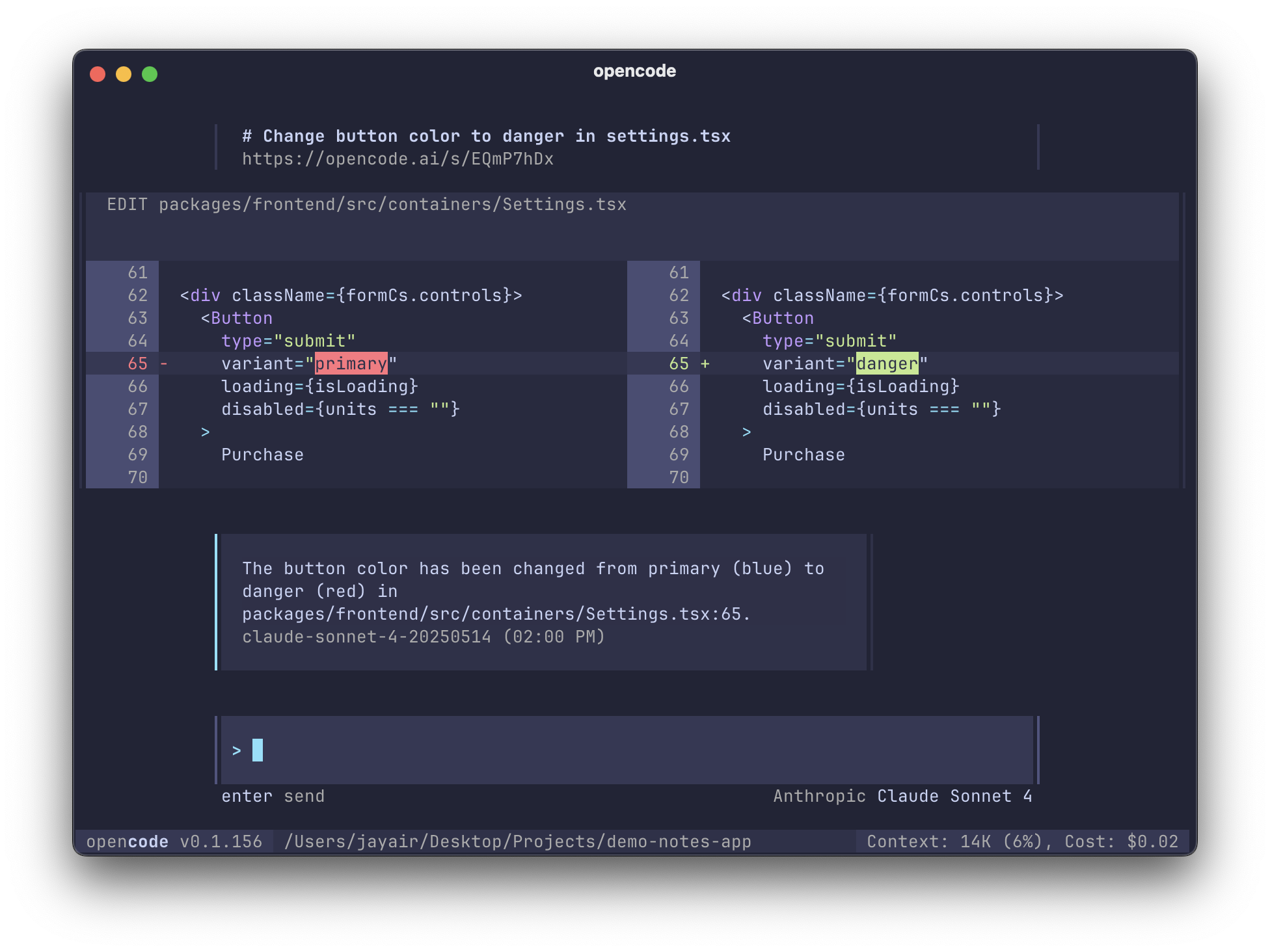
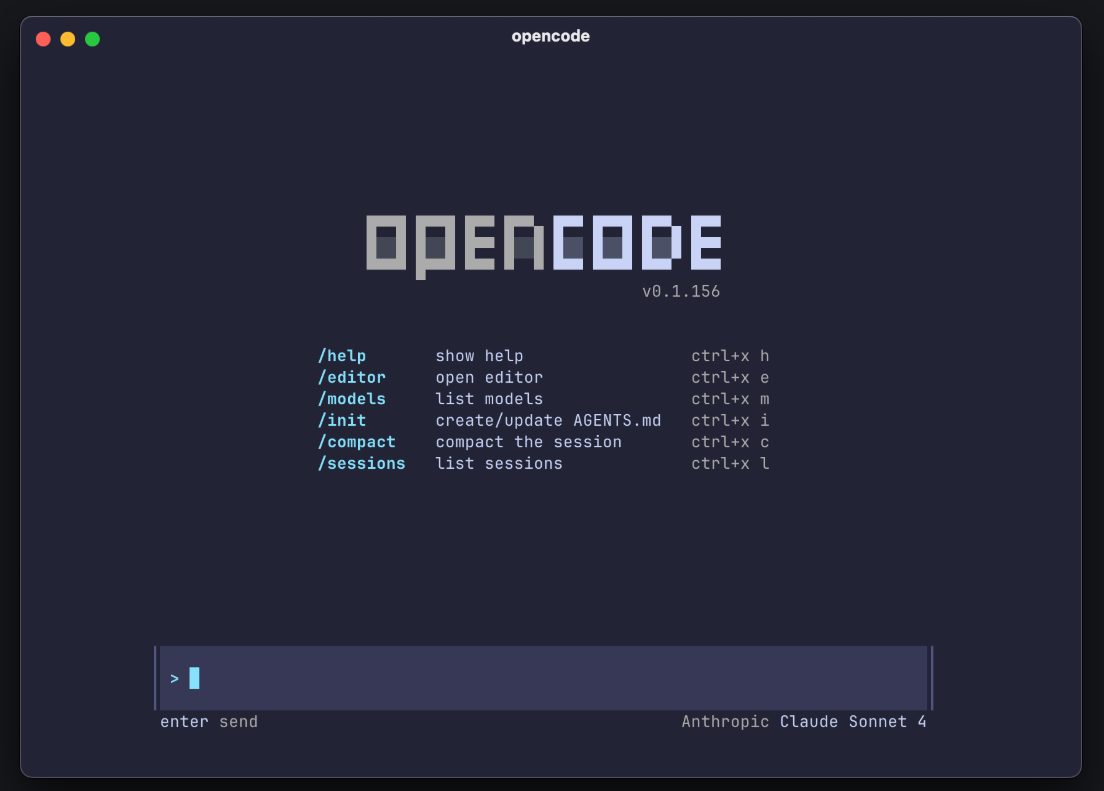
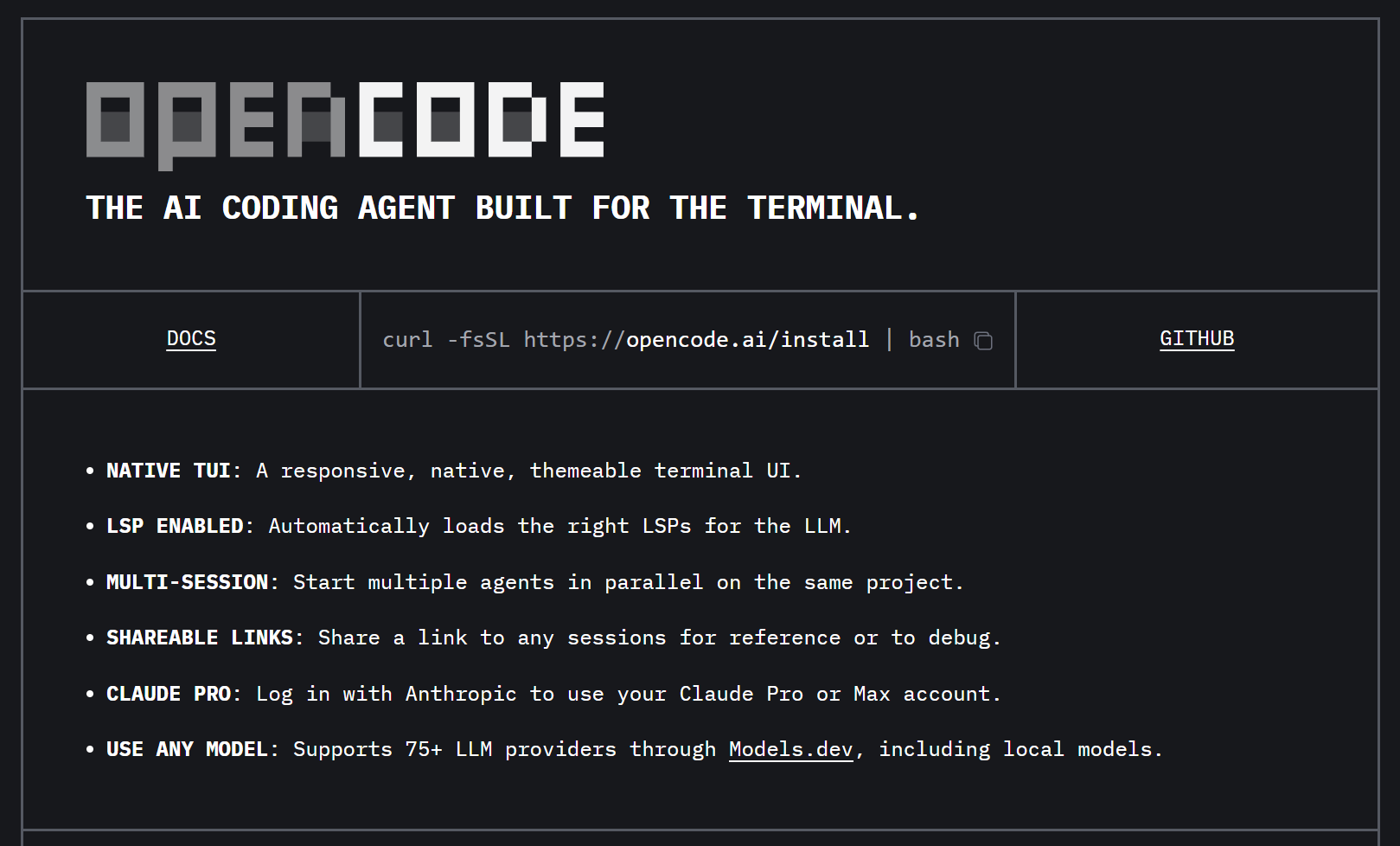
OpenCode brings AI-assisted coding directly into the developer's workflow, supporting terminal, IDE, and desktop environments. It offers model-agnostic LLM integration, letting users connect any model, including local ones. This open-source approach, combined with multi-session support and privacy-first data handling, removes friction for developers seeking flexible AI tools.
- For who
- Developers using terminal, IDE, or desktop
- Solves what
- AI-assisted coding directly within the developer's workflow
- Open-source AI coding agent
- Model-agnostic LLM integration
- Native TUI and IDE extensions
Commercial cues
- Model
- free only
- Free tier
- Yes
- Trial
- No
Pricing strategy
OpenCode offers a free tier; paid plan details are not publicly priced.
- • The open-source model fosters community contributions and rapid development.
- • Model-agnosticism attracts users with diverse LLM preferences and existing setups.
- • Free tier lowers testing friction.
Operator & company
Company
- Team
Indie / lean
- Founded
Jul 2025
Operating model
- Business model
Donation
- Platform
API
- Audience
Developers
Product channels
Builder strategy
ProvenRadar analysis
- Strategy Type
- Open Source Commercial
- Stage
- Bootstrapped Lean
- Effort
- Solo Buildable
Tech stack
Market demand
opencode zen keyword demand
5 keywords
Market demand is Starter-tier market intelligence.
Derived from this product’s latest SimilarWeb keyword mix — directional demand, not proof.
In their own words
The open source AI coding agent
Free models included or connect any model from any provider, including Claude, GPT, Gemini and more.
About opencode zen Expand
OpenCode provides an open-source AI coding agent designed for developers who want AI assistance directly within their existing workflows. It supports integration across the terminal, IDE, and desktop, offering a flexible product for various development environments.
A key differentiator is its model-agnostic approach, allowing users to connect any large language model, including local ones, rather than being locked into a specific provider. This, combined with multi-session support and a privacy-first data handling philosophy, makes OpenCode a practical option for developers prioritizing control and adaptability in their AI tooling.