
An open-source tool for building agent-driven local mobile app retention flows.
Product memo
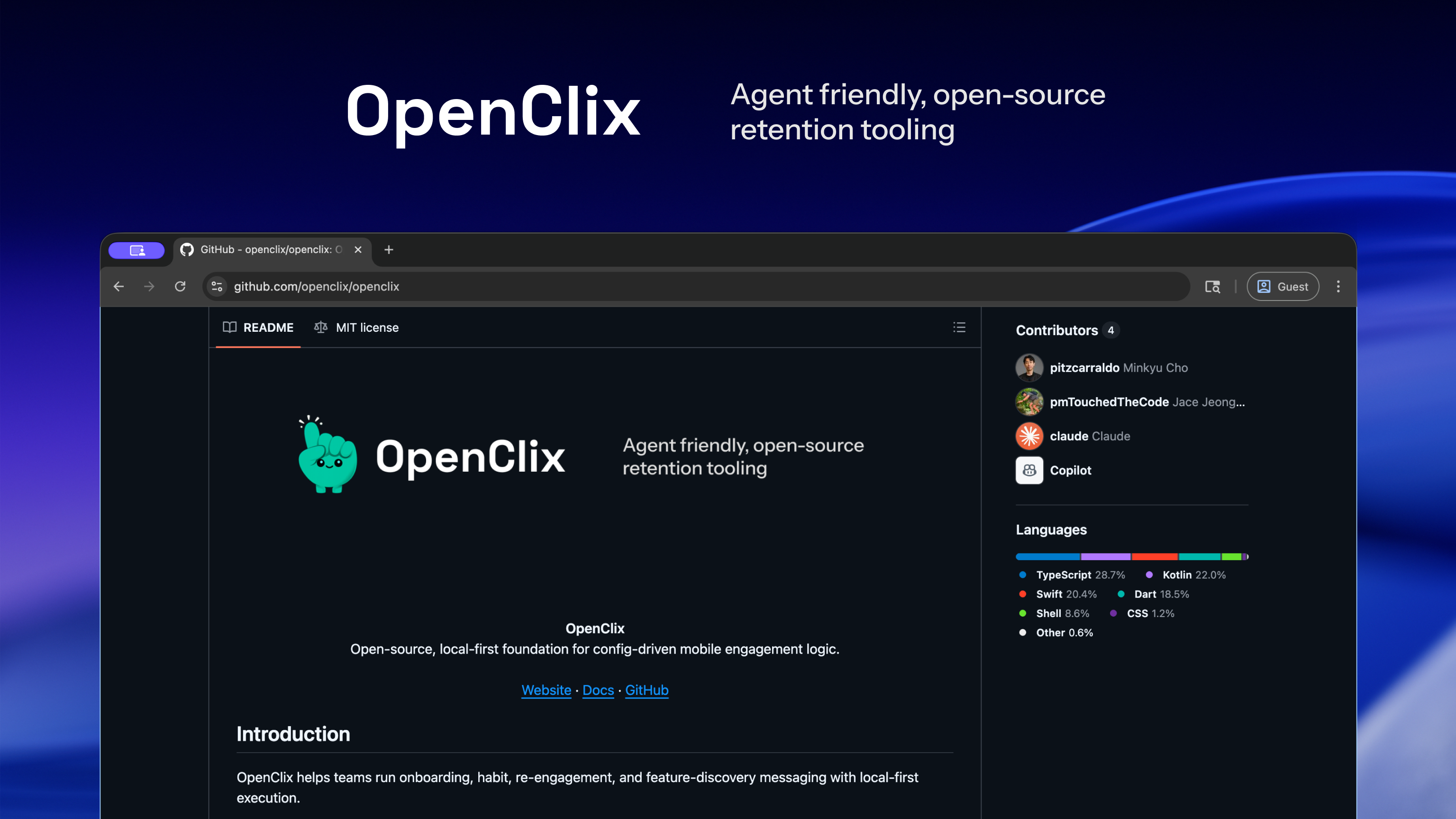
OpenClix offers an open-source, local-first approach to mobile app retention and engagement. It allows teams to build and deploy retention flows, onboarding nudges, and re-engagement campaigns directly on-device using config-driven logic and vendor source code. This model emphasizes full ownership, transparency, and agent-friendly interfaces for safe AI-driven iteration, bypassing the need for complex backend infrastructure or hosted control planes.
For who
Mobile teams building retention flows
Solves what
Agent-driven local push campaigns without heavy setup
- Source-in-repo client code
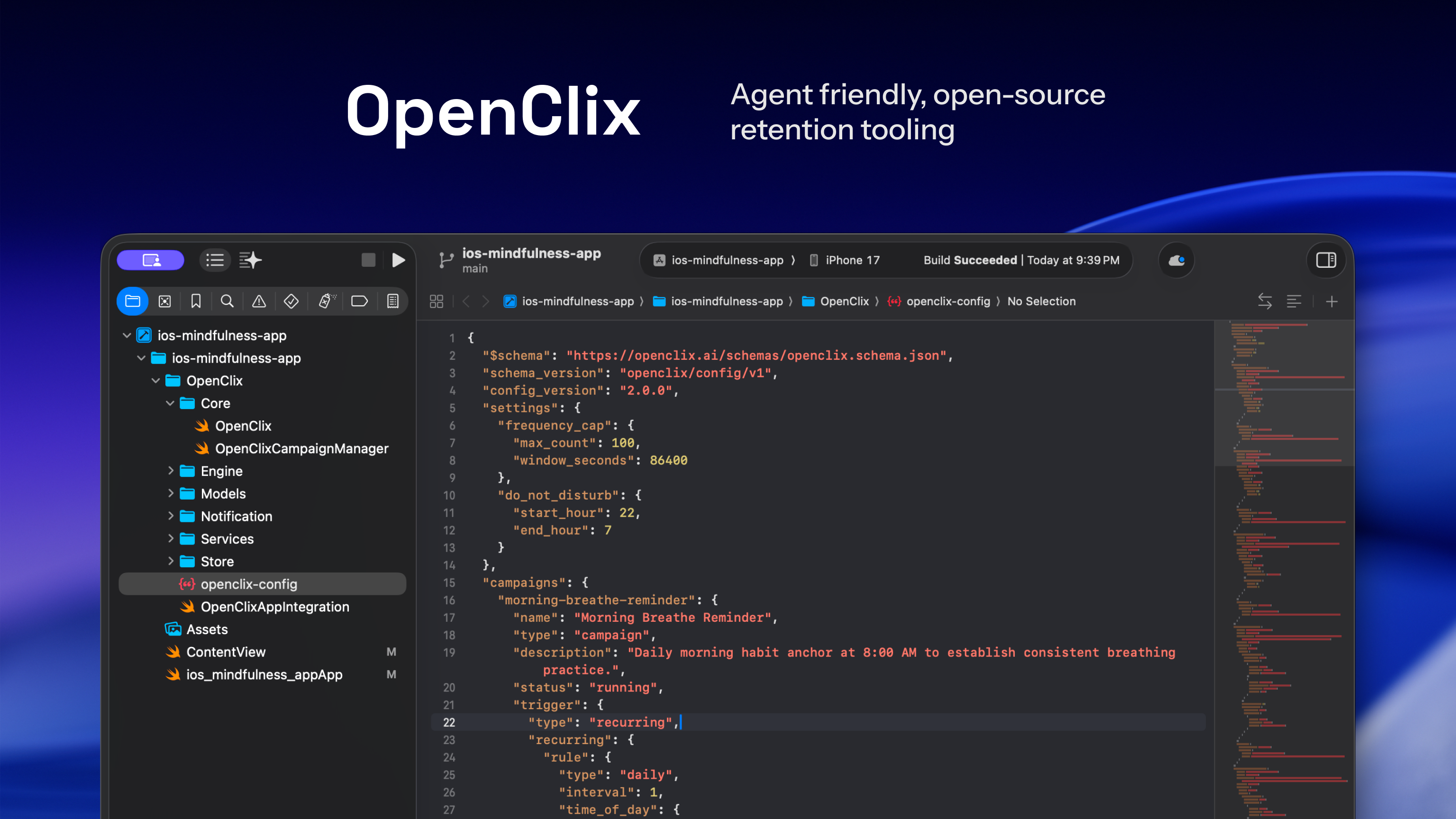
- Config-driven local engagement logic
- AI agent modification support
In their own words
Build retention flows without the infra maze
Source-first, config-driven mobile engagement logic that runs on-device. Ship quickly with clear ownership.
Open-source local-first engagement
Commercial cues
Model
—
Free tier
Yes
Trial
No
Pricing Strategy
OpenClix offers a free Open Source tier; paid plan details are not publicly priced.
- • MIT license encourages adoption and modification
- • No-cost model removes friction for builders
- • Focus on developer experience and ownership
Operator context
Operating setup
Team
Indie / lean
LLM classification
Founded
Mar 2026
Platform
Web app
Audience
Developers
Social footprint
Tech stack
Builder Strategy
- Strategy Type
- Niche Specialist
- Stage
- Bootstrapped Lean
- Effort
- Solo Buildable
About OpenClix Expand
OpenClix provides an open-source, local-first product for mobile app retention and engagement automation. It empowers mobile teams to build and deploy retention flows, onboarding nudges, and re-engagement campaigns directly on-device.
By leveraging config-driven logic and allowing teams to vendor source code into their repositories, OpenClix ensures full ownership and transparency. The platform is designed to be AI agent-friendly, with clear interfaces and edit points for safe, reviewable iteration, eliminating the need for complex backend infrastructure or hosted control planes.