
API monitoring for Next.js applications, combining internal and external checks.
Product memo
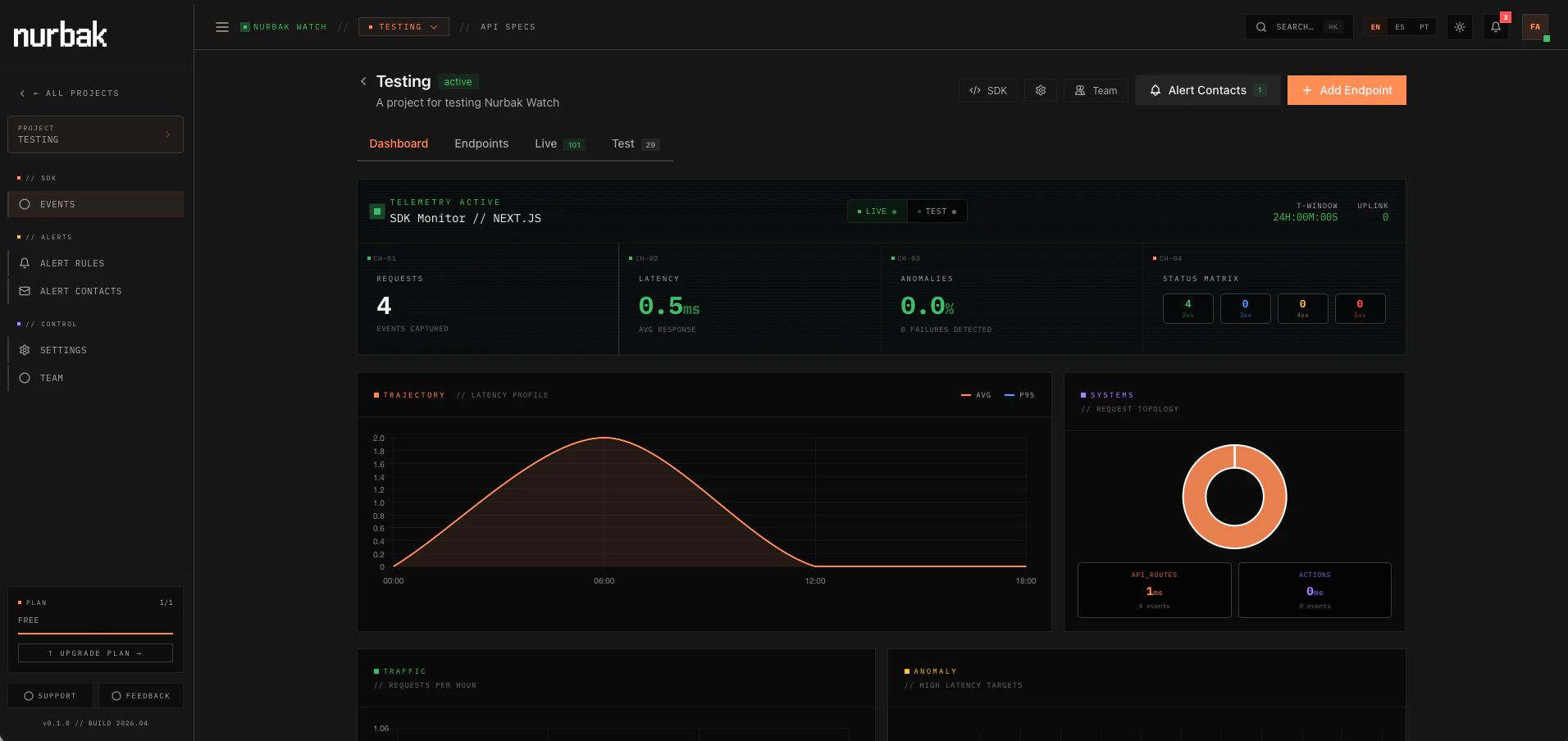
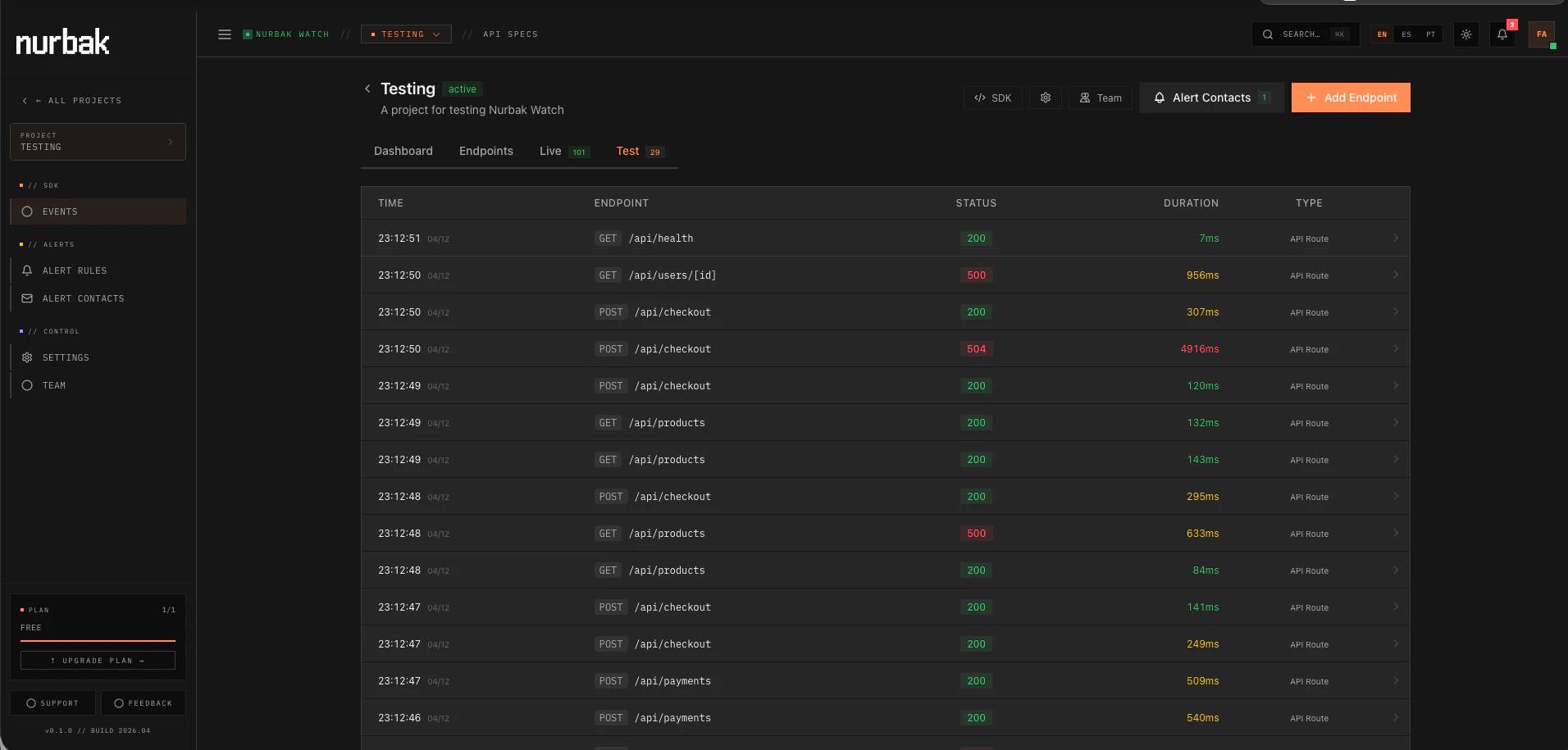
Nurbak Watch gives Next.js developers a unified view of API performance, combining internal execution monitoring with external uptime checks. It integrates directly into Next.js applications, offering a zero-config setup that bypasses the complexity of traditional observability platforms. This approach helps small teams quickly gain visibility into their API health without extensive configuration or agent deployments.
For who
Next.js developers and small teams
Solves what
API monitoring for Next.js applications with internal and external checks
- Internal execution monitoring
- External uptime checks
- Zero-config setup
In their own words
Catch the '200 OK but actually broken' bug — before your users do.
Next.js API monitoring with external uptime checks from 4 global regions every minute plus internal execution monitoring from inside your server. The only tool that does both. No agents. No YAML. Slack, email or WhatsApp alerts in seconds — not hours.
Commercial cues
Model
subscription
Free tier
Yes
Trial
Available
Pricing Strategy
- • A Free tier removes adoption friction for individual developers and small projects.
- • Tiered plans scale limits on projects and endpoints, aligning with team growth.
- • Alert and region options expand with paid plans, serving more critical use.
Operator context
Operating setup
Team
Indie / lean
LLM classification
Founded
Feb 2026
HQ
Uruguay
Platform
Web app
Audience
Developers
Payments
Polar
Detected via TrustMRR
Social footprint
Market demand
Nurbak keyword demand
5 keywords
Market demand is Starter-tier market intelligence.
Derived from this product’s latest SimilarWeb keyword mix — directional demand, not proof.
Builder Strategy
- Strategy Type
- Niche Specialist
- Stage
- Pre Revenue
- Effort
- Solo Buildable
About Nurbak Expand
Nurbak Watch offers a specialized API monitoring product built for Next.js developers and small teams. It differentiates itself by combining internal execution monitoring, integrated directly within Next.js applications, with external uptime checks from multiple global regions.
This dual approach provides broad visibility into API performance. The tool focuses on simplicity, requiring minimal setup to deliver real-time alerts via Slack, email, or WhatsApp, making it an accessible option for developers who need immediate insights without the overhead of complex enterprise observability platforms.