
Centralized routing and management for application notifications, with rule-based controls.

Product memo
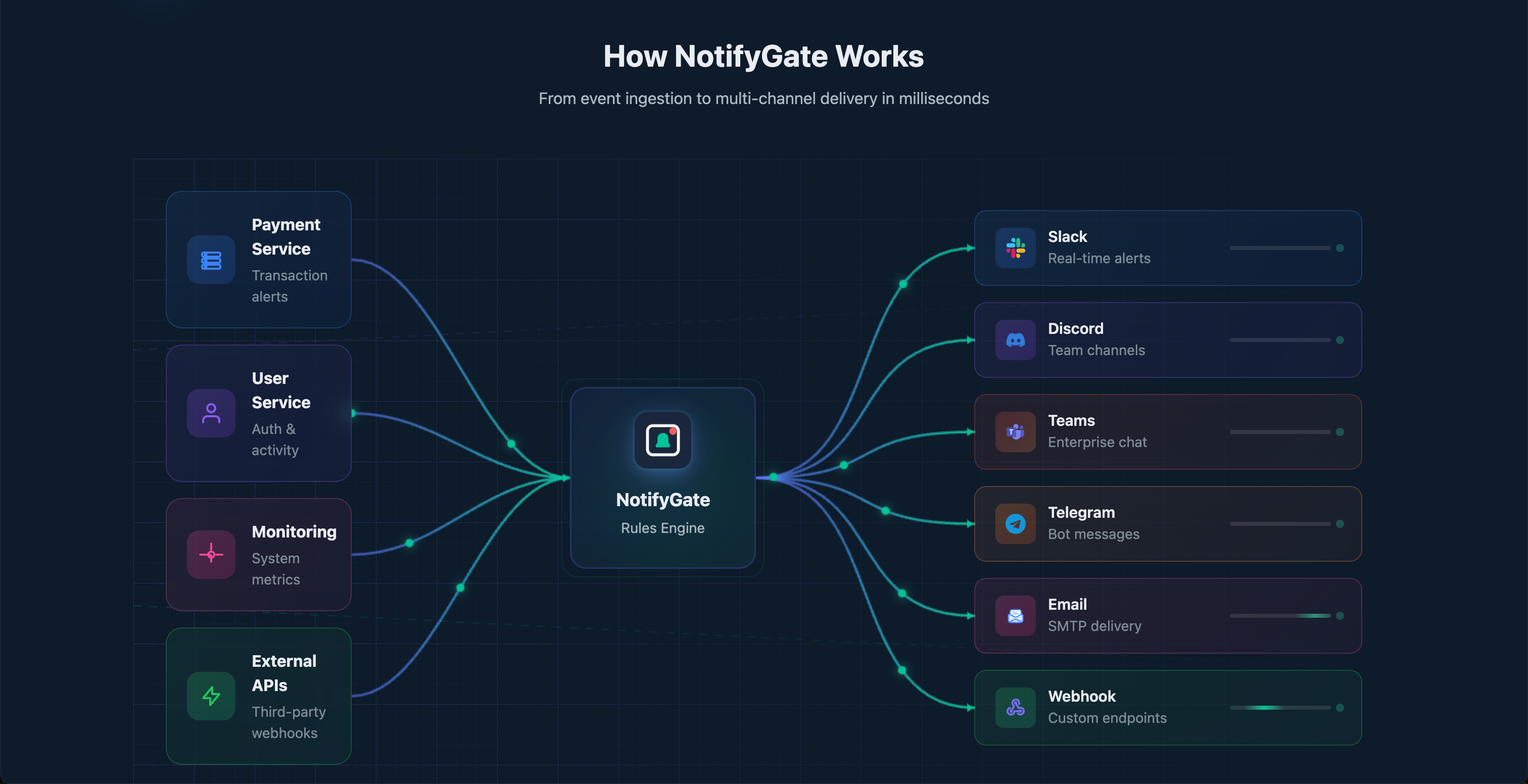
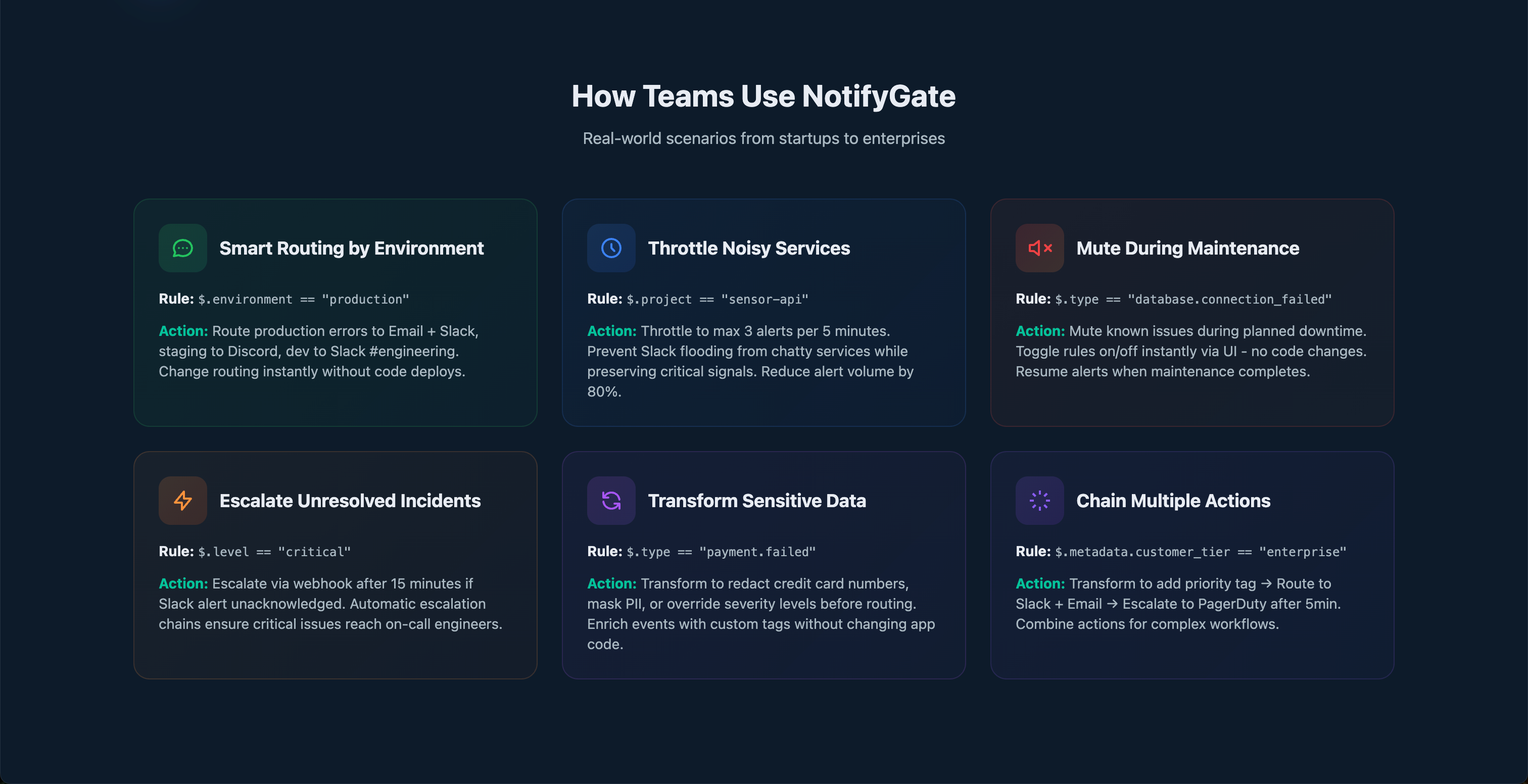
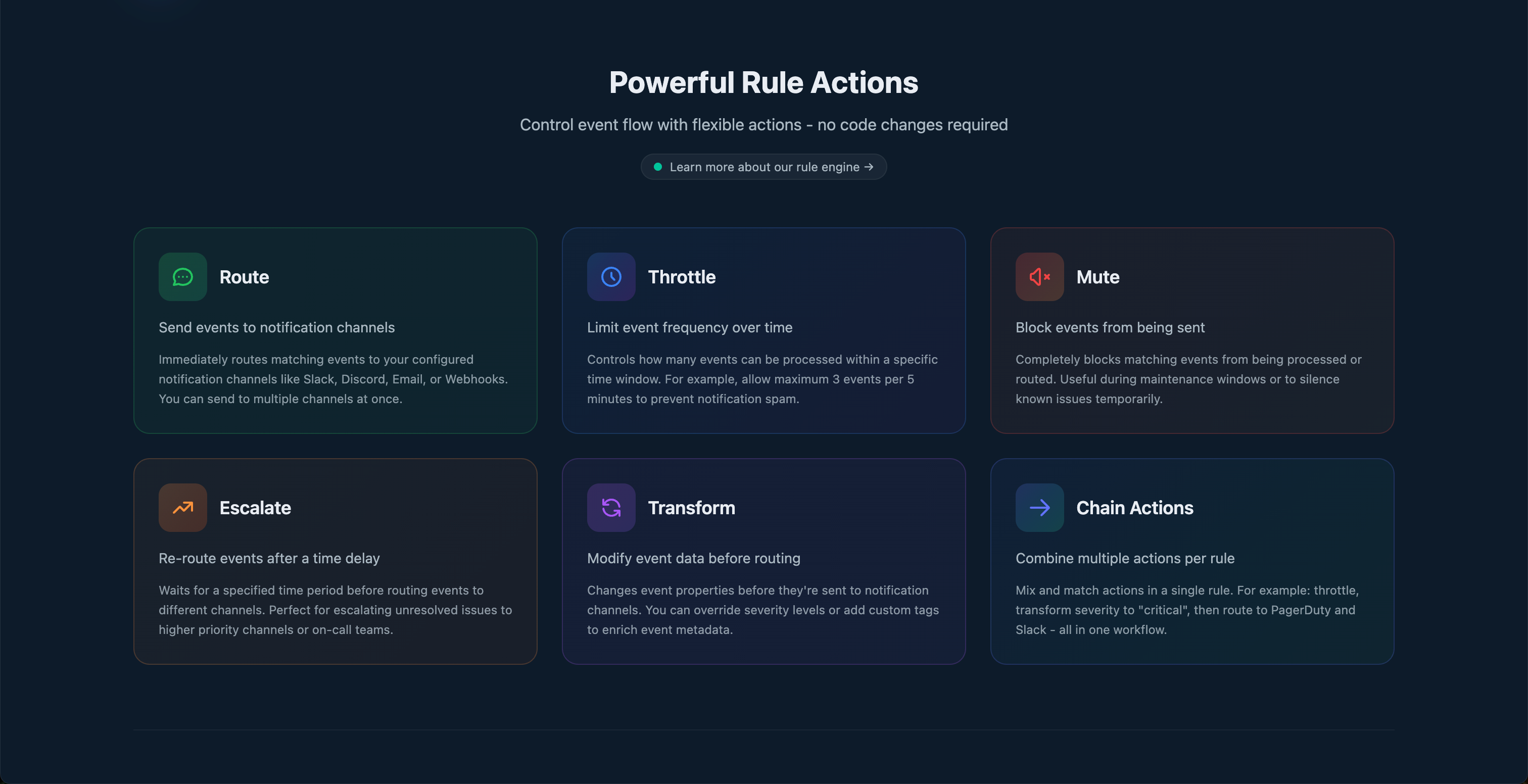
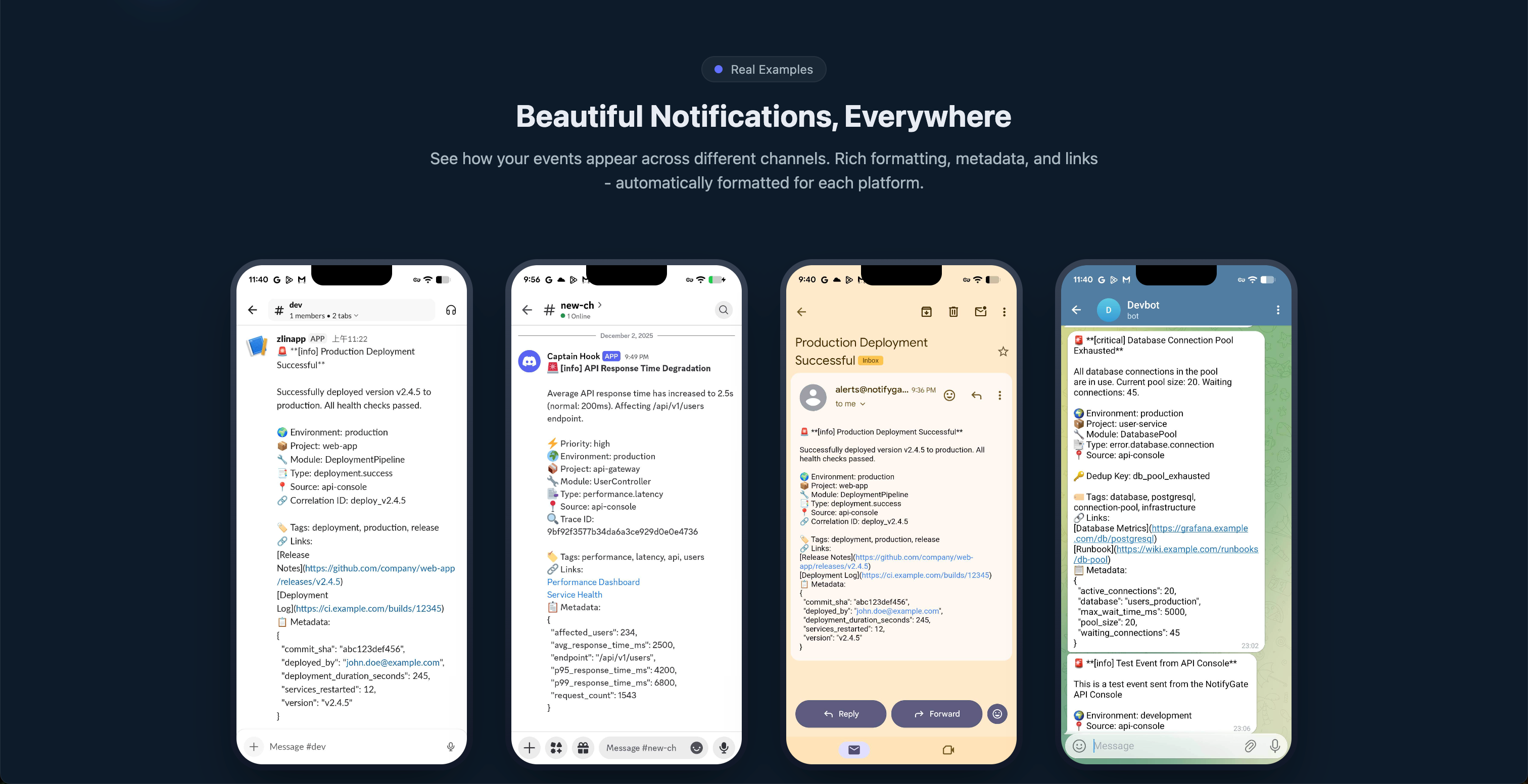
Developers and Ops teams use NotifyGate to manage application notifications, routing them through a centralized system. It provides granular control over notification flow, allowing users to mute, throttle, escalate, and transform events without code changes. This approach helps teams reduce alert noise and ensures critical issues reach the right channels, such as Slack, Discord, or email, efficiently.
For who
Developers and Ops teams managing notifications
Solves what
Centralized, rule-based routing and management of application notifications
- Rule-based notification routing
- Event throttling and muting
- Multi-channel delivery
In their own words
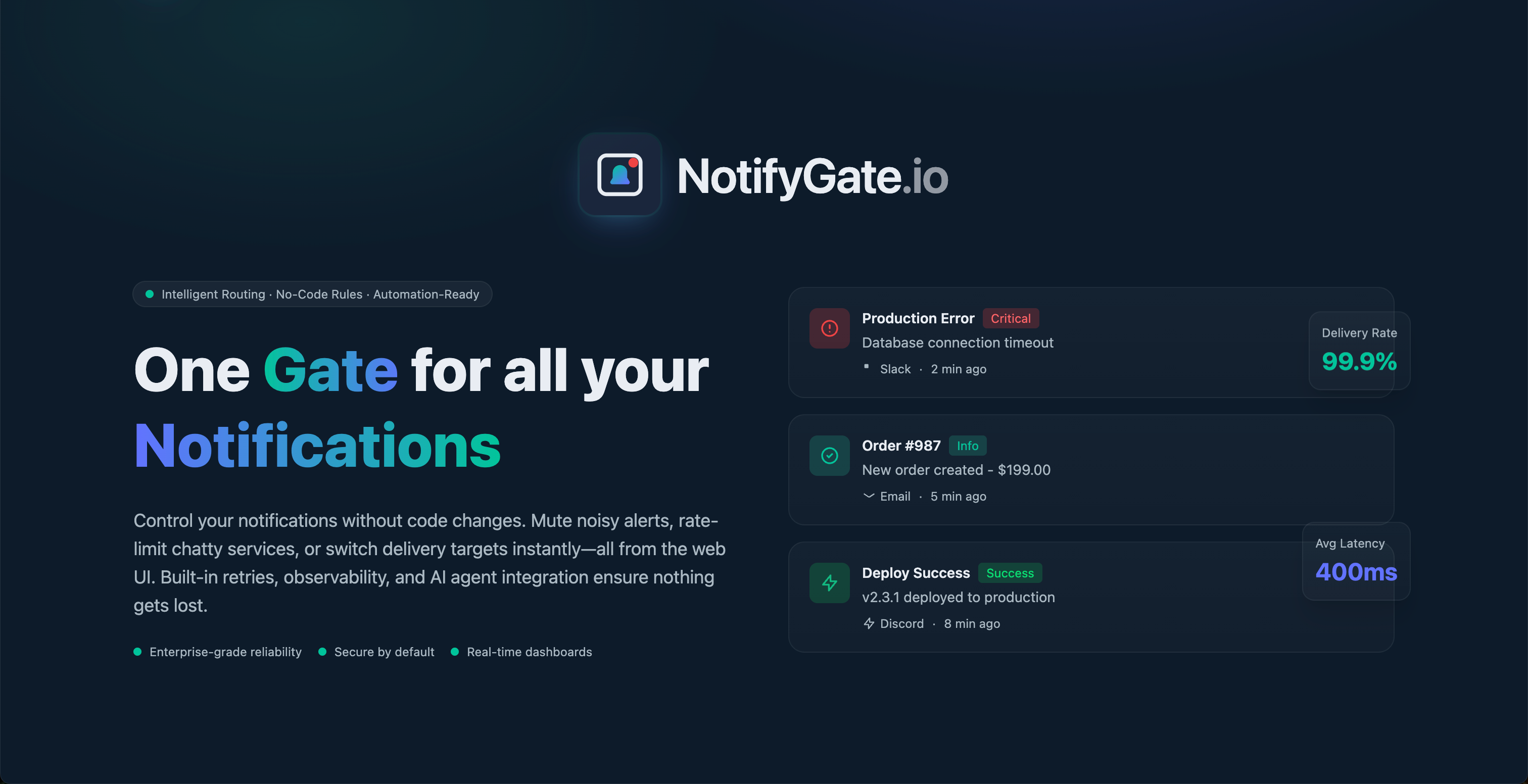
One Gate for all your Notifications
The open-source notification routing platform.
Mute noisy alerts, rate-limit chatty services, or switch delivery targets instantly—all from the web UI.
Commercial cues
Model
hybrid
Free tier
Yes
Trial
Available
Pricing Strategy
- • A free tier with event limits drives initial adoption for small projects.
- • Tiered plans scale features and event volume to match user growth.
Operator context
Operating setup
Founded
Jan 2026
Platform
Web app
Audience
Developers
Social footprint
Builder Strategy
- Strategy Type
- Open Source Commercial
- Stage
- Vc Growth
- Effort
- Small Team
About NotifyGate Expand
NotifyGate offers a centralized, rule-based system for managing application notifications, designed for developers and operations teams. It provides granular control over how alerts are processed and delivered, allowing users to mute noisy alerts, rate-limit chatty services, or instantly switch delivery targets.
This helps teams cut down on alert fatigue and ensures that critical information reaches the correct channels, like Slack or email, efficiently. The product's open-source foundation provides flexibility, while its tiered SaaS plans offer managed cloud services that scale with event volume and feature needs.