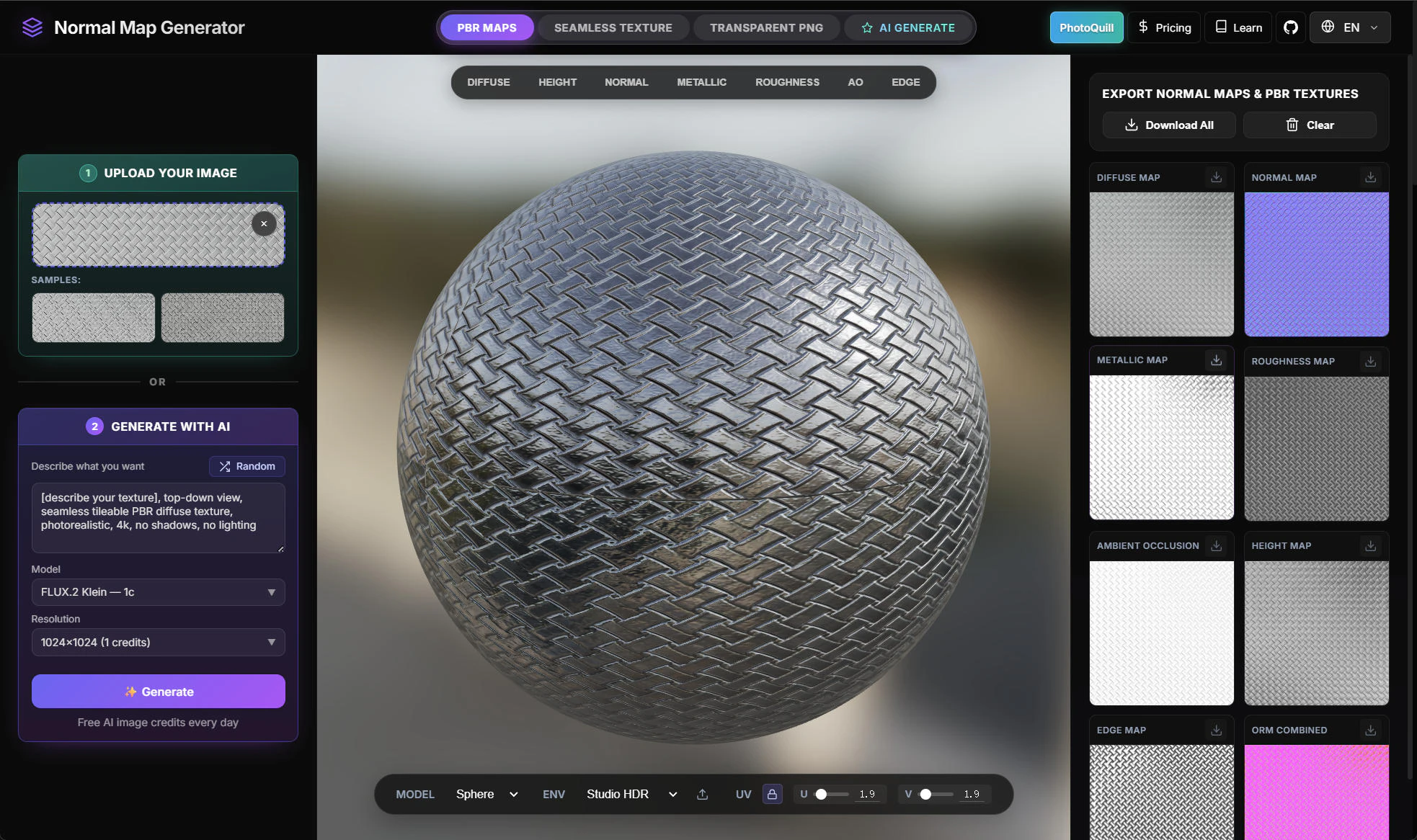
AI-powered workstation generating PBR textures and direct 3D maps from text prompts.
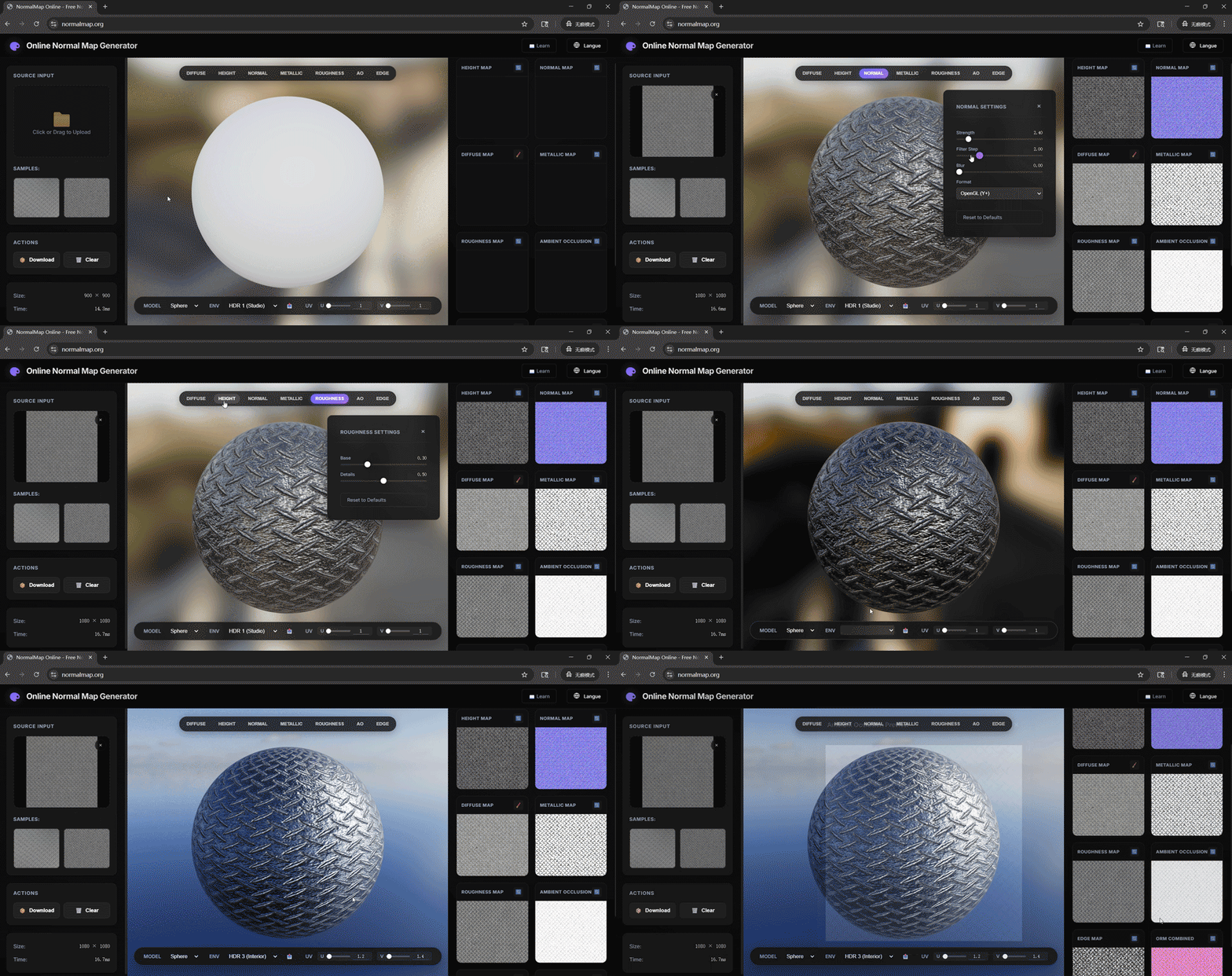
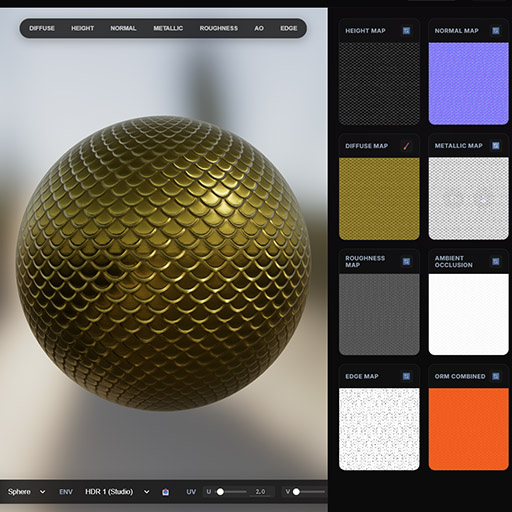
Product memo
3D artists and game developers use Normal Map Online AI to generate PBR textures and maps. It creates direct, tileable outputs from text prompts, extracting essential maps like Normal, Roughness, and Metallic. This tool serves as a rapid prototyping product for asset creation, simplifying the workflow for visual content.
For who
3D artists and game developers
Solves what
AI-powered generation of PBR textures and maps
- AI texture generation from text
- Normal, Roughness, Metallic map extraction
- Seamless texture creation
In their own words
Free Normal Map Generator
Seamless, Tileable PBR Textures
Create PBR Textures, SEAMLESS TEXTURE, and TRANSPARENT PNG online in your browser.
Commercial cues
Model
hybrid
Free tier
Yes
Trial
No
Pricing Strategy
Normal Map Online AI offers a free tier; paid plan details are not publicly priced.
- • Tiered credit bundles offer a defined plan boundary as user demand grows.
- • Annual plans provide a discount, securing longer-term user commitments.
- • One-time credit purchases allow flexible top-ups for occasional high-volume needs.
Operator context
Founded
Jan 2026
Platform
Web app
Audience
Developers
Public footprint
Tech stack
Builder Strategy
- Strategy Type
- Ai Wrapper
- Stage
- Pre Revenue
- Effort
- Solo Buildable
About Normal Map Online AI Expand
Normal Map Online AI provides 3D artists and game developers with an AI-powered workstation for generating PBR textures and maps. The platform focuses on creating direct, tileable outputs directly from text prompts, simplifying the initial stages of asset creation.
It extracts critical map types such as Normal, Roughness, Metallic, AO, and Height, which are essential for realistic 3D rendering. This helps users quickly prototype and iterate on visual assets, reducing manual effort in texture development.
The tool's hybrid pricing model, offering both subscription credits and one-time purchases, accommodates varying project needs and usage patterns.