
A TypeScript framework and platform for building, testing, and deploying AI agents.
Product memo
Developers building AI agents and applications use this framework and platform to simplify their workflows. It provides tools for building, testing, and deploying AI applications, including features like observability, tracing, and custom evaluations. The open-source framework attracts individual developers, while the paid platform scales to enterprise teams needing advanced support and features.
For who
Developers building AI agents and applications
Solves what
Framework and platform for building, testing, and deploying AI agents
- TypeScript framework for AI agents
- Observability, tracing, and evals
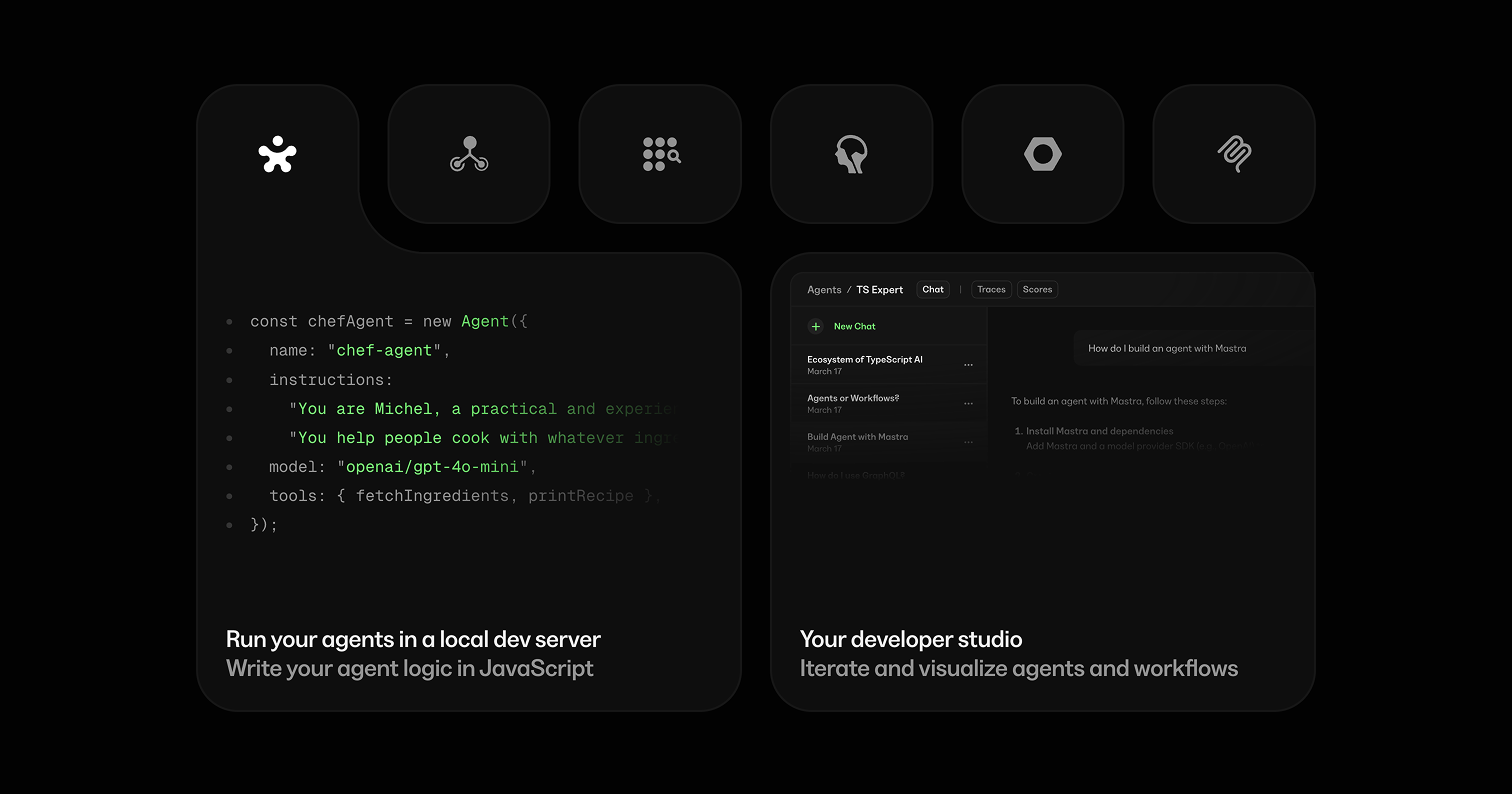
- Interactive Studio for dev and testing
In their own words
Build more
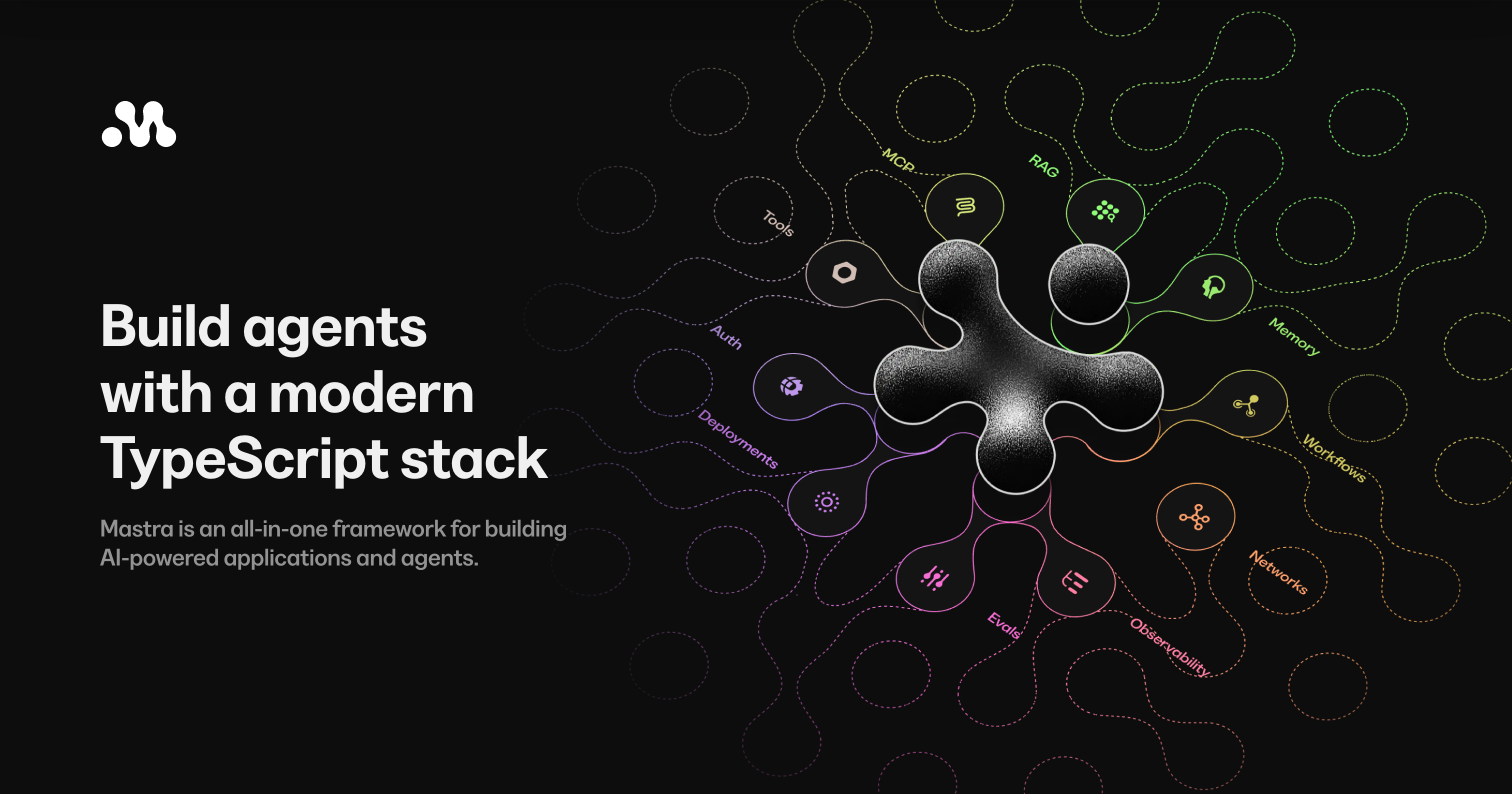
Mastra is the modern TypeScript framework for AI-powered applications and agents.
Commercial cues
Model
subscription
Free tier
Yes
Trial
No
Pricing Strategy
- • A free tier removes adoption friction for individual developers and small projects.
- • Tiered plans offer increasing data retention and team features for scaling organizations.
- • Enterprise plans include custom volume, RBAC, and uptime SLAs for large deployments.
Operator context
Team
VC / larger team
Founded
Jan 2026
HQ
United States
Platform
Web app
Audience
Developers
Public footprint
+1 more footprint links
Tech stack
Builder Strategy
- Strategy Type
- Niche Specialist
- Stage
- Vc Growth
- Effort
- Small Team
About Mastra Expand
Mastra offers a broad framework and platform designed for developers creating AI agents and applications. It simplifies the process of building, testing, and deploying these tools, providing essential features like an AI agent framework, observability, and tracing.
The platform supports TypeScript and JavaScript, making it accessible to a broad developer audience. With a free tier for individual developers and a structured upgrade path to Teams and Enterprise plans, Mastra addresses the needs of projects from initial experimentation to large-scale, secure deployments requiring SSO, SOC 2 documentation, and audit logs.