
Localization engineering platform integrating translation infrastructure directly into development workflows.

Product memo
Engineering teams building global products often struggle with inconsistent translations and slow localization cycles. Lingo.dev solves this by embedding translation infrastructure directly into the development workflow, moving localization from an external vendor relationship to a configurable, code-driven process. It persists glossaries, brand voice, and per-locale model chains, ensuring terminology stays consistent across every locale and release. This approach appeals to engineering teams aiming to automate and control their localization process directly.
For who
Engineering teams building global products
Solves what
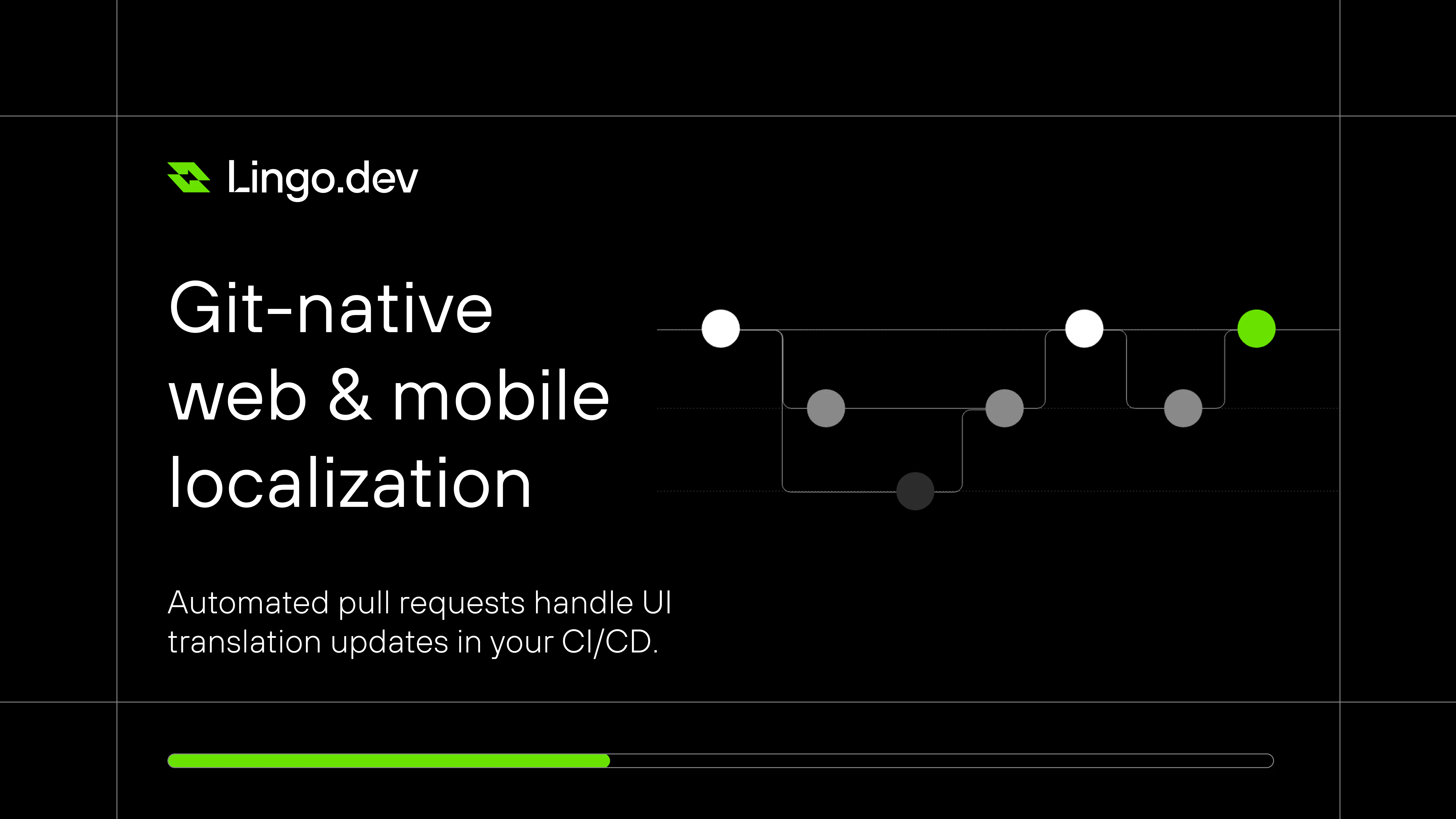
Streamlines localization by integrating translation infrastructure into the development workflow.
- Configurable localization engines
- Stateful translation APIs
- Automated translation quality scoring
In their own words
The localization engineering platform.
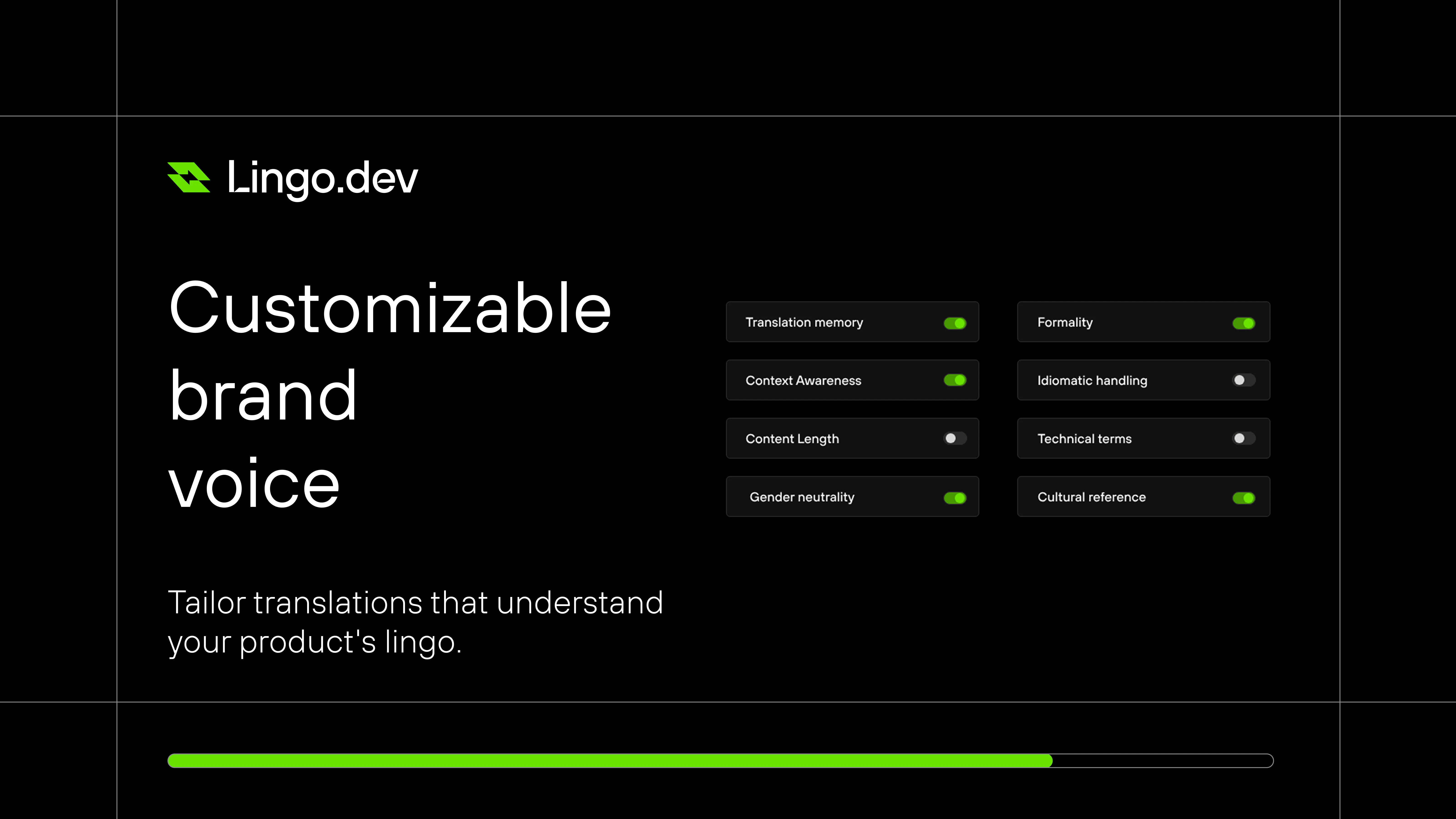
that persist glossaries, brand voice, and per-locale model chains – then call them from backend code, CLI, CI/CD, or MCP. Terminology stays consistent across every locale, every release.
Commercial cues
Model
subscription
Free tier
No
Trial
No
Pricing Strategy
- • A free Sandbox tier lowers adoption risk for engineering teams.
- • Throughput limits align costs with usage, scaling as products grow.
Operator context
Operating setup
Team
VC / larger team
LLM classification
Founded
May 2026
HQ
United States
Platform
API
Audience
Developers
Market demand
Lingo.dev v1 keyword demand
4 keywords
Market demand is Starter-tier market intelligence.
Derived from this product’s latest SimilarWeb keyword mix — directional demand, not proof.
Builder Strategy
- Strategy Type
- Niche Specialist
- Stage
- Vc Growth
- Effort
- Small Team
About Lingo.dev v1 Expand
Lingo.dev provides a localization engineering platform for engineering teams building global products. It simplifies localization by shifting translation from an external vendor relationship to configurable infrastructure.
The platform embeds glossaries, brand voice, and per-locale model chains directly into the development workflow, ensuring consistent terminology and measurable quality. It aims to make localization a direct part of the development cycle, rather than a separate, manual effort.