
An observability tool that catches leaked secrets in AI coding assistant prompts.

Product memo
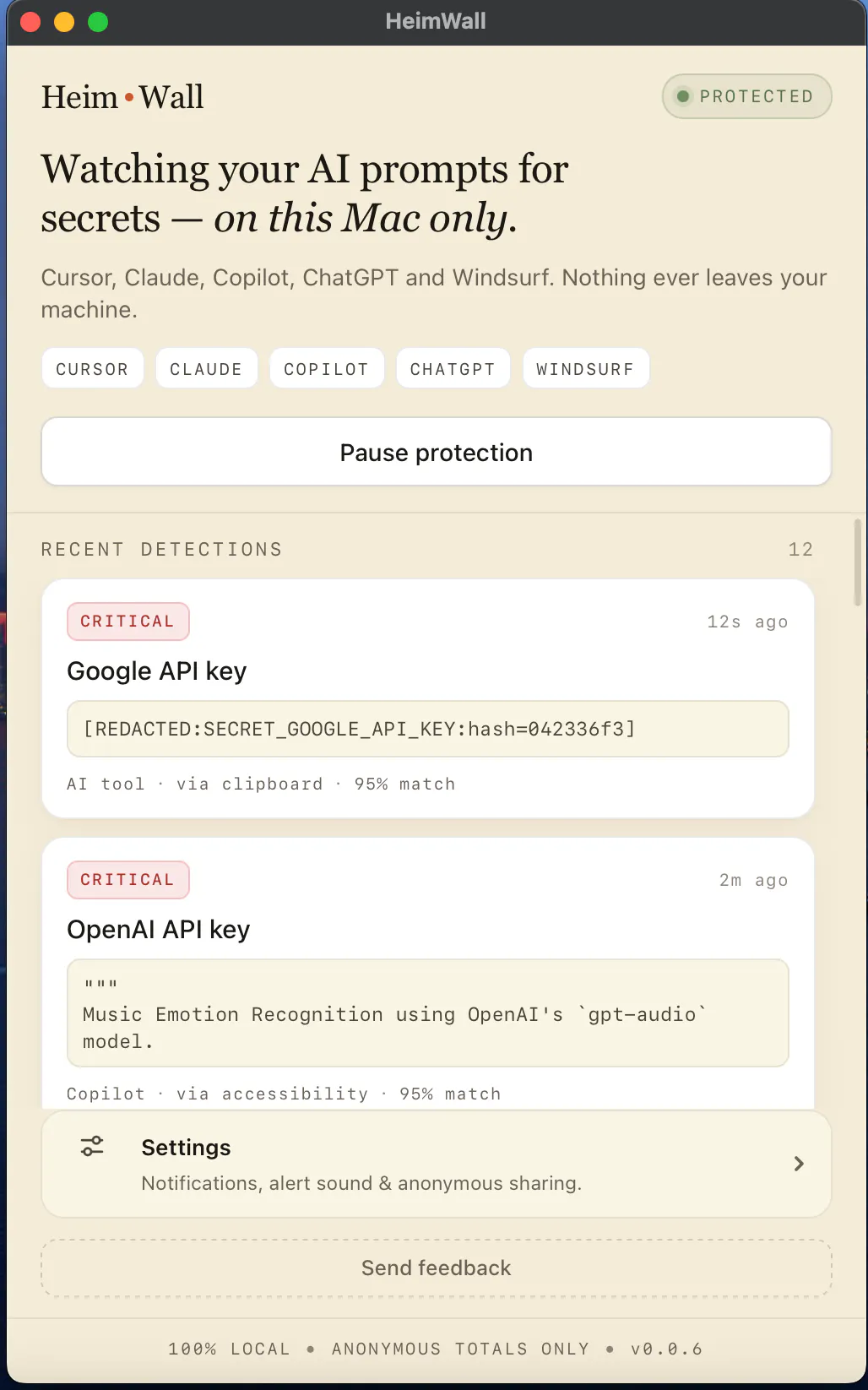
HeimWall targets engineering teams adopting AI coding assistants like Cursor and Copilot. It provides on-device observability to catch sensitive data leaks before they occur, without disrupting developer workflows. Unlike traditional DLP, it focuses on prompt-based data exfiltration, offering tiered detection and redaction at the source, with manager dashboards showing anonymized signals rather than raw content.
For who
Engineering teams using AI coding assistants
Solves what
Detects and redacts leaked secrets, PII, and confidential data in prompts.
- On-device capture and detection
- Tiered detection (regex + classifier)
- Redaction at source
In their own words
Observability for the _agentic_ workforce.
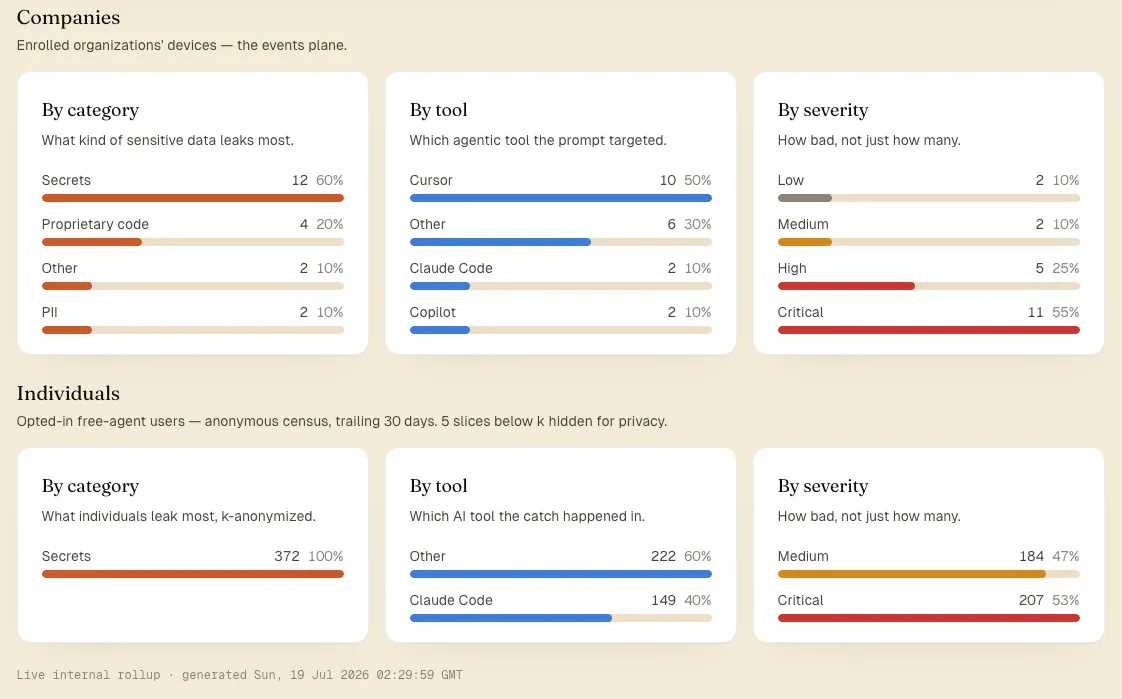
Signal, not surveillance. See how your engineers use Cursor, Claude Code, and Copilot — catch leaked secrets, PII, and confidential data, without blocking them or reading their prompts.
Commercial cues
Model
subscription
Free tier
Yes
Trial
Available
Pricing Strategy
- • Free tier for individual adoption and product validation
- • Per-seat pricing scales with team size and features
Operator context
Operating setup
Founded
Jul 2026
Platform
Desktop
Audience
Developers
Social footprint
Builder Strategy
- Strategy Type
- Niche Specialist
- Stage
- Pre Revenue
- Effort
- Solo Buildable
About HeimWall Expand
HeimWall offers observability for the agentic workforce, focusing on engineering teams using AI coding assistants like Cursor, Claude Code, and Copilot. It operates as a lightweight macOS app, performing on-device capture, detection, and redaction of sensitive data such as API keys, PII, and proprietary code before it leaves the user's machine.
This approach ensures privacy by not reading prompts directly, instead providing managers with anonymized signals, safety scores, and trend analysis. HeimWall aims to provide visibility into the adoption of these tools without compromising developer velocity or privacy, distinguishing itself from traditional DLP products by addressing the unique challenges of prompt-based data exfiltration.