
Connects wearable health data to AI for natural language insights.
Product memo
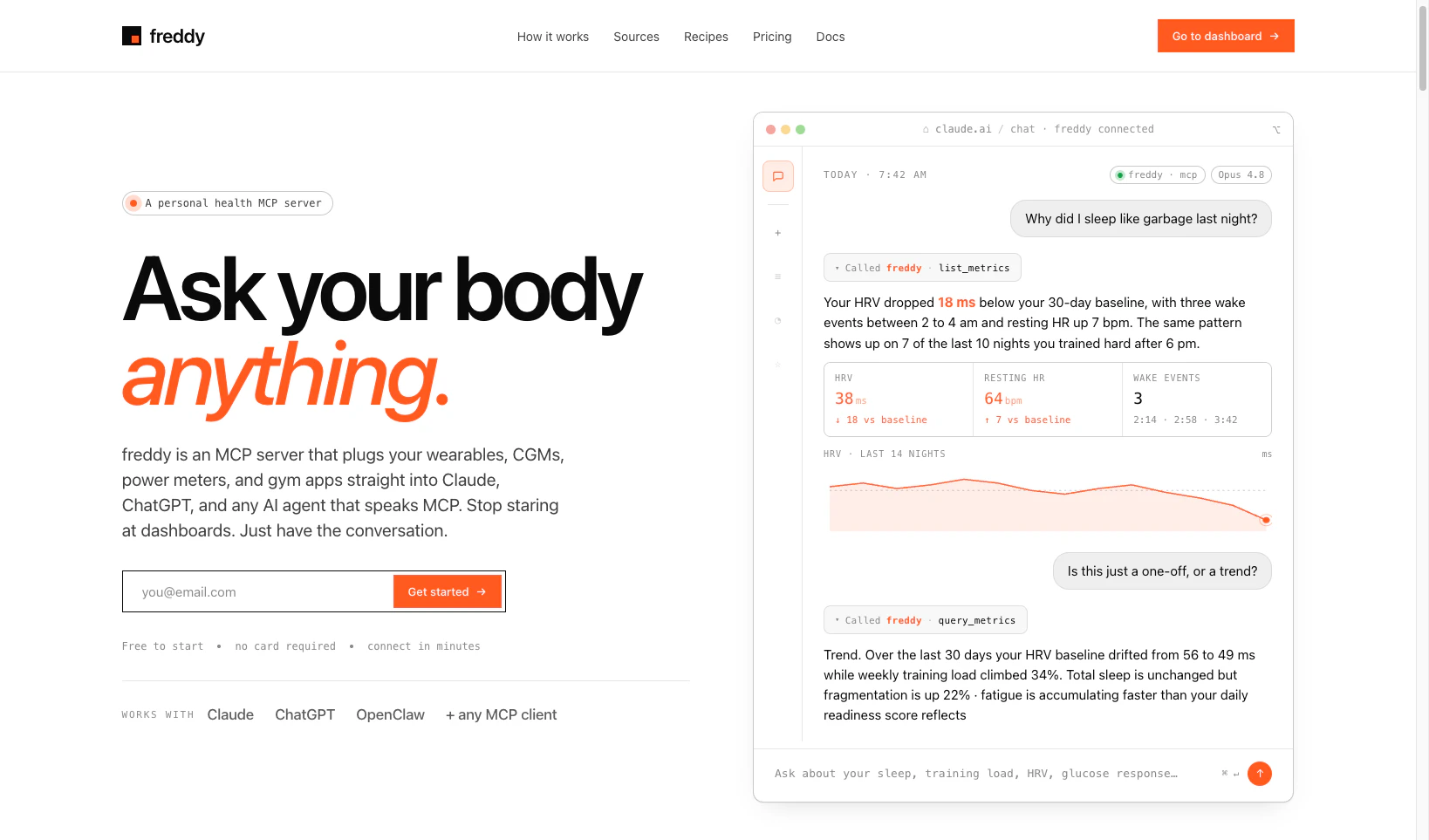
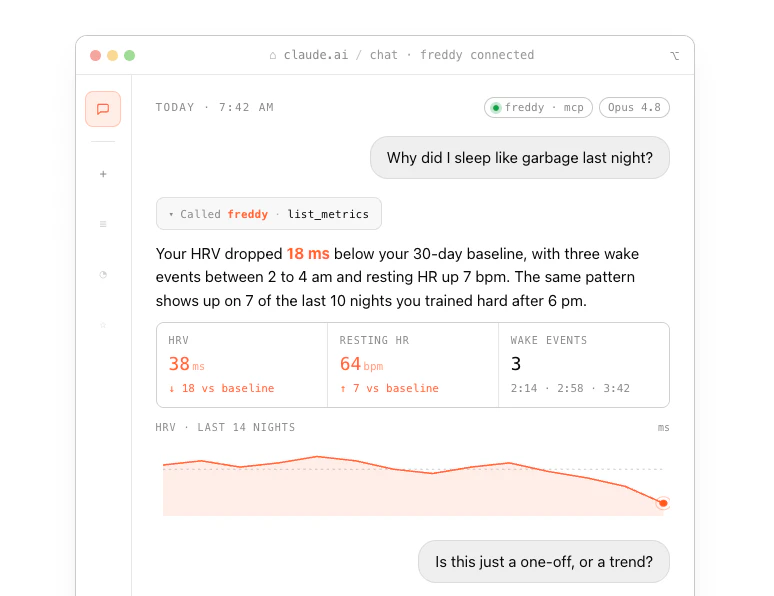
Freddy acts as a personal health MCP server, bridging raw wearable data and AI models like ChatGPT and Claude. It allows athletes, developers, and biohackers to ask natural language questions about their health metrics, moving beyond static dashboards to conversational insights. This positions freddy as a crucial layer for deeper understanding from collected data.
For who
Athletes, devs, and biohackers using wearables
Solves what
Connects health data to AI for natural language insights
- Wearable data integration
- AI conversation interface
- Cross-source analysis
In their own words
Ask your body
freddy is an MCP server that plugs your wearables, CGMs, power meters, and gym apps straight into Claude, ChatGPT, and any AI agent that speaks MCP. Stop staring at dashboards. Just have the conversation.
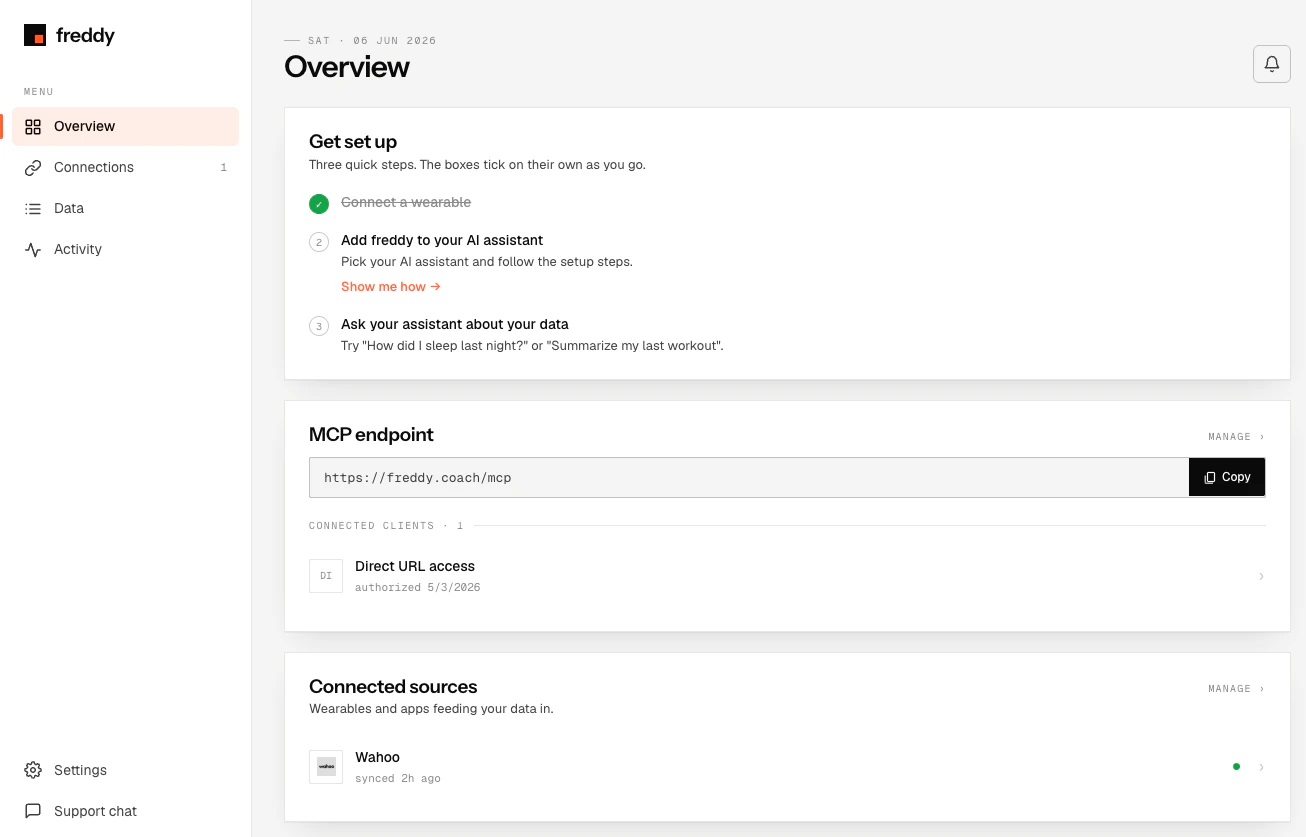
Connect your wearables, CGMs, power meters, and gym apps straight into Claude, ChatGPT, and any AI agent that speaks MCP.
Commercial cues
Model
hybrid
Free tier
Yes
Trial
Available
Pricing Strategy
- • A free tier removes friction for initial adoption with one connected source.
- • The one-time fee plus annual charge creates a hybrid purchase model.
Operator context
Team
Indie / lean
Founded
Jun 2026
HQ
United States
Platform
Web app
Audience
General
Builder Strategy
- Strategy Type
- Niche Specialist
- Stage
- Bootstrapped Lean
- Effort
- Solo Buildable
About freddy. Expand
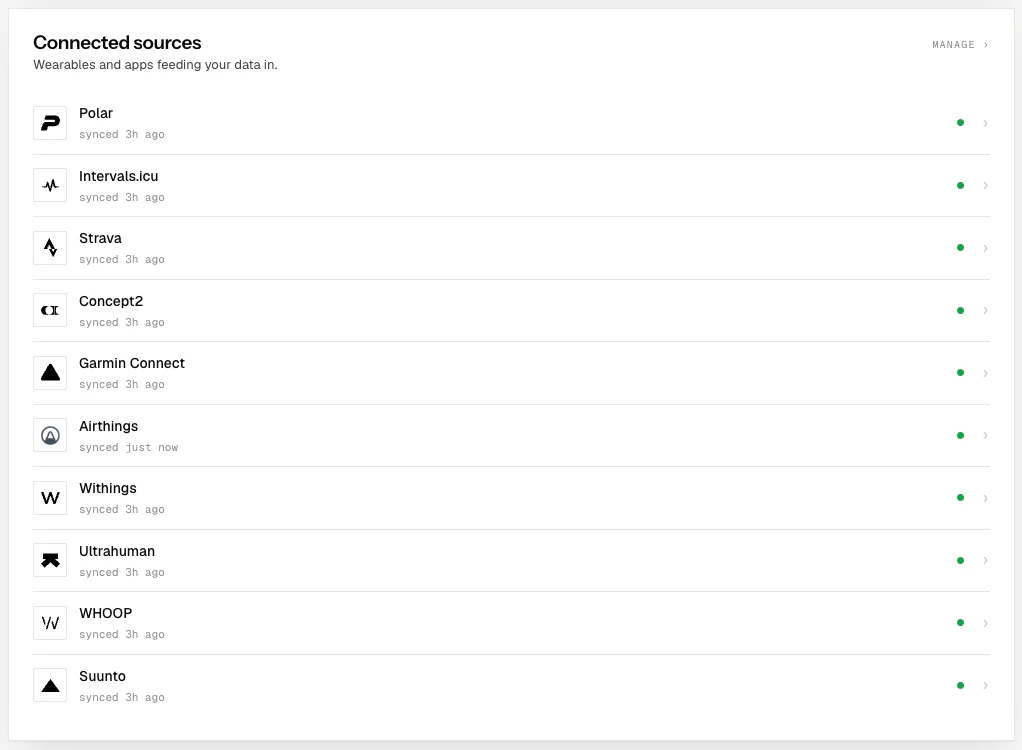
Freddy provides a crucial bridge between diverse health data sources and advanced AI models. It serves athletes, developers, and biohackers who use wearables, CGMs, power meters, and gym apps, allowing them to integrate their metrics directly into AI agents like Claude and ChatGPT via the MCP protocol.
This enables users to move beyond traditional dashboards, asking natural language questions and receiving conversational insights from their combined health data. The platform offers a free tier for initial exploration, with a Pro plan that adds unlimited sources and full data history for broad analysis.