
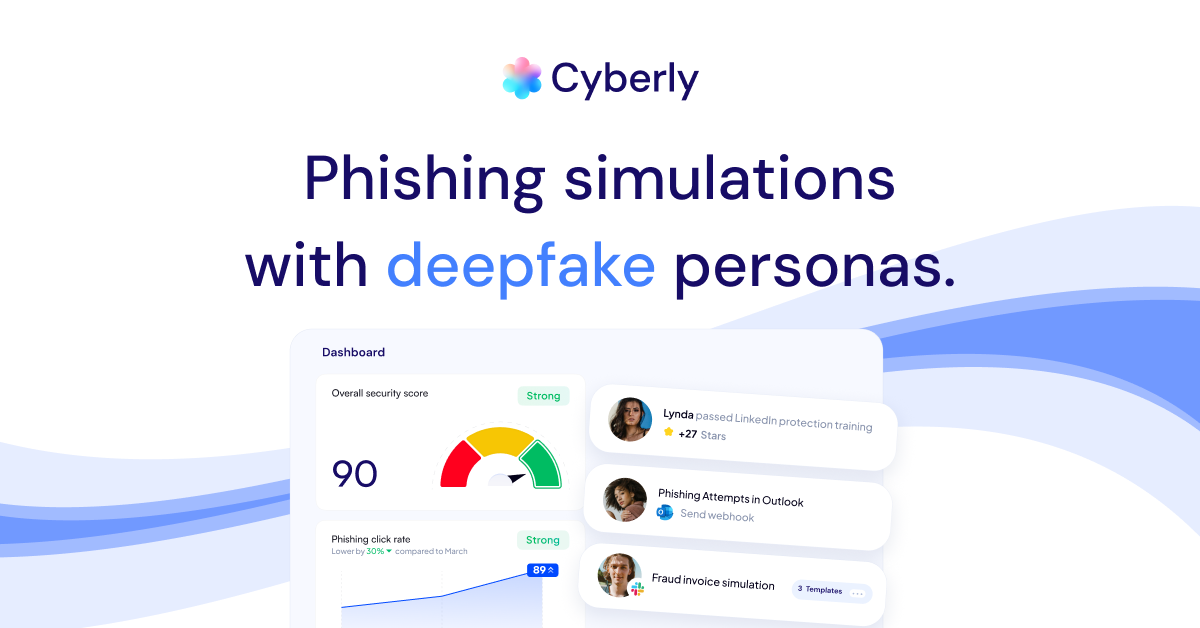
AI-powered training and simulations reduce human cyber risk for organizations.
Product memo
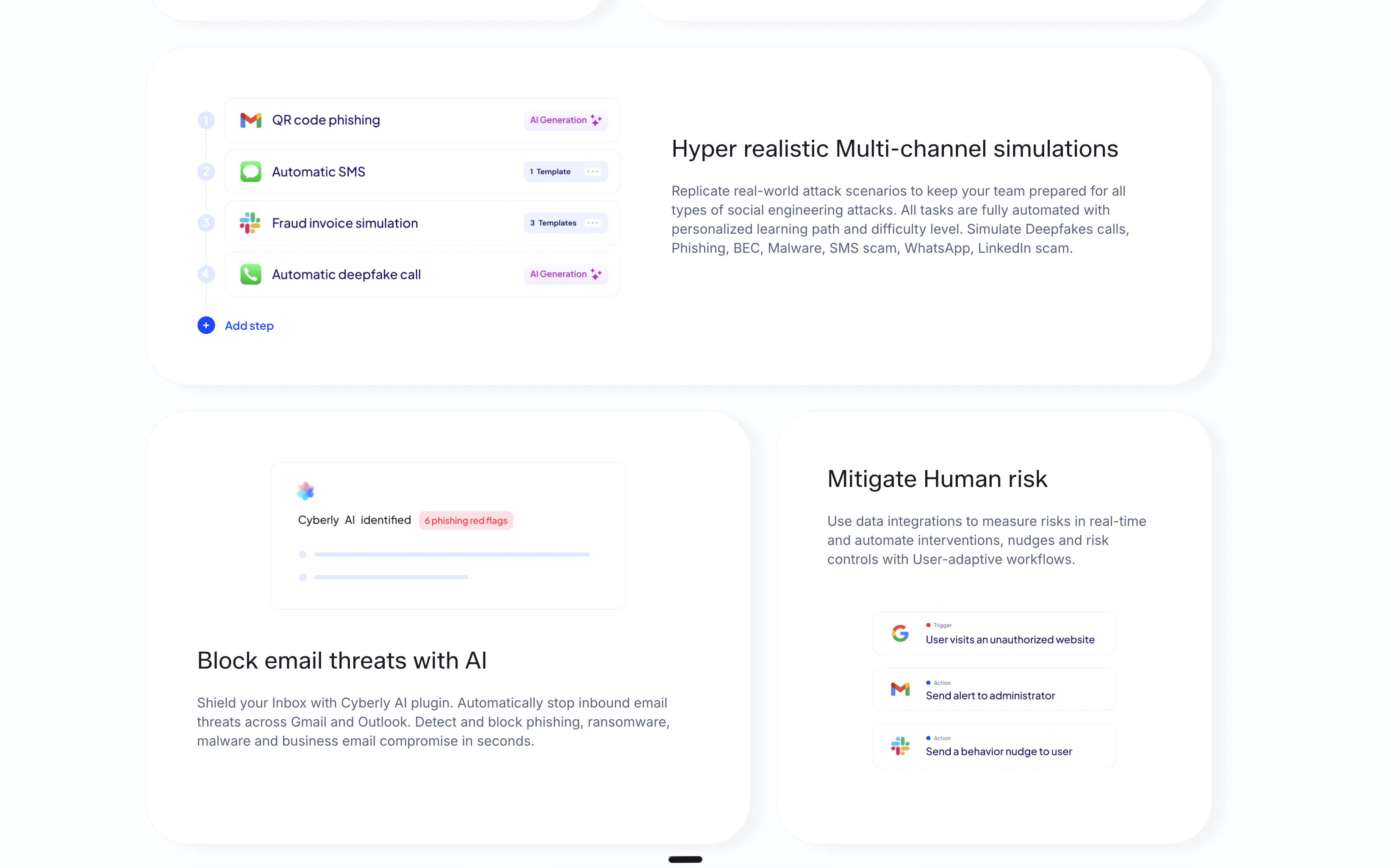
Organizations use Cyberly to reduce human cyber risk through AI-powered training and simulations. It focuses on emerging threats like deepfakes, delivering multi-channel simulations across email, SMS, and chat. This approach creates an automated, personalized training experience for employees, moving beyond generic phishing tests.
For who
Organizations and their employees
Solves what
Reducing human cyber risk through AI-powered training and simulations.
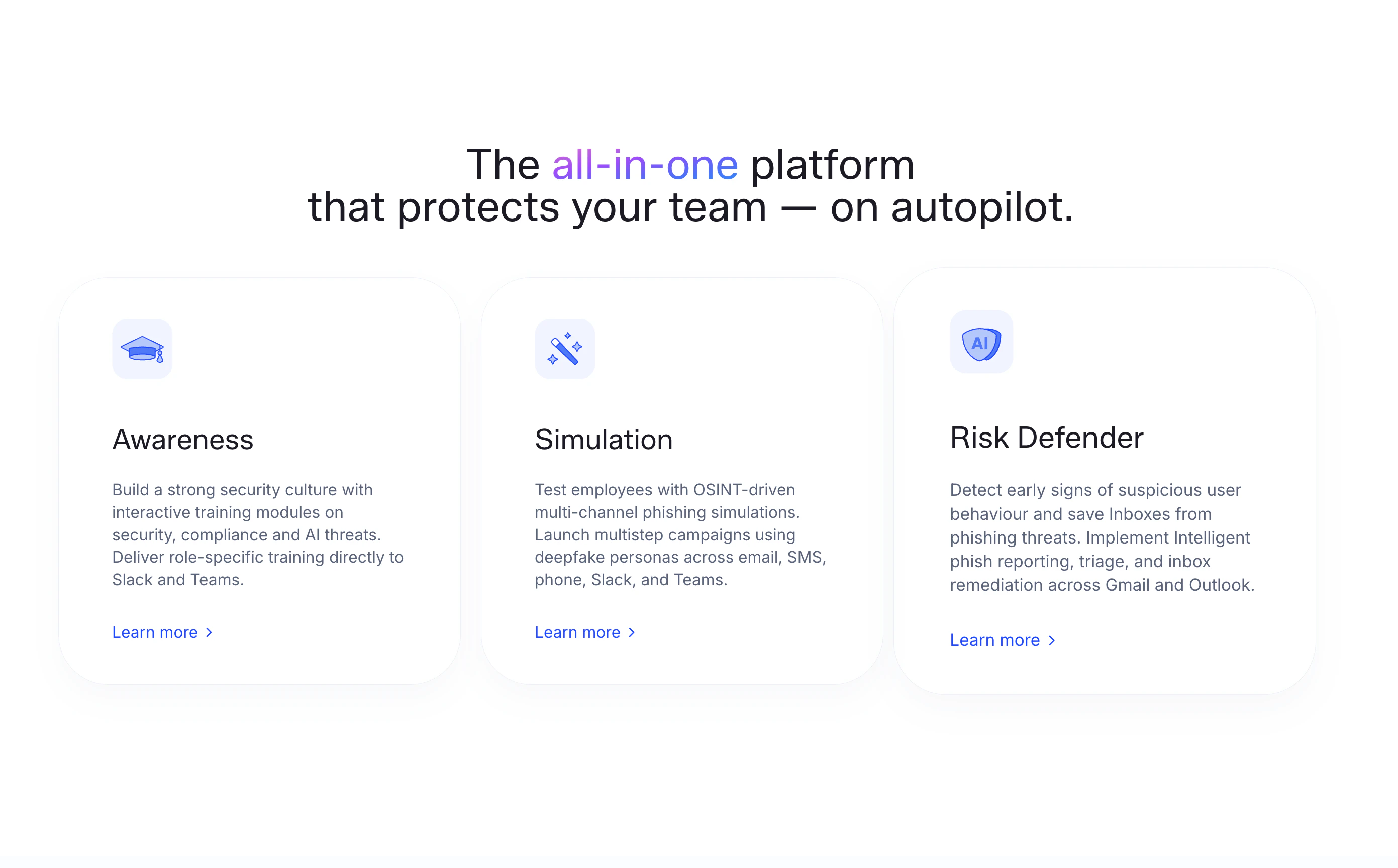
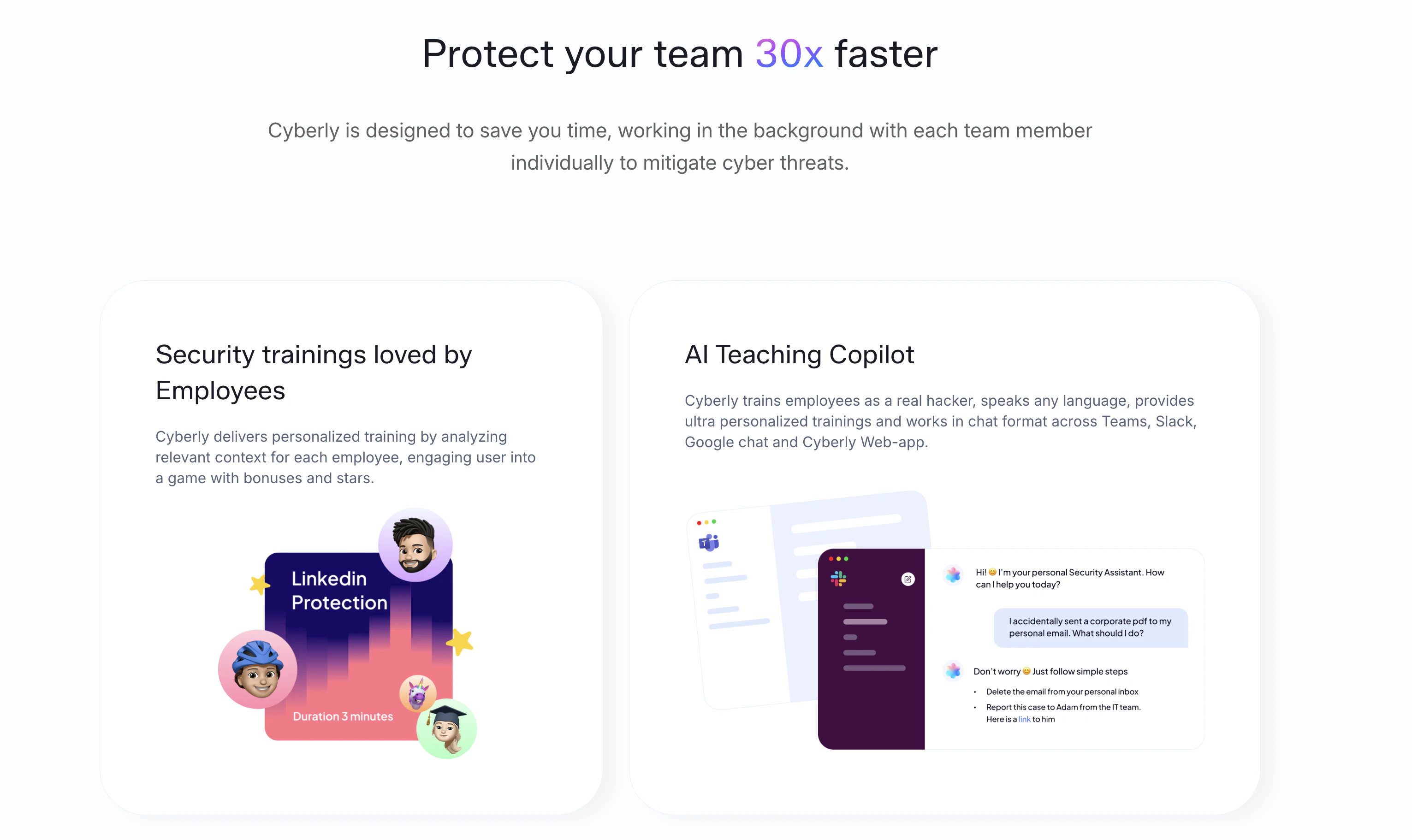
- AI-powered security training
- Multi-channel deepfake simulations
- Behavior tracking and nudges
In their own words
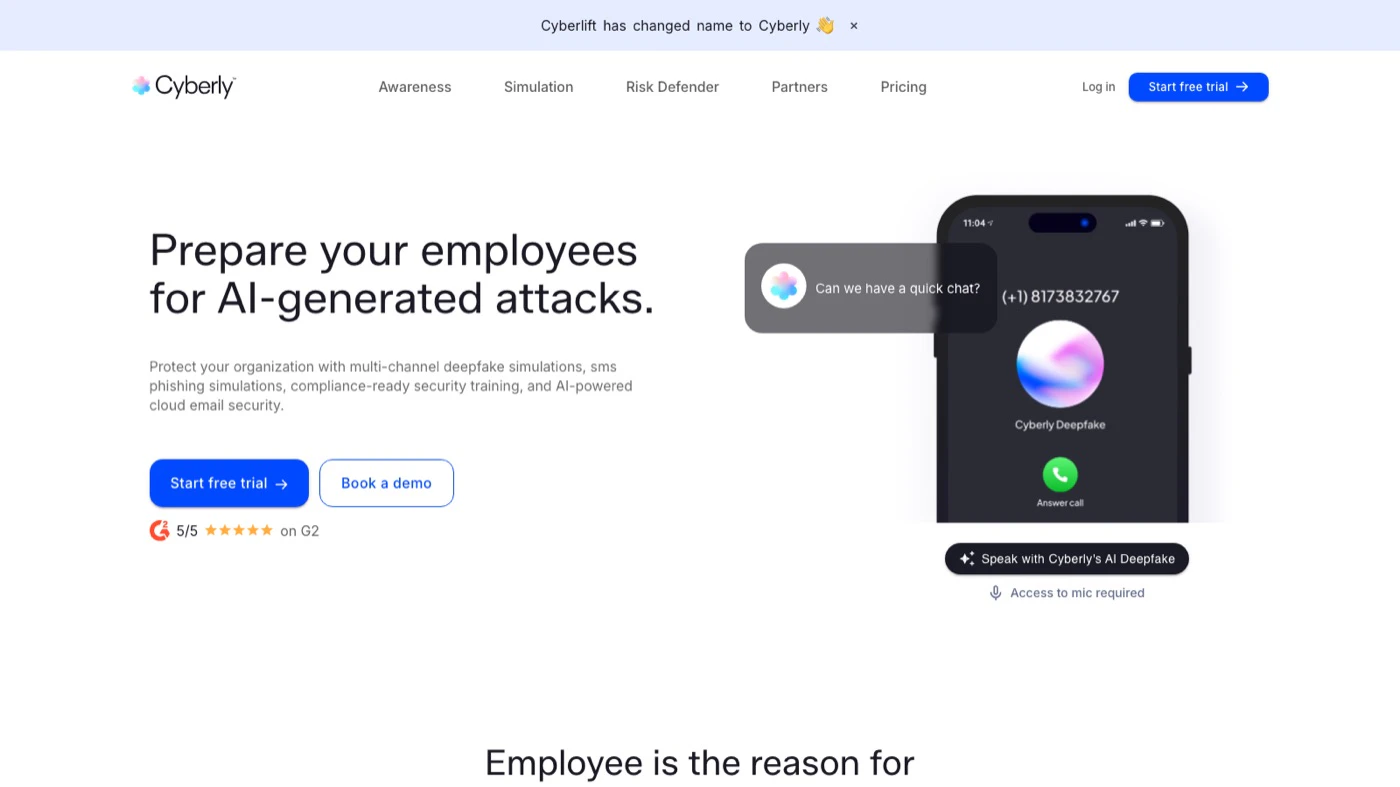
Prepare your employees for AI-generated attacks.
Protect your organization with multi-channel deepfake simulations, sms phishing simulations, compliance-ready security training, and AI-powered cloud email security.
Commercial cues
Model
free only
Free tier
Yes
Trial
Available
Pricing Strategy
Cyberly offers a free tier, then moves to custom pricing for its Business and Enterprise plans. These plans scale based on employee count, starting from 10-150 employees.
- • A free tier attracts smaller organizations and allows product evaluation.
- • Enterprise plans offer tailored pricing for organizations with 151+ employees.
- • Enterprise plan handles custom requirements.
Operator context
Operating setup
Founded
Apr 2026
Platform
Web app
Audience
General
Social footprint
Tech stack
Builder Strategy
- Strategy Type
- Wedge Expand
- Stage
- Vc Growth
- Effort
- Small Team
About Cyberly Expand
Cyberly helps organizations reduce human cyber risk by delivering AI-powered security training and multi-channel simulations. It targets both small and large businesses, offering a free tier for initial adoption and custom plans that scale with employee count.
The platform focuses on modern threats like deepfakes and SMS phishing, providing a more advanced approach than traditional security awareness tools. This specialization in AI-driven attacks and broad simulations helps organizations build stronger human firewalls against evolving cyber threats.