
ConceptSeek maps ideas across videos, podcasts, and documents for deep research.

Product memo
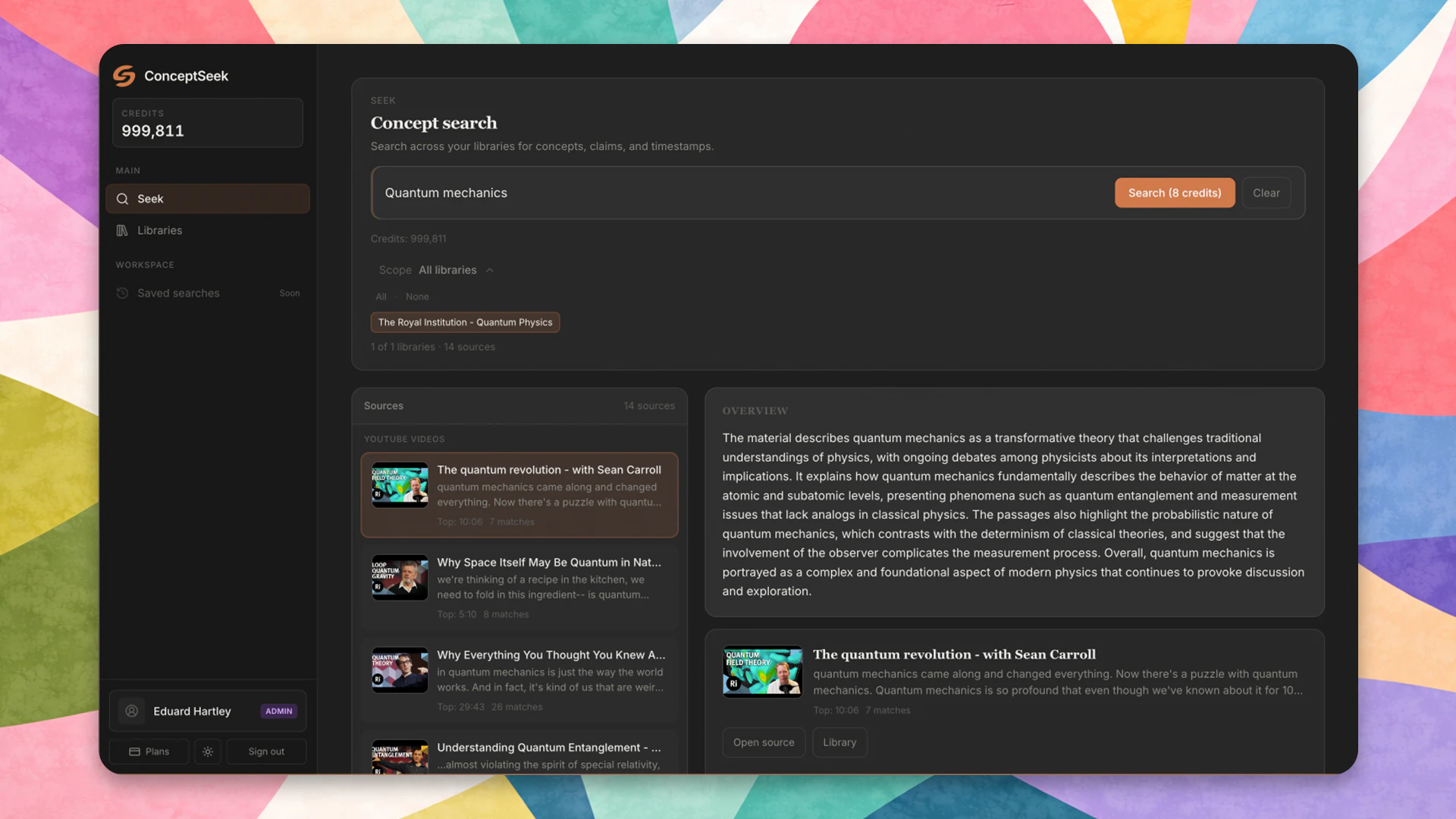
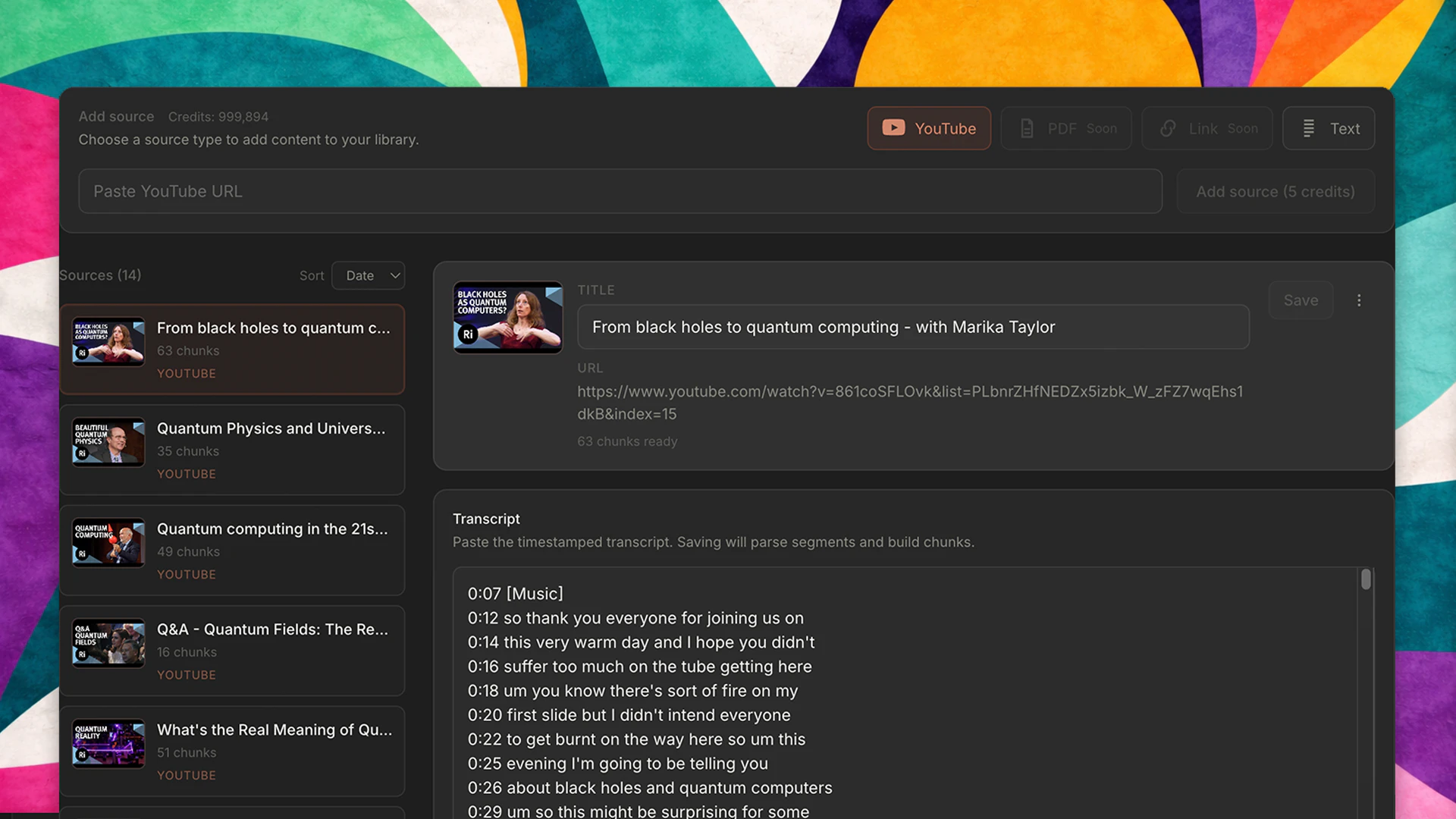
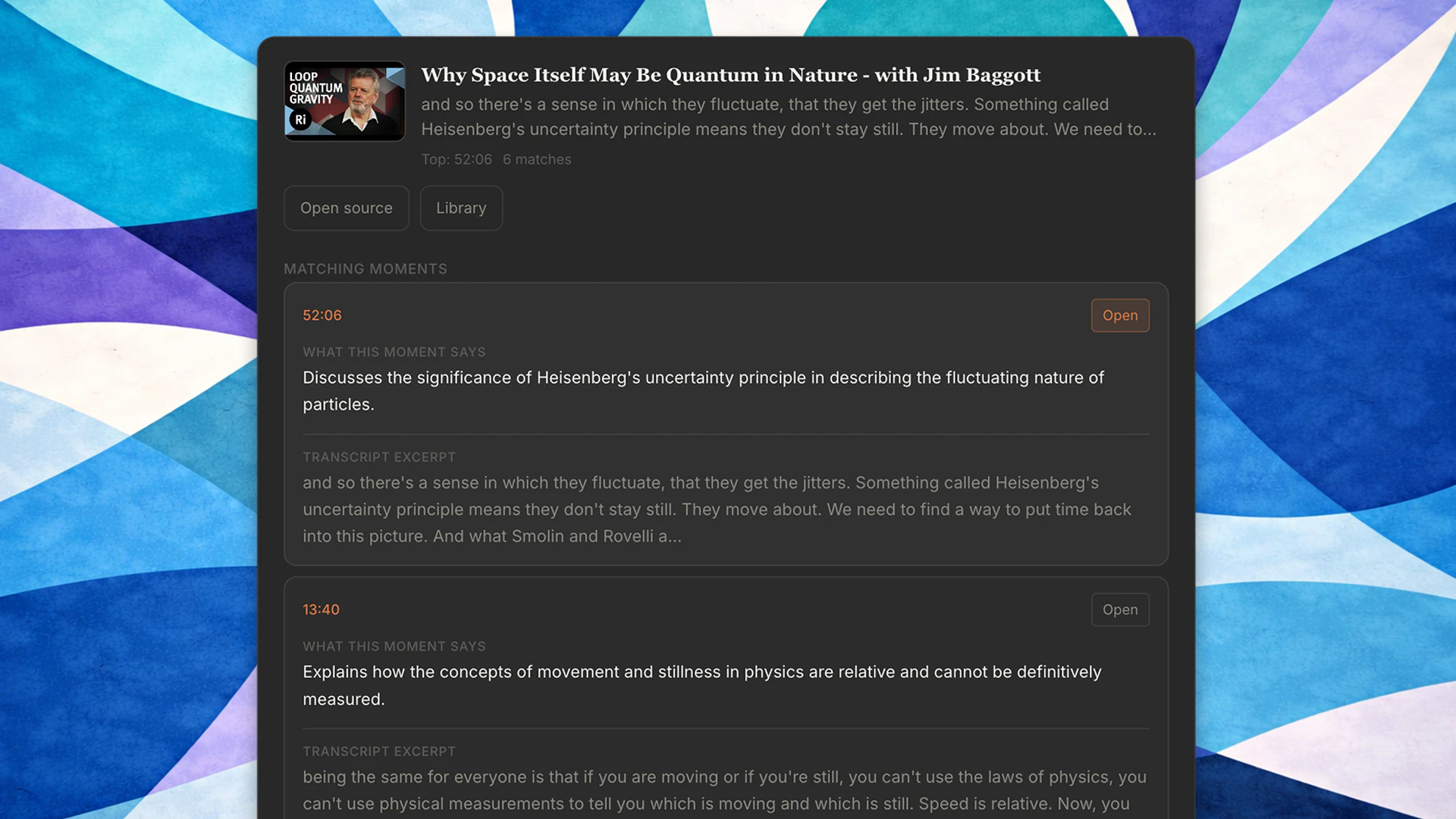
Researchers, students, and analysts use ConceptSeek to inspect findings, not just summarize them. It performs concept-based search across diverse media, from videos and podcasts to documents. A relational map visualizes connections between sources, helping users compare evidence and trace ideas more intuitively than keyword-based tools.
For who
Researchers, students, analysts, journalists, power users
Solves what
Concept search and analysis across diverse media types
- Concept search across video, audio, text
- Relational map of source connections
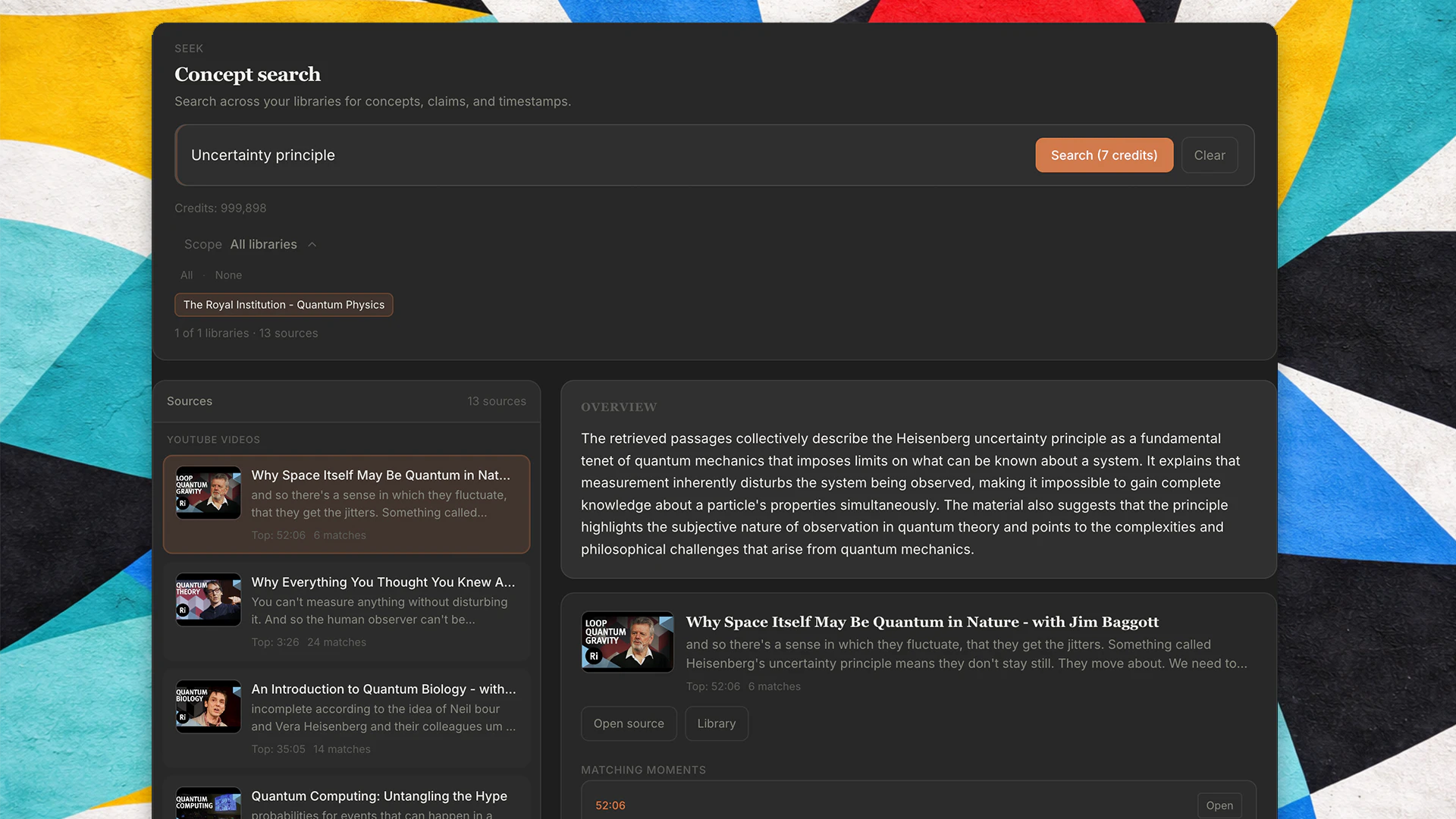
- Jump to exact moments/passages
In their own words
Map concepts across your sources.
Built to inspect research, not just summarize it.
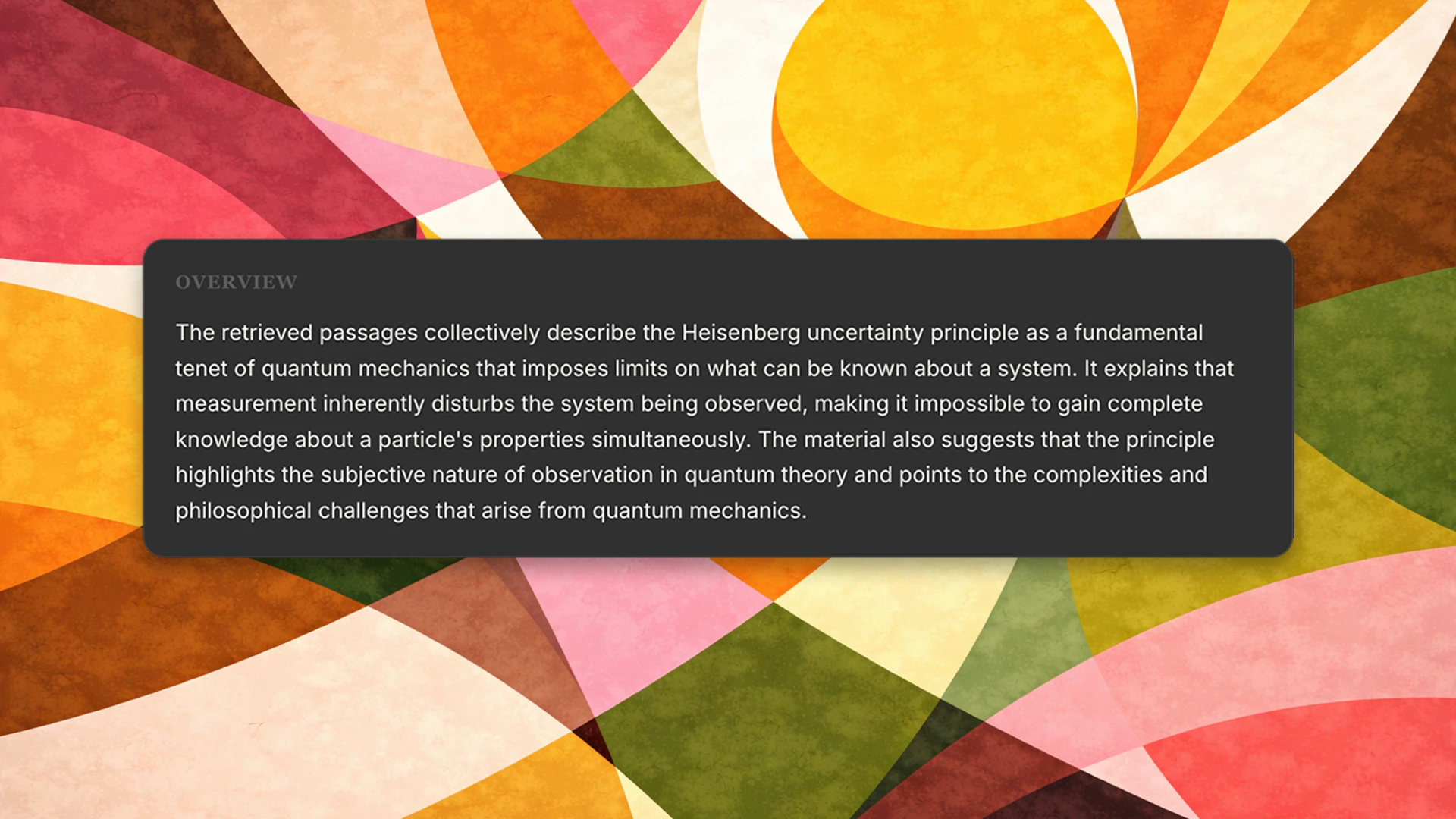
Trace any concept through your videos, podcasts, and documents. ConceptSeek surfaces the exact passages and timestamps where the idea appears.
Commercial cues
Model
subscription
Free tier
Yes
Trial
7d
Pricing Strategy
- • Annual billing gives two months free, rewarding longer commitment.
- • Tiered plans scale limits on libraries, sources, and monthly credits.
- • 7-day trial lowers adoption risk.
Operator context
Operating setup
Founded
Apr 2026
Platform
Web app
Audience
Creators
Social footprint
Builder Strategy
- Strategy Type
- Niche Specialist
- Stage
- Pre Revenue
- Effort
- Solo Buildable
About ConceptSeek Expand
ConceptSeek helps researchers, students, and analysts go beyond simple keyword searches. It provides concept search and analysis across diverse media types, including videos, podcasts, and documents.
Users can trace any concept through their content, surfacing exact passages and timestamps where ideas appear. The platform visualizes these connections in a relational map, making it easier to compare evidence and understand how concepts evolve across sources.
This approach offers a deeper inspection of research materials than traditional knowledge bases, serving power users who need granular insights.