
A local supply-chain firewall blocking malicious package installs for developers.
Product memo
Computer Police acts as a local supply-chain firewall, intercepting npm and pip install requests from developers and AI coding agents. It compares these against the OSV malware feed, blocking confirmed malicious packages before they reach disk. This proactive defense addresses a critical gap, as existing tools often scan packages only after they are already on the system.
For who
Developers, CI/CD, and coding agents
Solves what
Blocks confirmed-malicious package installs before they reach disk.
- Local registry proxy
- Real-time malware blocking
- OSV feed integration
In their own words
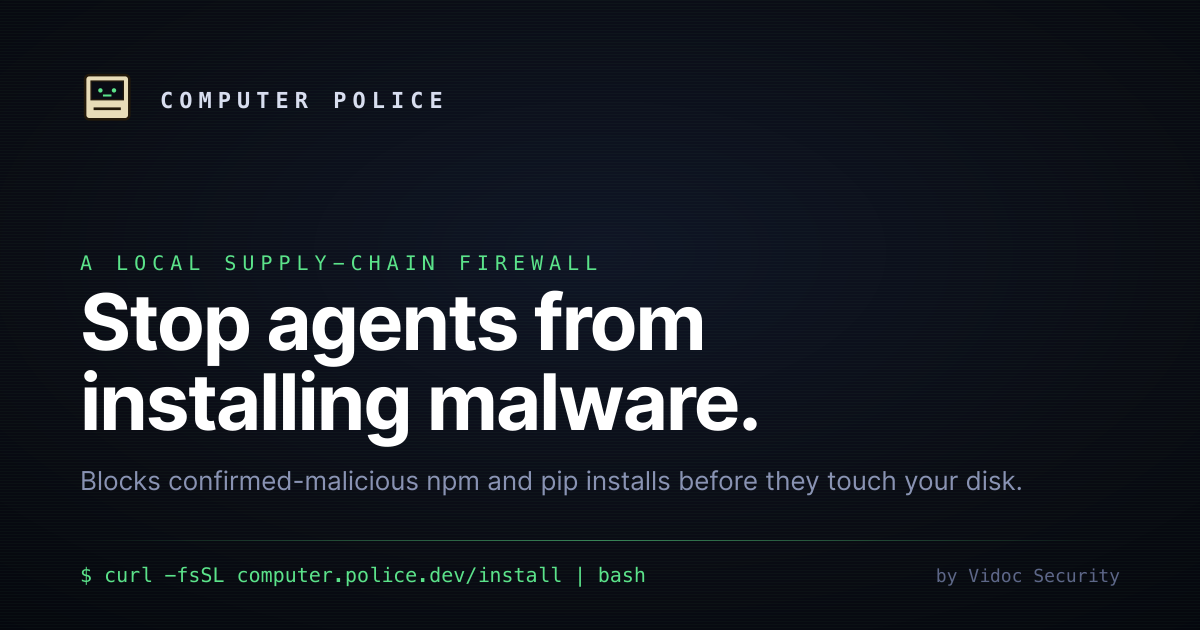
A LOCAL SUPPLY-CHAIN FIREWALL
Stop agents from installing malware.
Commercial cues
Model
free only
Free tier
Yes
Trial
No
Pricing Strategy
Computer Police offers a free Open Source tier; paid plan details are not publicly priced.
- • No-cost model leverages open-source for broad adoption.
- • Focus on security builds trust and community engagement.
- • MIT license encourages widespread integration into workflows.
Operator context
Operating setup
Team
Indie / lean
LLM classification
Platform
Web app
Audience
Developers
Builder Strategy
- Strategy Type
- Niche Specialist
- Stage
- Bootstrapped Lean
- Effort
- Solo Buildable
About Computer Police Expand
Computer Police provides a local supply-chain firewall, specifically designed for developers and CI/CD environments. It works by acting as a proxy for package managers like npm and pip, checking install requests against the OSV malware feed.
This allows it to block confirmed-malicious packages before they are downloaded to disk, preventing supply-chain attacks. The open-source nature of Computer Police, combined with its support for macOS, Linux, and Windows, makes it an accessible and proactive defense against the weekly threats from compromised registries.