Self-hosted error tracking for developers, compatible with Sentry SDKs.
Product memo
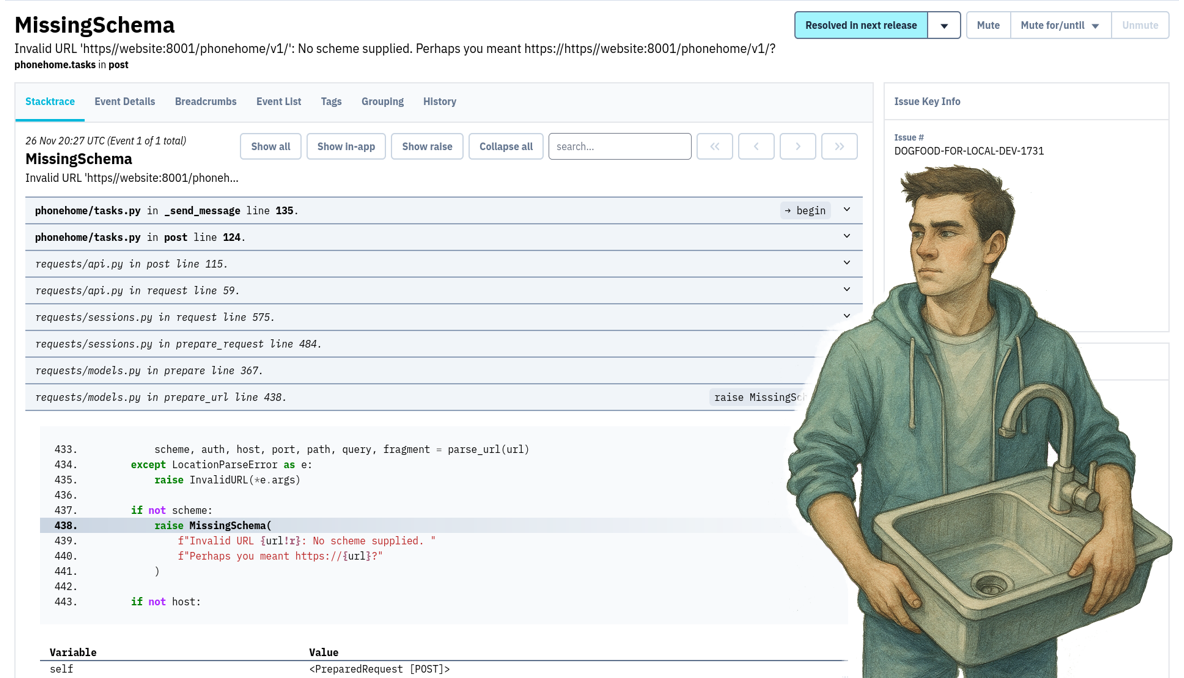
Developers and teams using Sentry SDKs can deploy Bugsink for self-hosted error tracking, gaining full control over their data and infrastructure. It provides detailed stacktraces, code, and local variable analysis to pinpoint production failures. This approach offers a cost-effective alternative to hosted products, serving teams that prioritize predictable expenses at scale without losing essential monitoring capabilities.
For who
Developers and teams using Sentry SDKs
Solves what
Self-hosted error tracking with full stacktraces and local variables
- Drop-in replacement for Sentry SDKs
- Self-host for full control
- Predictable costs at scale
In their own words
Self-hosted Error Tracking
See exactly _when_ your code fails in production and _why_
Commercial cues
Model
usage based
Free tier
Yes
Trial
No
Pricing Strategy
- • Tiered pricing based on event volume offers predictable costs as usage grows.
Operator context
Operating setup
Platform
Web app
Audience
Developers
Social footprint
Market demand
Bugsink keyword demand
5 keywords
Market demand is Starter-tier market intelligence.
Derived from this product’s latest SimilarWeb keyword mix — directional demand, not proof.
Builder Strategy
- Strategy Type
- Niche Specialist
- Stage
- Vc Growth
- Effort
- Solo Buildable
About Bugsink Expand
Bugsink offers developers a self-hosted error tracking product, providing an alternative to traditional hosted services. It integrates with existing Sentry SDKs, allowing teams to transition smoothly while maintaining full visibility into production code failures.
The platform delivers detailed stacktraces, code context, and local variable analysis, helping pinpoint the exact cause of issues. This appeals to teams that need greater control over their data infrastructure and seek predictable costs as their event volume scales, making it a practical option for managing operational expenses.