
Automates branded visual and document generation for high-volume creative needs.

Product memo
Brands needing to scale creative production use Bannx to automate visual asset generation. It focuses on high-volume, templated outputs via forms, spreadsheets, APIs, and AI. This enables rapid campaign variations and personalized documents, acting as a creative velocity engine for marketing and e-commerce teams.
- For who
- Brands needing high-volume creative automation
- Solves what
- Automated generation of branded visuals, ads, and documents at scale.
- Visuals via forms, spreadsheets, API, AI
- Endless variations across formats/languages
- High-volume ad & banner automation
In their own words
Automate your brand's creatives—from OG images and blog updates to social ads, certificates, receipts, invoicing—with tailored outcomes for each pairing
Operator & company
Company
- Founded
May 2026
Operating model
- Business model
Saas
- Platform
Web app
- Audience
Marketers
Builder strategy
ProvenRadar analysis
- Strategy Type
- Niche Specialist
- Stage
- Pre Revenue
- Effort
- Small Team
Tech stack
Commercial cues
- Model
- subscription
- Free tier
- No
- Trial
- No
Pricing strategy
- • Credit-based tiers incentivize higher volume purchases for creative output.
- • Lifetime access is available, offering a one-time purchase for long-term use.
About Bannx Expand
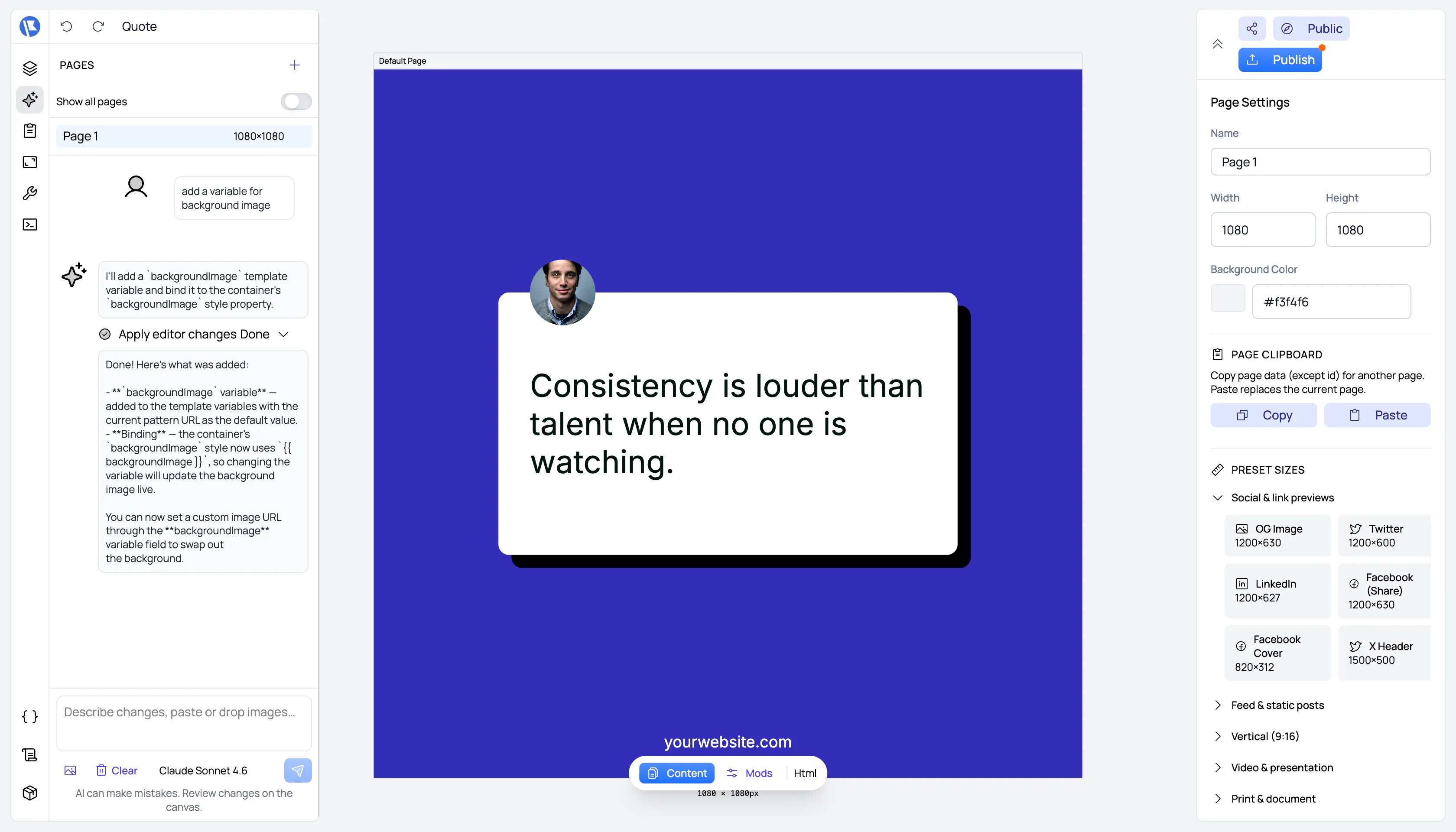
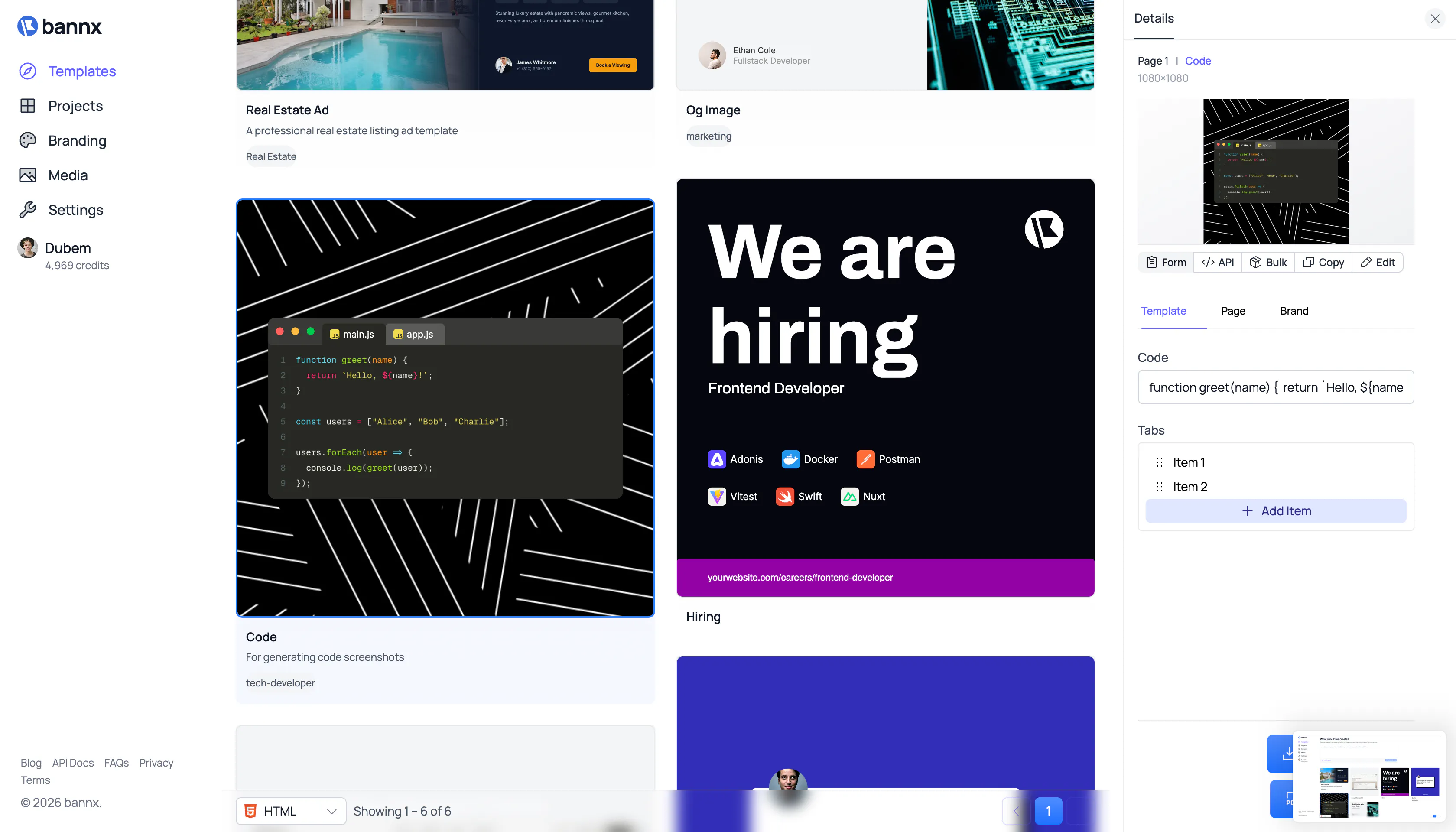
Bannx provides creative automation for brands that require high-volume generation of visual assets and documents. It helps marketing and e-commerce teams produce branded visuals, ads, and various documents like certificates and receipts.
The platform integrates with forms, spreadsheets, APIs, and AI to generate multi-size campaign variations and personalized outputs from customizable templates. This focus on automated, templated content production allows brands to maintain consistency while rapidly scaling their creative output without manual design bottlenecks.