
Single-use virtual Visa cards enable AI agents to make secure online purchases.
Product memo
AgentCard equips AI agents with disposable virtual Visa cards for online purchases, removing the need for pre-funding or complex crypto wallet management. This establishes a secure, developer-focused payment layer for AI agents, allowing programmatic spending without direct financial risk. It bypasses traditional wallet infrastructure, prioritizing transactional isolation and user control.
For who
AI agents and their human operators
Solves what
Enables AI agents to make online purchases securely with single-use virtual cards.
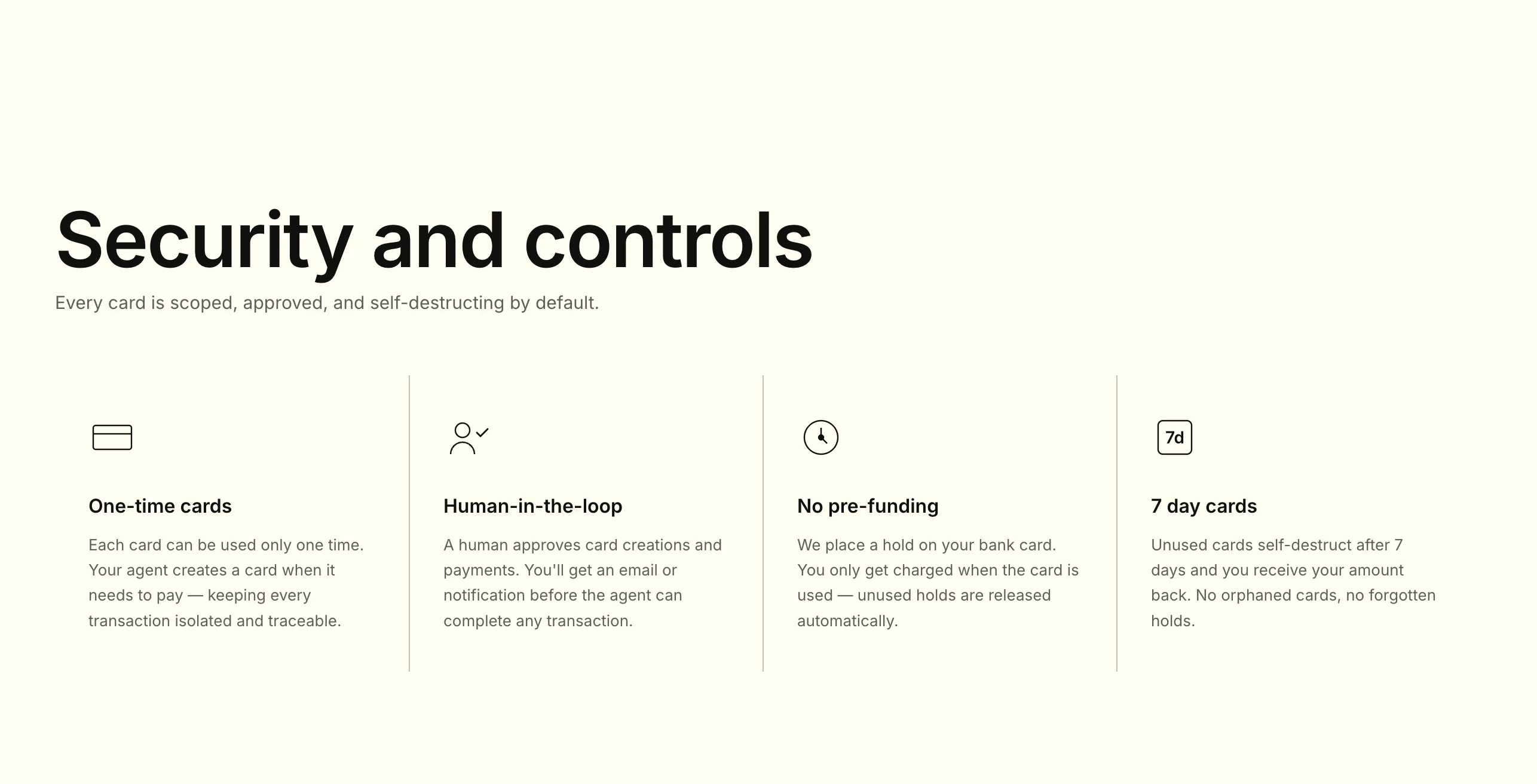
- One-time use virtual Visa cards
- No pre-funding required
- Human approval for transactions
In their own words
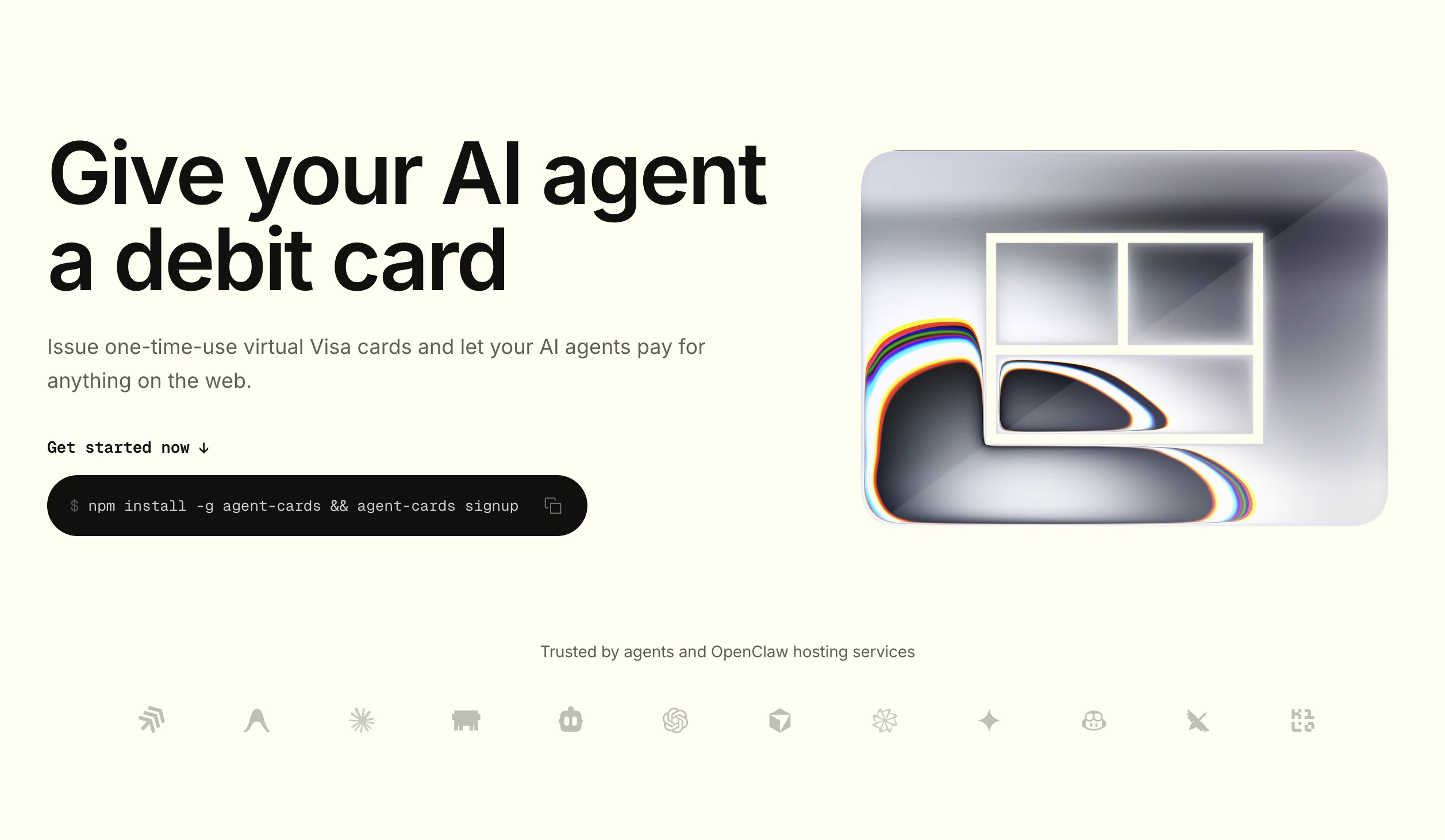
Give your AI agent
Issue one-time-use virtual Visa cards and let your AI agents pay for anything on the web.
Commercial cues
Model
subscription
Free tier
Yes
Trial
No
Pricing Strategy
- • A free tier offers limited cards and spending caps to attract new.
- • Per-card spending limits act as a core control for autonomous agent payments.
Operator context
Operating setup
Founded
Apr 2026
Platform
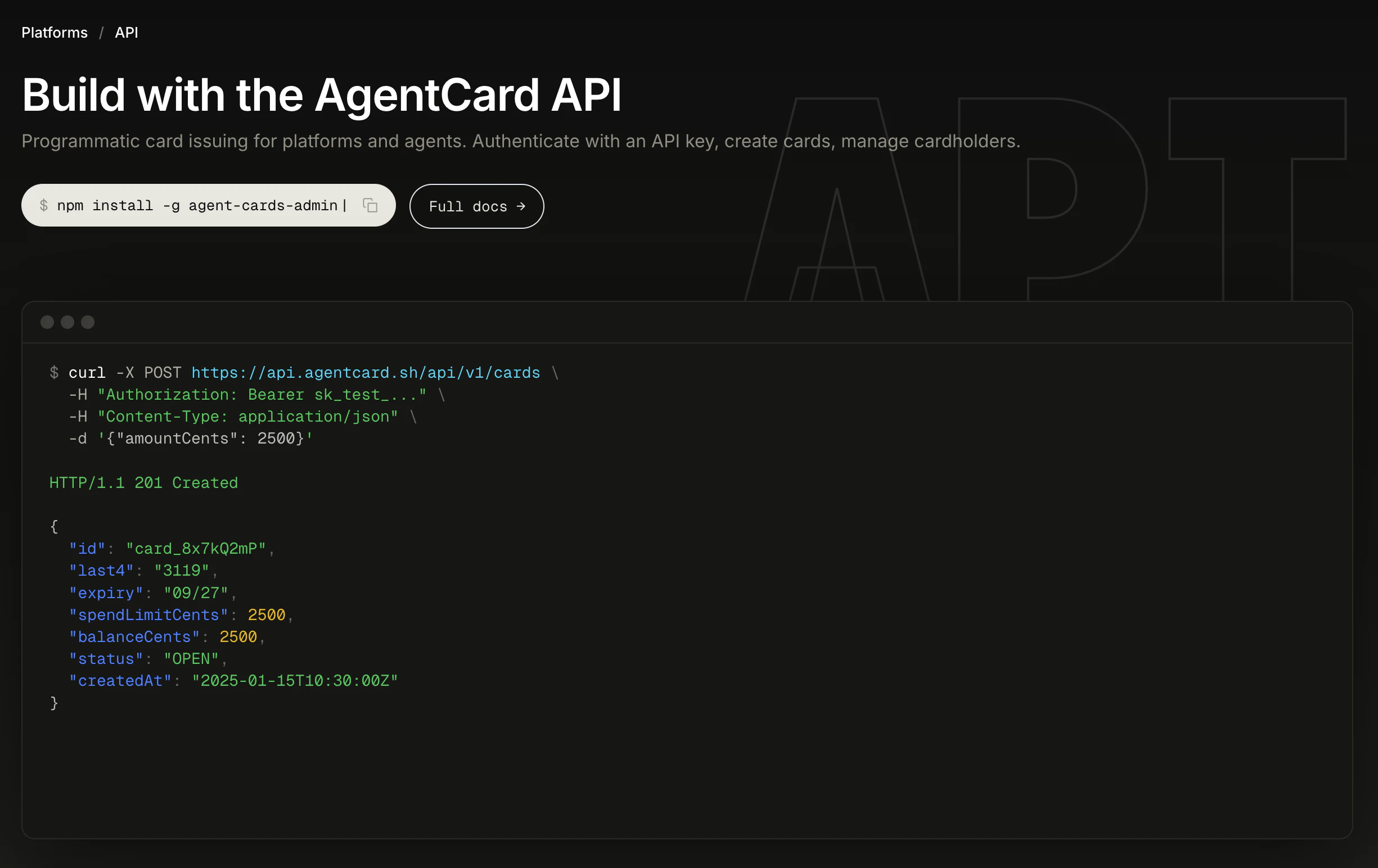
API
Audience
Developers
Tech stack
Market demand
Agent Card keyword demand
5 keywords
Market demand is Starter-tier market intelligence.
Derived from this product’s latest SimilarWeb keyword mix — directional demand, not proof.
Builder Strategy
- Strategy Type
- Niche Specialist
- Stage
- Pre Revenue
- Effort
- Solo Buildable
About Agent Card Expand
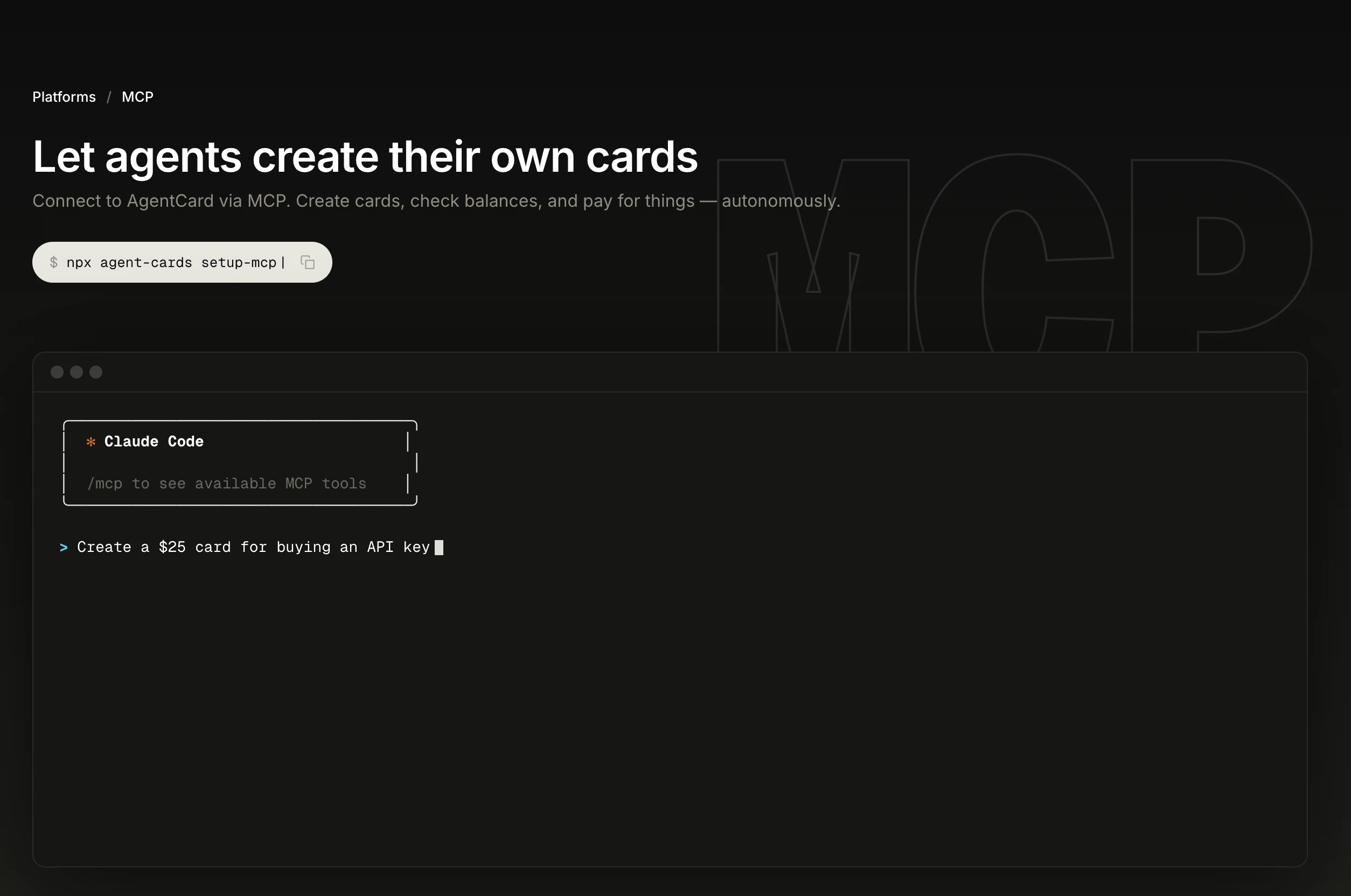
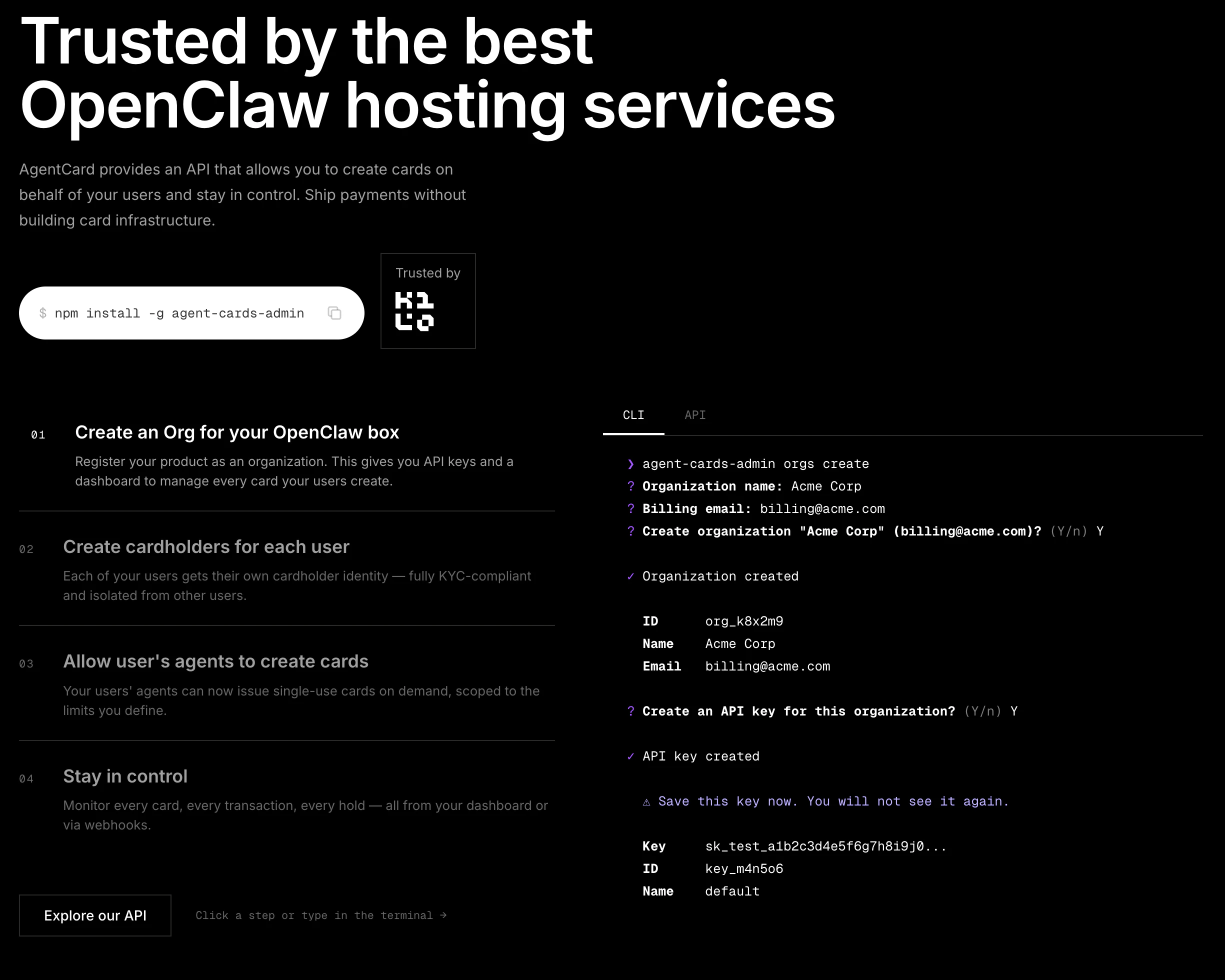
AgentCard provides a specialized payment product for AI agents and their human operators. It enables AI agents to conduct online purchases using single-use virtual Visa cards, removing the need for pre-funding or managing cryptocurrency wallets.
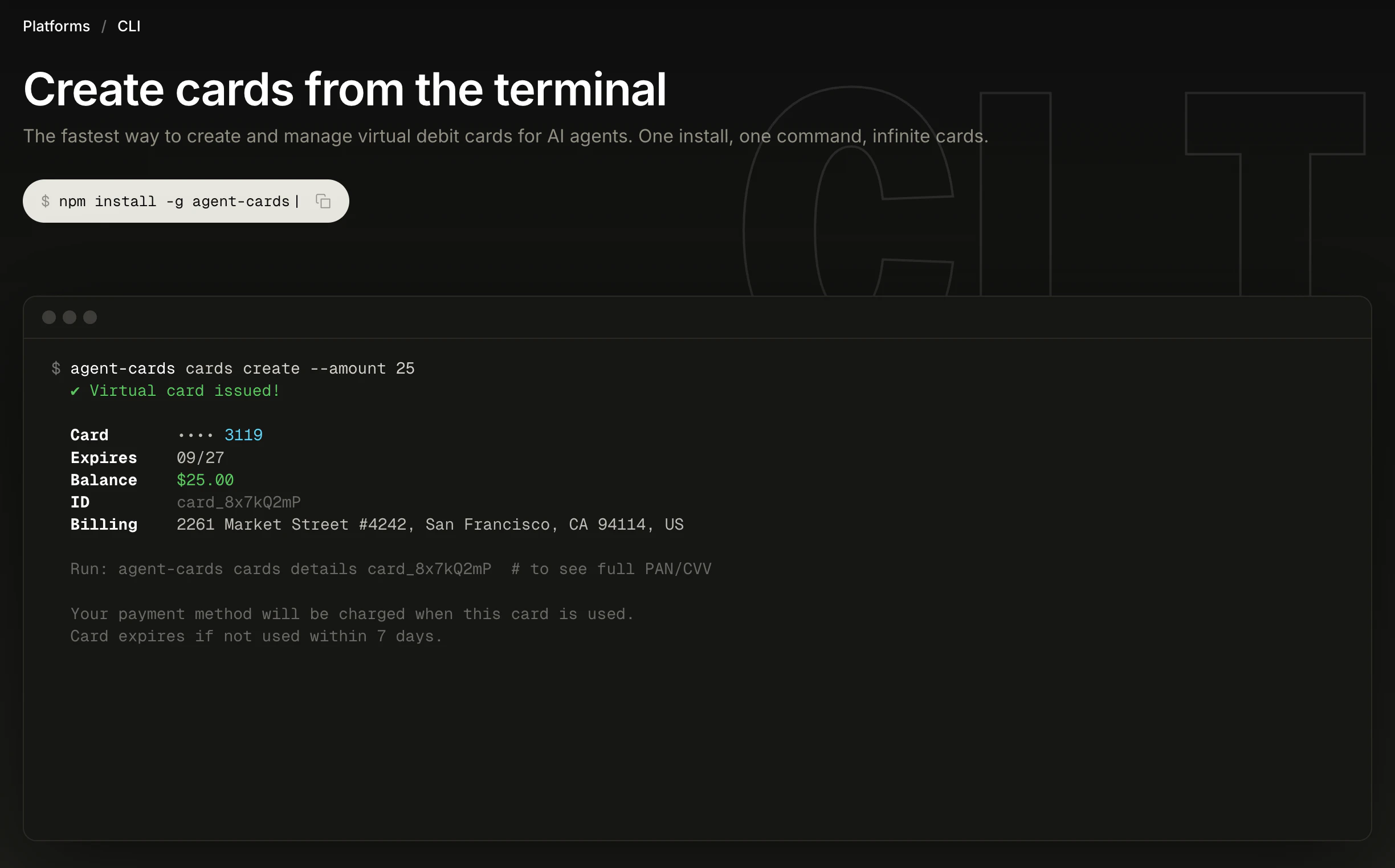
This service focuses on security and control, offering features like human-in-the-loop approval and automatic card expiration. The platform's positioning as a developer tool, complete with API access, helps it integrate directly into AI agent workflows, solving a critical payment friction point for autonomous systems.
This approach allows for programmatic spending while minimizing financial risk for users.