

Product memo
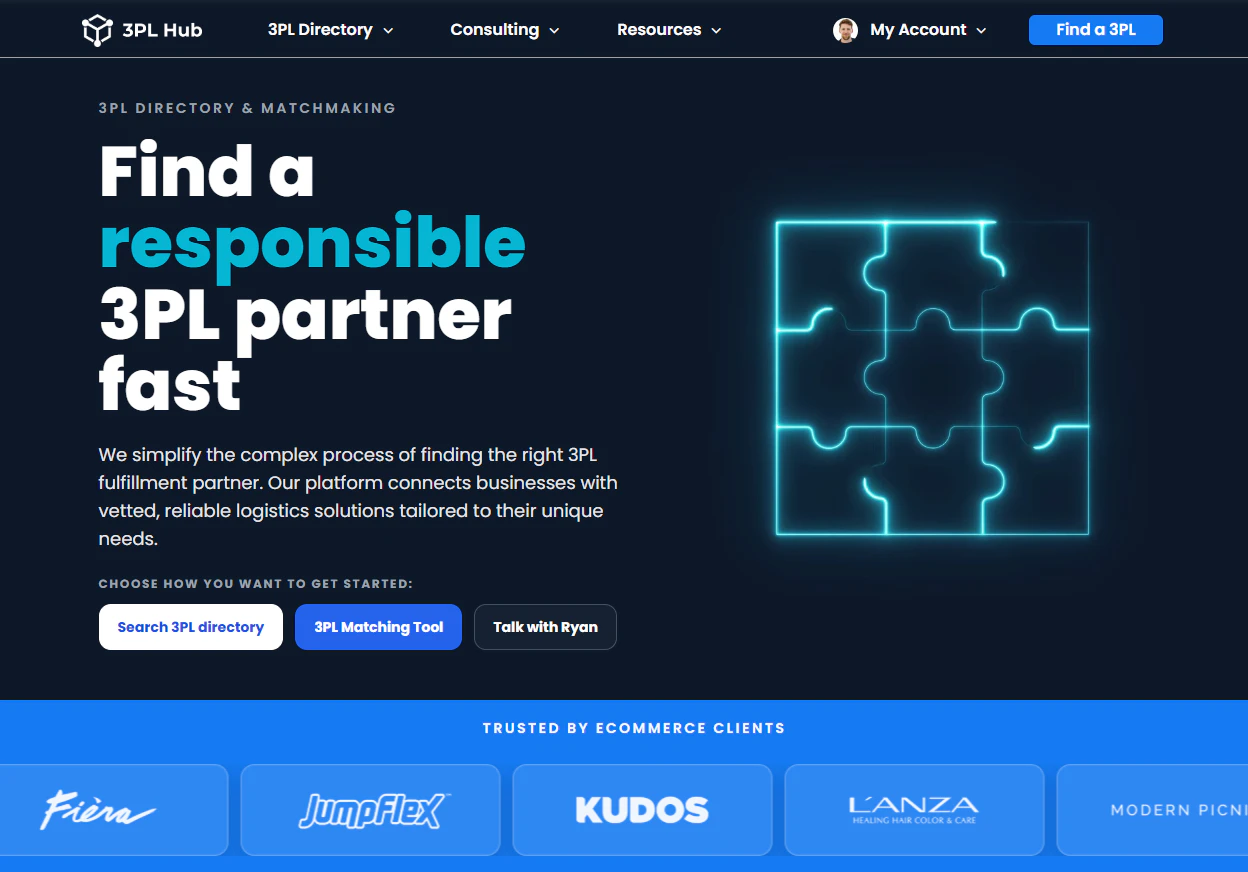
Ecommerce brands seeking fulfillment partners use 3PL Hub to find unbiased, vetted options. It replaces commission-driven platforms with a matching tool built on deep logistics expertise. This approach helps brands avoid costly mismatches by aligning on volume, SKUs, regions, and tech stack requirements.
For who
Ecommerce brands seeking fulfillment partners
Solves what
Finding unbiased, vetted 3PL fulfillment partners globally
- 3PL directory
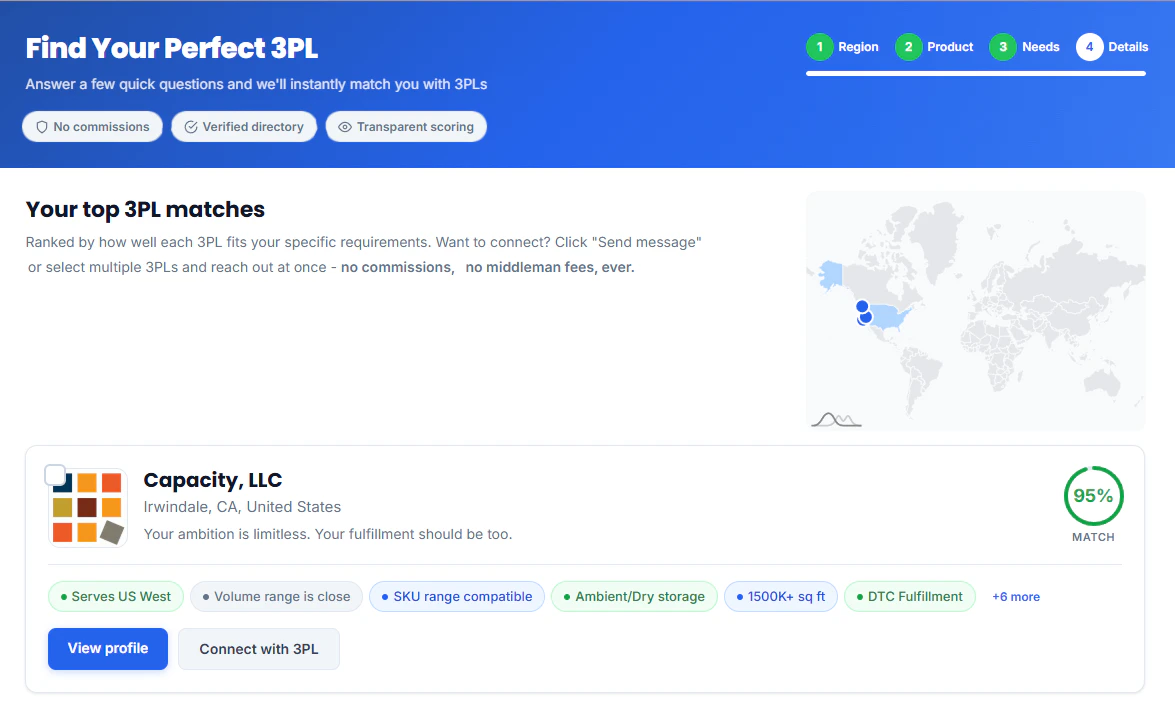
- Matching tool
- RFP support
In their own words
Find a
A better way to find the right 3PL — without bias.
Commercial cues
Model
contact only
Free tier
Yes
Trial
No
Pricing Strategy
3PL Hub offers a free tier, with Custom handled through custom pricing.
- • A free tier attracts ecommerce brands seeking fulfillment partners.
- • Unbiased matching builds trust, avoiding commission-driven sales.
- • Custom handles custom requirements.
Operator context
Operating setup
Founded
Apr 2026
HQ
United States
Platform
Web app
Audience
General
Social footprint
Tech stack
Market demand
3PL Hub keyword demand
4 keywords
Market demand is Starter-tier market intelligence.
Derived from this product’s latest SimilarWeb keyword mix — directional demand, not proof.
Builder Strategy
- Strategy Type
- Niche Specialist
- Stage
- Vc Growth
- Effort
- Solo Buildable
About 3PL Hub Expand
3PL Hub offers a specialized directory and matchmaking service for ecommerce brands to find third-party logistics (3PL) fulfillment partners. It helps users navigate the complex landscape of fulfillment by providing unbiased, vetted recommendations.
Unlike platforms driven by commissions, 3PL Hub focuses on aligning brands with partners based on specific operational needs, including order volume, SKU complexity, regional requirements, and technology stack compatibility. This approach aims to prevent costly mismatches and provides a more reliable path to efficient fulfillment for growing ecommerce businesses.