
PostgreSQL-backed message queue for per-entity ordering without preallocating partitions.
Product memo
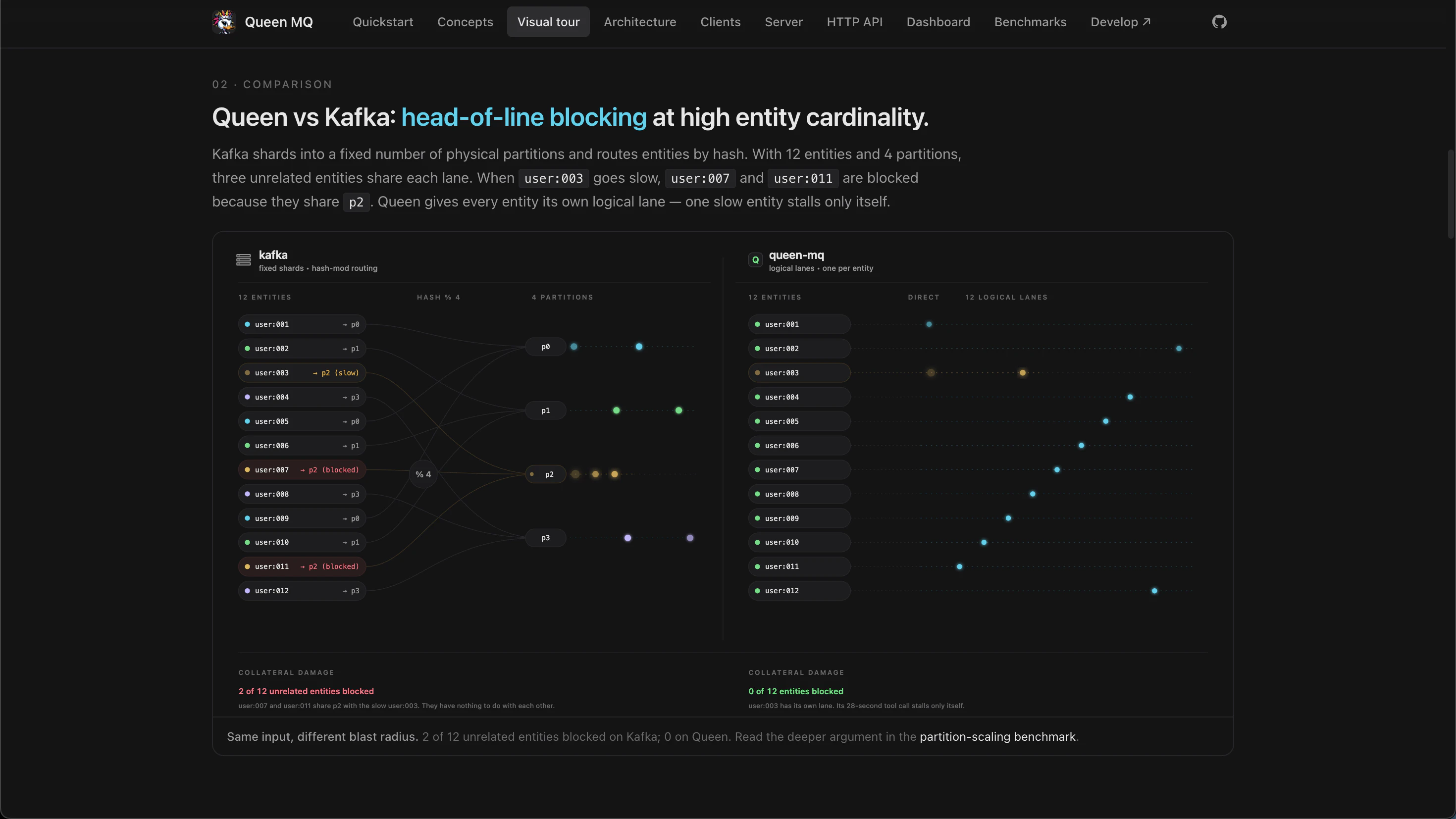
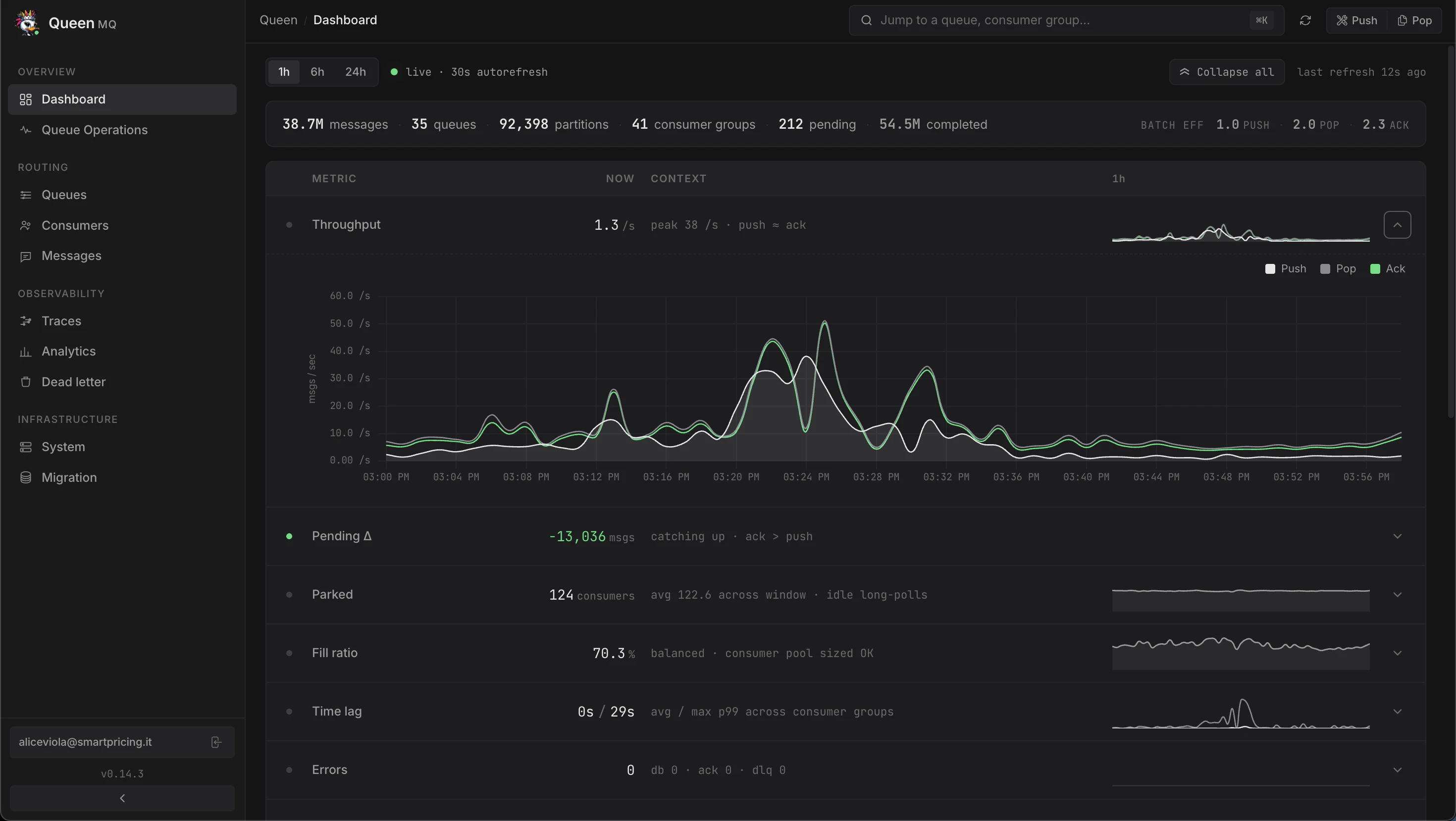
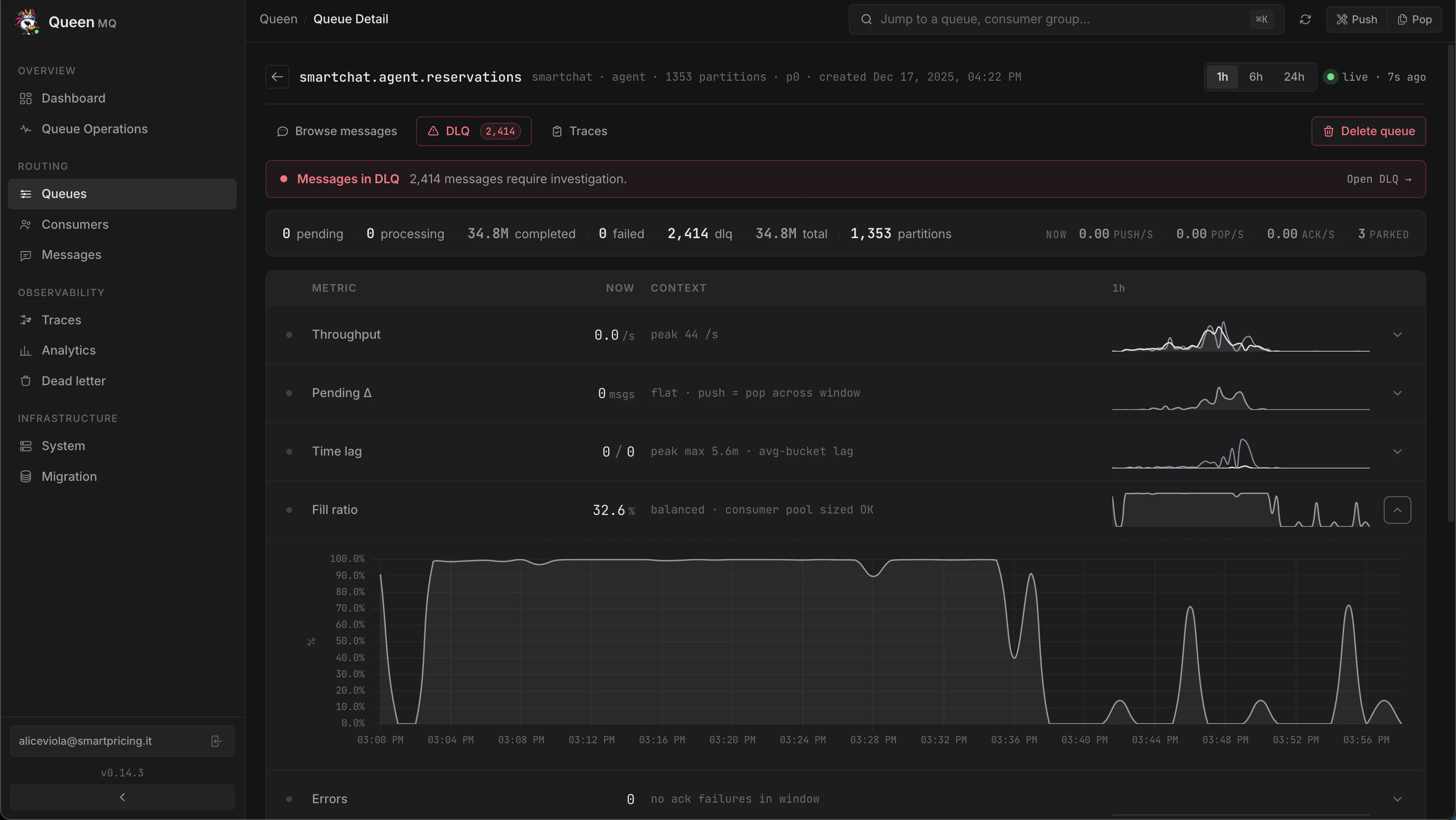
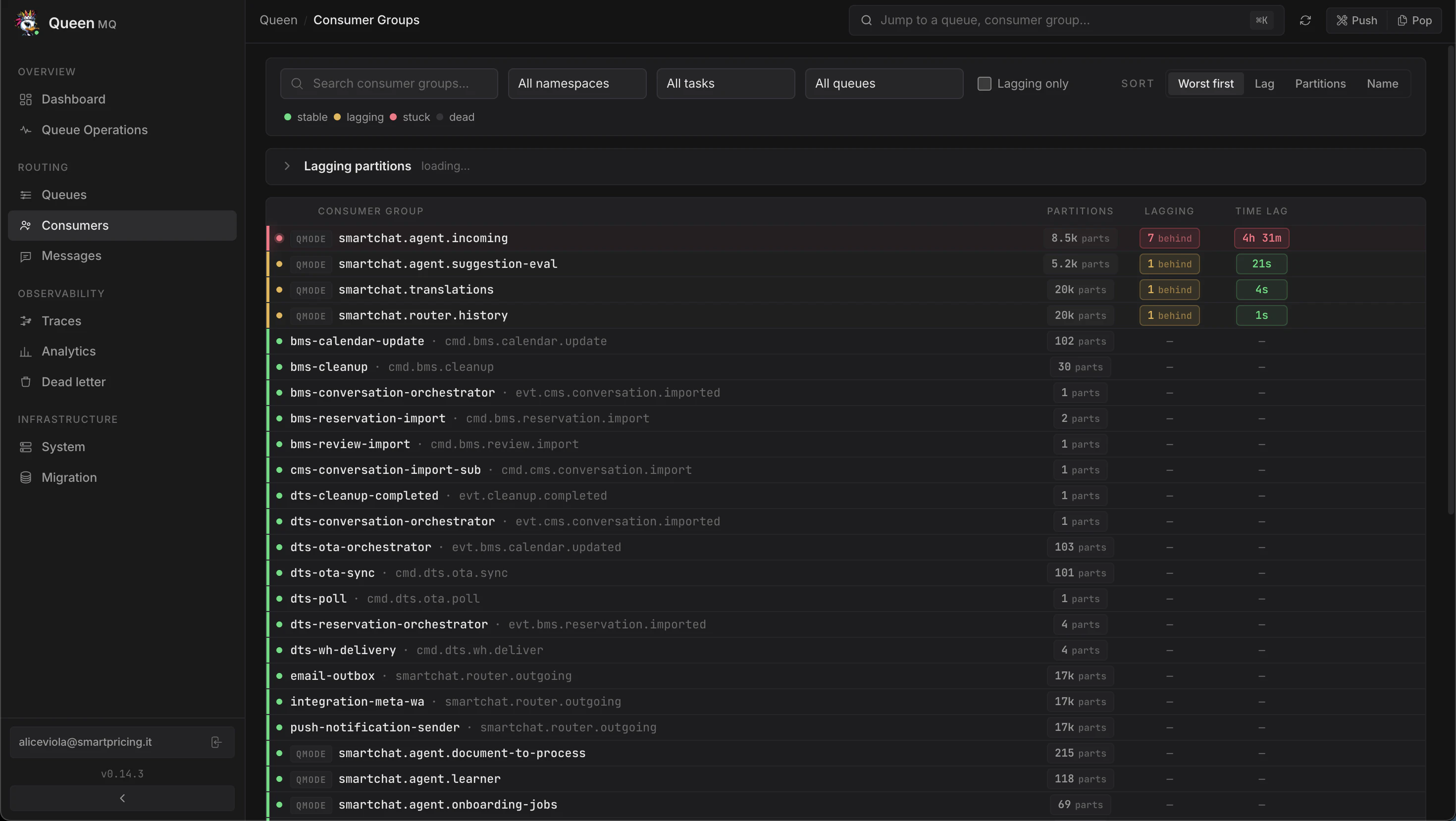
Queen MQ provides a message queue built on PostgreSQL, offering per-entity FIFO ordering and competing consumer patterns. It treats partitions as logical ordering scopes, supporting tens of thousands of partitions per queue without preallocation. This design suits workloads where a single PostgreSQL instance handles message traffic, carving out a niche distinct from Kafka for managing individual chat conversations or user workflows.
For who
Developers running message queues on PostgreSQL
Solves what
Per-entity FIFO ordering and competing consumers without preallocating partitions.
- Per-entity ordering
- PostgreSQL-backed
- Kafka/RabbitMQ-shaped queues
In their own words
Per-entity ordering _without preallocating partitions._
Queen MQ is a message queue backed by PostgreSQL with the partition count as a continuous knob. Slide it toward thousands and you have Kafka-shaped per-entity FIFO ordering without preallocating anything, one chat per partition, one user per partition, one workflow per partition. Slide it toward ten and you have Rabbit
Commercial cues
Model
free_only
Free tier
Yes
Trial
No
Operator context
Team
Indie / lean
Founded
May 2026
Platform
API
Audience
Developers
Social / footprint
Builder Strategy
- Strategy Type
- Niche Specialist
- Stage
- Bootstrapped Lean
- Effort
- Solo Buildable
About Queen MQ Expand
Queen MQ offers a PostgreSQL-backed message queue product tailored for developers who need per-entity FIFO ordering and competing consumers. It differentiates itself by treating partitions as logical ordering scopes, allowing for tens of thousands of partitions per queue without the need for preallocation.
This approach makes Queen MQ suitable for specific use cases, such as managing individual chat conversations or user workflows, where a single PostgreSQL instance can handle the message volume. The project is open-source, providing a specialized alternative to more general-purpose message brokers like Kafka for teams deeply integrated with PostgreSQL.