Self-hosted kanban board that orchestrates AI agents as development team members.
Product memo
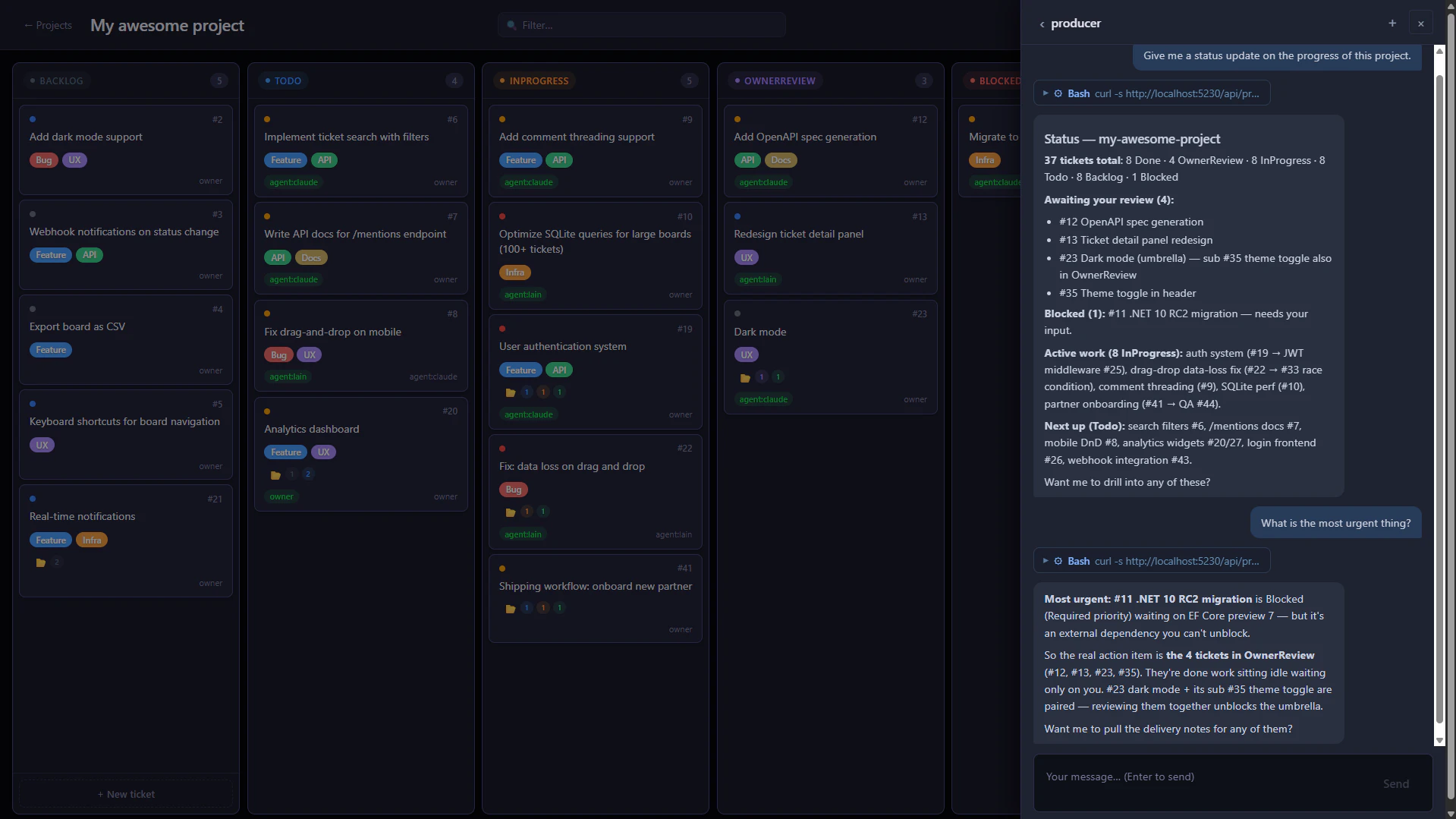
KittyClaw provides a self-hosted, MIT-licensed kanban board that integrates AI agents as first-class team members. It orchestrates LLM agents, like Claude Code, to perform development tasks directly on the board, streaming outputs back in real-time. This agent-native approach simplifies workflows by treating AI as a collaborator, not a separate tool, for developers orchestrating AI agents.
For who
Developers orchestrating AI agents for software development
Solves what
Provides a self-hosted kanban board where AI agents and humans collaborate on development tasks.
- AI agents as board members
- Self-hosted kanban board
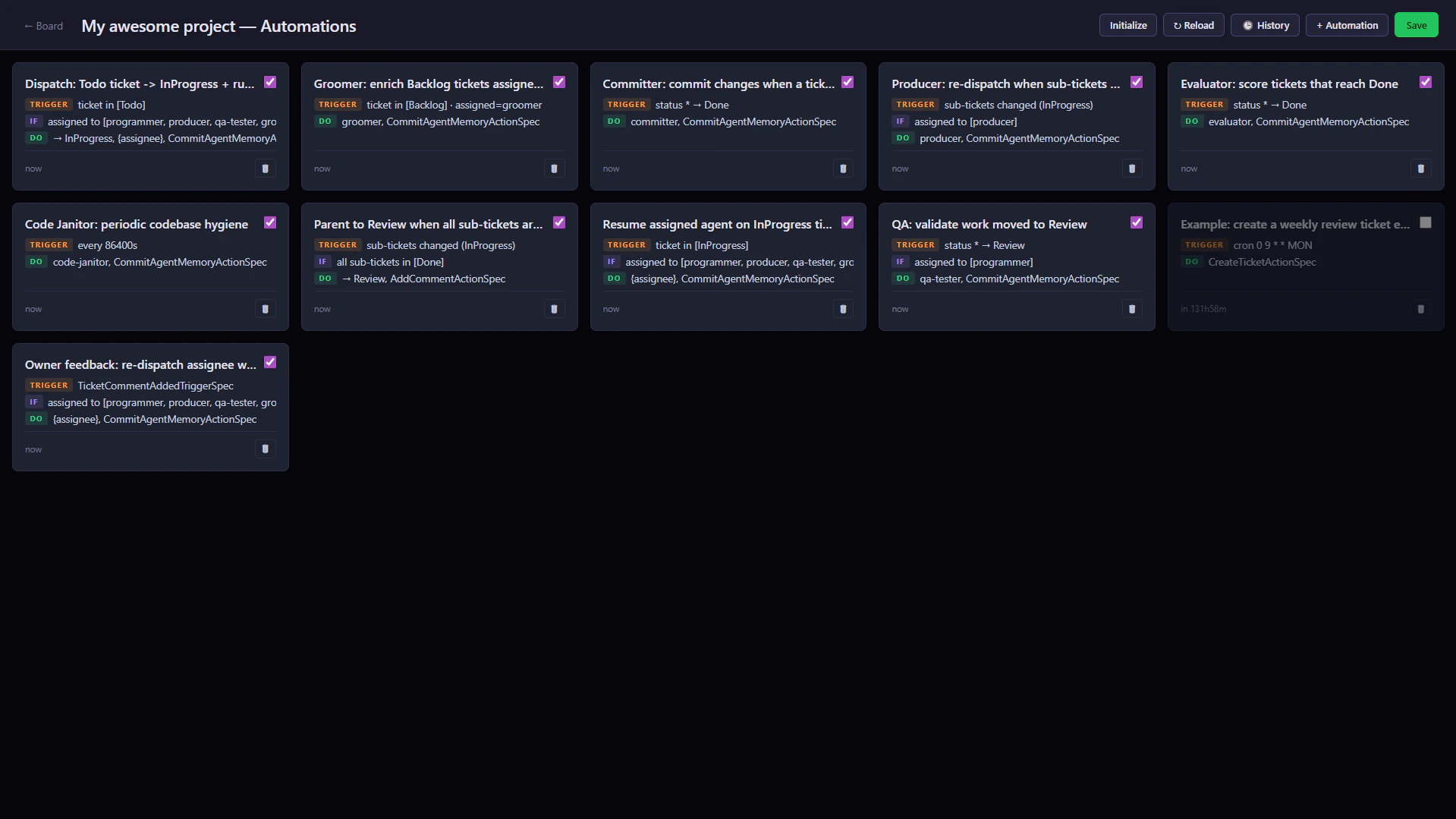
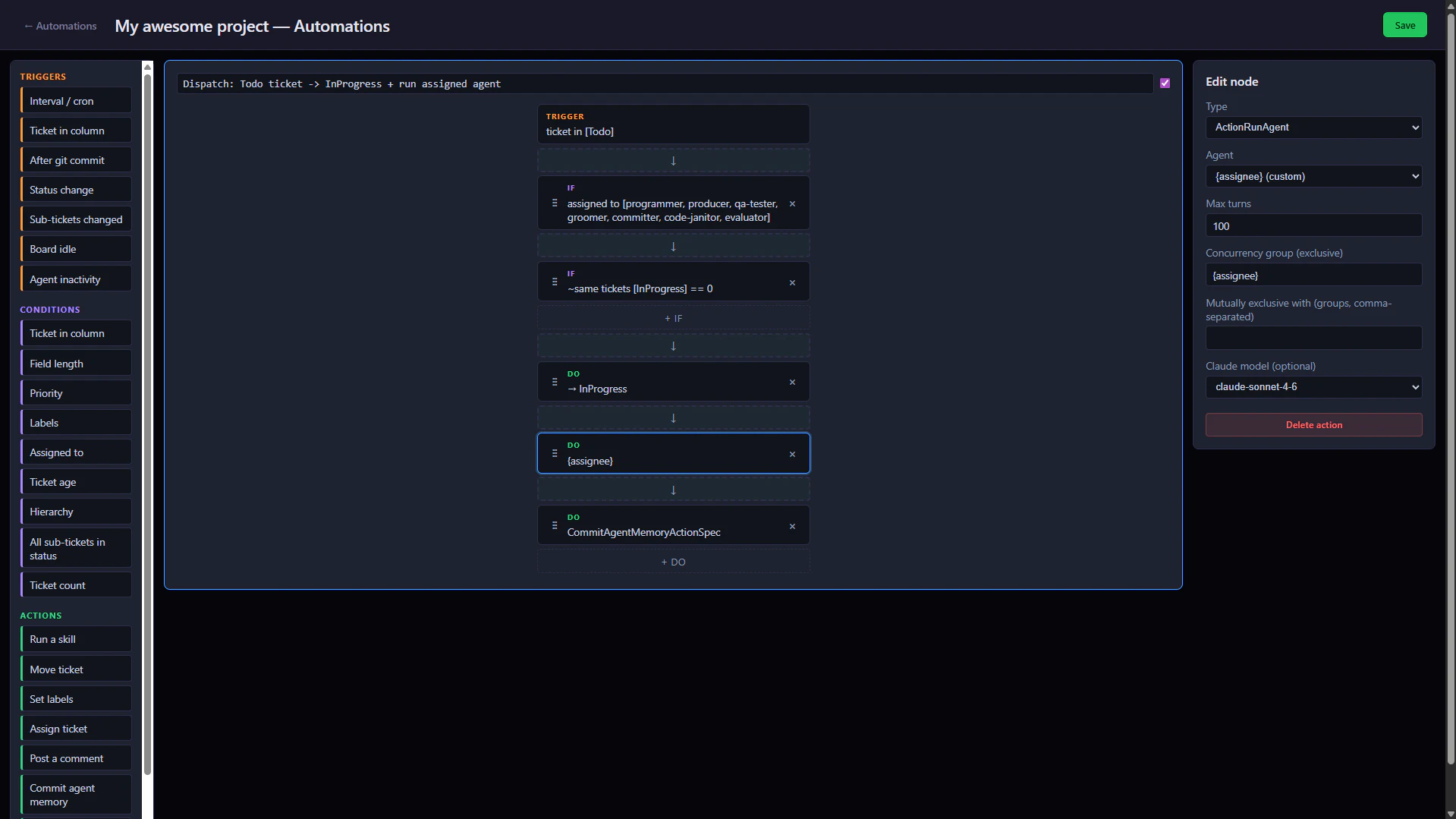
- Automation engine for AI tasks
In their own words
A kanban that _orchestrates_ AI agents.
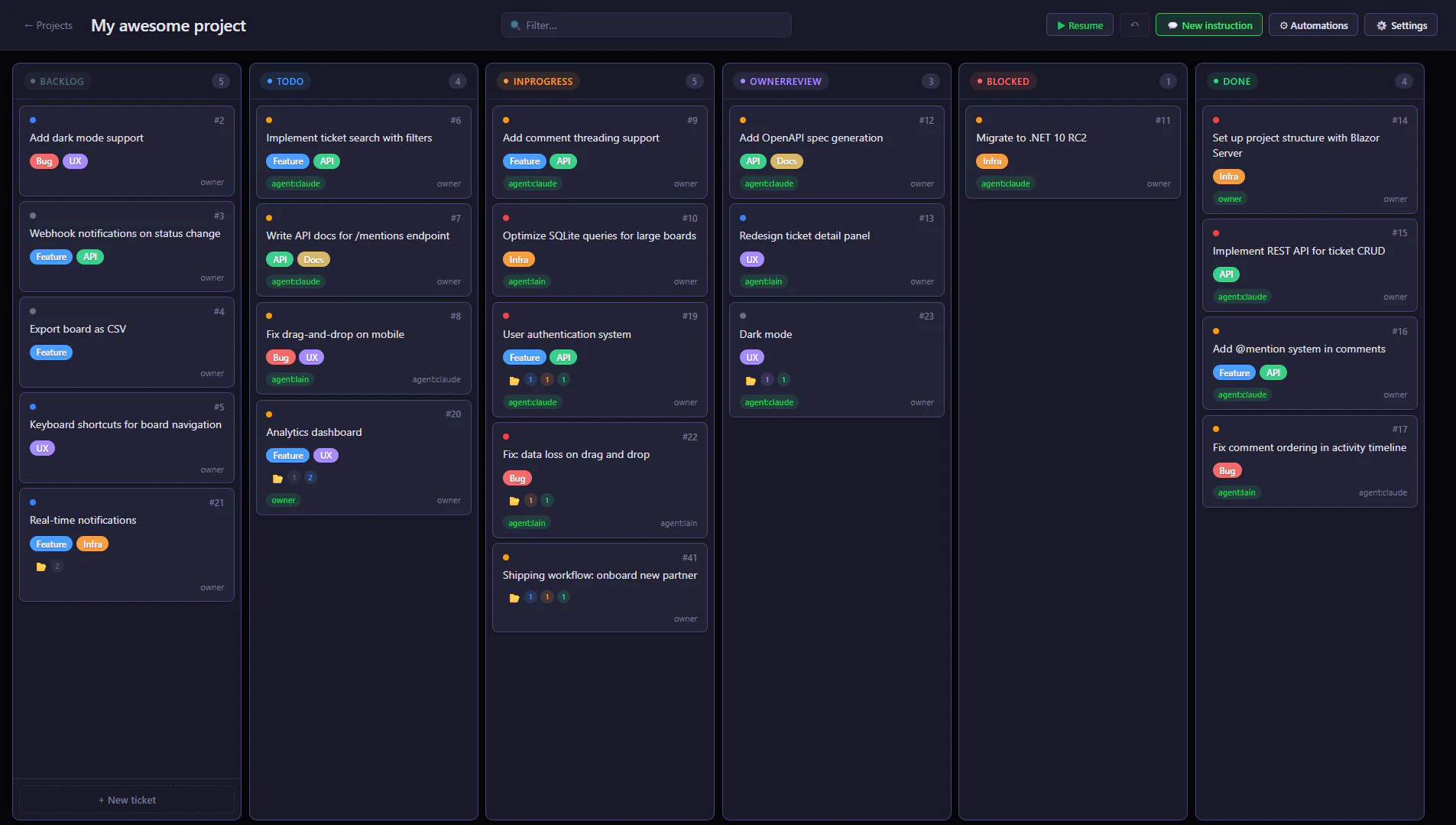
Each column is a workflow stage. Each member can be a human owner — or an LLM agent. A background engine dispatches them on triggers, and their output streams back into the board.
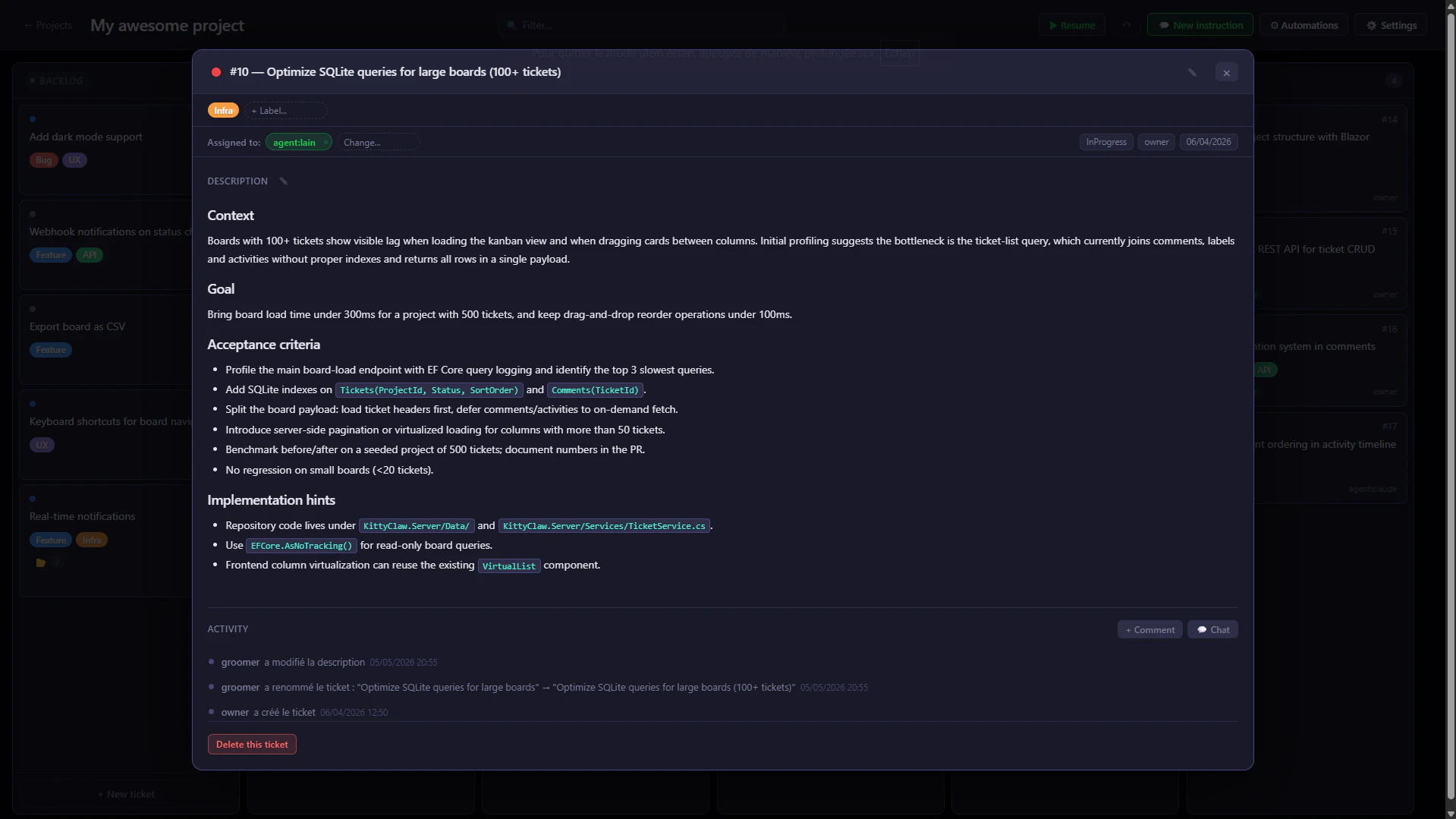
AI agents as real team members on your board. Assign a ticket, an automation fires, Claude Code does the work. Local-first, MIT, self-hosted.
Commercial cues
Model
one_time
Free tier
No
Trial
Available
Operator context
Team
Indie / lean
Founded
May 2026
Platform
Web app
Audience
Developers
Social / footprint
Builder Strategy
- Strategy Type
- Niche Specialist
- Stage
- Bootstrapped Lean
- Effort
- Small Team
About KittyClaw Expand
KittyClaw offers a self-hosted kanban board designed for developers orchestrating AI agents in software development. It integrates AI agents directly into the workflow, treating them as team members on the board.
Developers can assign tickets, triggering automations that allow LLMs like Claude Code to perform the work, with real-time output streaming. The MIT-licensed, local-first approach positions KittyClaw as a transparent and controllable platform for AI-assisted development, serving users who prefer to avoid vendor lock-in and subscription models for their core development tools.